Reporting snapshot · 5 November 2026 (Asia/Karachi). The defence agreement was signed on Wednesday, 4 November, and neither Riyadh nor Damascus has published its text, so what it covers can be described only from the Saudi Press Agency's readout and the Reuters reports published on 5 November. Syria's interest in the Makkah alliance rests on a statement made at the Manama Dialogue on Saturday, and no application, timetable or decision by the three signatories has been announced.
What Riyadh and Damascus signed
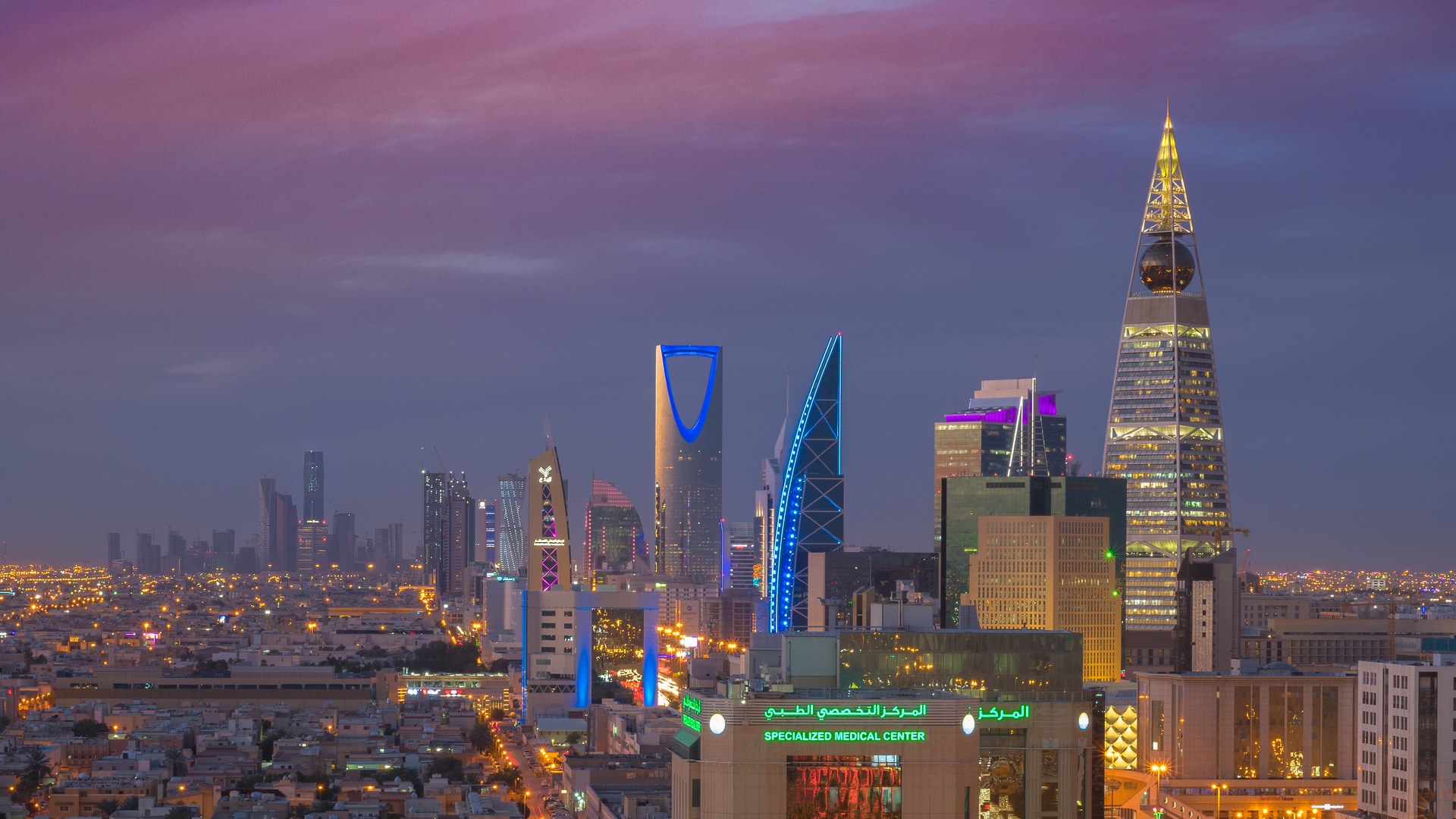
Saudi Arabia and Syria signed an agreement on cooperation between their two defence ministries on Wednesday, 4 November, during Syrian President Ahmed al-Sharaa’s second visit to Riyadh in less than a month, the Saudi Press Agency reported.
The agency said Crown Prince and Prime Minister Mohammed bin Salman received al-Sharaa at the invitation of King Salman bin Abdulaziz Al Saud, and that the two sides “held a session of official talks” covering bilateral ties and the regional situation, including “the grave repercussions any military escalation could have on regional and international security and stability, the safety of international navigation, the sustainability of energy supplies, and the stability of the global economy”. Both sides, the readout said, called for “an immediate halt to all acts threatening the security of navigation and waterways in the Red Sea, Bab al-Mandab Strait, and the Strait of Hormuz”.
The documents signed were a memorandum of understanding on industrial cooperation, the defence-ministries agreement, and two further memoranda on agricultural cooperation and environmental protection. The Saudi Fund for Development also signed agreements covering infrastructure, healthcare, housing and financial services, the agency added.
Reuters reported through Al Jazeera that more than $403 million in Saudi loans had been agreed for Syria’s energy, housing, health and infrastructure sectors, under six concessional agreements with Syria’s Finance Ministry. Al Jazeera listed projects including $100 million to rebuild and equip damaged healthcare facilities, $60 million to repair damaged housing, $105 million to strengthen civil defence, $90 million to rehabilitate the Aleppo thermal power plant and $30 million to develop drinking-water systems in Damascus and Idlib — an itemisation that accounts for $385 million of the $403 million package.
The Express Tribune reported that the defence agreement was signed “as Yemen’s Iran-aligned Houthi group continues its missile and drone attacks on the kingdom”, and that “no details were provided on what the agreement entails”. Syria’s foreign ministry called the defence agreement “the most notable” of the deals while declining to publish its terms, Al Jazeera reported.
Why the signing lands now
The Houthi campaign is the immediate pressure behind it. Reuters, as carried by The Express Tribune, reported that Saudi Arabia has been seeking help “far and wide, from the US to Europe and the Middle East, for both defensive and offensive support in a renewed war against the Houthis”, and that Syria had been weighing whether to provide military assistance to Riyadh. A Syrian diplomat said at the time that any request for military cooperation or exchange of expertise “would take place exclusively through official channels and within the framework of the bilateral agreements governing relations between our two brotherly countries”.
Riyadh’s position has been under repeated strain this autumn. The Houthis claimed attacks on Saudi East-West oil pipeline pumping stations in October, and on 4 November Pakistan’s federal cabinet ratified a defence cooperation agreement with Kuwait, the latest of a run of Gulf defence steps by Islamabad this year.
Where the Makkah pact comes in
The link that matters most for Pakistan is the Makkah Joint Defence Agreement, signed on 7 August by Saudi Arabia, Türkiye and Pakistan, which treats an armed attack on one signatory as an attack on all three. BBC reported that the joint statement says the pact “stipulates that any armed attack against any one of the three States shall be regarded as an attack against them all” and “provides for the enhancement of all aspects of defence co-operation”, while noting that it “provides no specifics on the obligations of each party”. A Turkish official quoted by Reuters called the pact “purely defensive in nature”.
Days before the signing, Syria’s foreign minister said his government was weighing whether to join that pact. “Discussions are currently under way to evaluate Syria’s entry into the Mecca alliance,” Asaad al-Shaibani said on Saturday at the Manama Dialogue, a security conference in Bahrain, according to Al Jazeera. Ahmed Qassem, a Syrian political researcher, told Al Jazeera that al-Sharaa’s second visit in such a short time “indicates the magnitude of the security challenges in the region”, and argued that Syria needs a “deterrence force” to protect its sovereignty and deter Israeli action.
Damascus has put its own name to that debate, where Pakistan’s own spokesmen have so far spoken about other candidates. On 30 October Pakistan’s military spokesman said the pact’s wording places no bar on new members and that Iran would be welcome, as KhabarWire reported. A month earlier Deputy Prime Minister and Foreign Minister Ishaq Dar said more than six countries had expressed interest and named retired Lieutenant General Nauman Mahmood as the alliance’s first secretary general, KhabarWire reported. The Makkah Defence Pact file follows that track.
What it means for Islamabad
Pakistan’s public position has moved in steps. The Foreign Office described the pact on 10 September as purely defensive and said expansion was not on the table, KhabarWire reported. By early October the foreign minister was counting interested states and naming a secretary general, and the army spokesman a month ago said membership was not barred by the pact’s text. None of that is a decision to admit Syria.
The reason the question matters to Pakistan is the geography of the war. Islamabad has promised to defend Saudi territory and the holy sites of Makkah and Madina while saying it is not part of the Yemen conflict, a distinction that becomes harder to hold if Riyadh acquires a Syrian partner able to act on the Houthi front. Pakistan has also kept a channel open to Tehran: Pakistani, Saudi and Turkish officials met Iranian security leadership in the Iranian capital on 26 October, as KhabarWire reported, with Islamabad mediating a war whose Houthi side is aligned with Tehran.
What is still uncertain
The first gap is the agreement itself. Saudi Arabia has not published the text, Syria has not published the text, and the Saudi account says only that an agreement on cooperation between the defence ministries was concluded. Whether it covers training, arms supply, intelligence sharing or joint operations is unknown.
The second is the membership question. No application has been filed, no accession procedure has been published, and the three signatories decide politically. The pact’s own text sets out no obligations for members, and a Turkish official has called it purely defensive, so what a fourth signatory would take on is undefined.
The third is what the loans deliver. The Saudi Fund for Development agreements are described by the Saudi Press Agency as covering infrastructure, healthcare, housing and financial services; their texts, disbursement schedules and conditions have not been published, and the itemised projects Al Jazeera listed leave part of the $403 million unexplained.
The fourth is what happens next at sea. Riyadh has asked for offensive as well as defensive help, and both sides in Riyadh called for navigation in the Red Sea, Bab al-Mandab and the Strait of Hormuz to be left alone. Iran has warned that any resumption of attacks would widen the war, so pressure on Gulf shipping is unlikely to ease because of a signing in the Saudi capital. Tehran’s reaction to a Saudi-Syria defence channel, and to the possibility of Syria joining a pact that includes Pakistan, has not been stated.