Reporting snapshot · 26 October 2026 (Asia/Karachi). The claim of damage at the East-West pumping stations was still unconfirmed by Saudi authorities when this was written, and the coalition's interception figures cover a single day of fighting. How much of King Khalid International Airport's capacity has actually returned is also not yet clear.
What happened
Yemen’s Houthi movement said on Monday, 26 October, that it had attacked Saudi Arabia’s East-West crude oil pumping stations and King Khalid International Airport in Riyadh, in a claim the Saudi government had not confirmed. Reuters reported that the group made the claim after the Saudi-led coalition said it had destroyed two ballistic missile launchers in the Yemeni capital, Sanaa, including one used to fire a missile towards Riyadh that the coalition said it intercepted. Reuters also published a satellite image captioned as confirming significant damage at one pumping station, The Express Tribune reported.
The claim extends a target list the group has been building for two days. Houthi military spokesman Yahya Saree said on Saturday that the group had struck King Khalid International Airport in two phases, the airports at Dammam and Najran, the Khamis Mushait air base, and “crude oil pumping stations and the crude oil pipeline from east to west”, together with an Aramco facility at Yanbu on the Red Sea and the Rabigh refinery, The Nation reported. Saudi Arabia said civil defence teams were responding to falling debris in the Makkah and Madinah regions after two ballistic missiles were intercepted, with some shrapnel landing in Wadi Mughamas outside Makkah; the Houthis denied targeting the two cities, the same newspaper reported.
Sunday’s fighting was heavier. The coalition said it had intercepted and destroyed 10 ballistic missiles launched towards southern Saudi Arabia, along with a cruise missile aimed at Khamis Mushait, a ballistic missile and two drones directed at Riyadh, The Nation reported. Two people were injured by shrapnel in Khamis Mushait and Ahad Rafidah, and King Khalid International Airport resumed selected flights after a two-week closure, with Terminal 1 to handle domestic services and Terminal 2 international flights operated by Saudi national carriers, the newspaper added. A Saudi Civil Defence alert warning of a possible aerial threat reached Riyadh residents at 3:42 a.m. local time, and Major General Turki al-Maliki, the coalition’s spokesman, said forces had destroyed two ballistic missile launch platforms in Sanaa, Samaa TV reported. Al Jazeera’s live coverage of the war noted that the coalition had struck Houthi-held territory in Yemen, including Sanaa, after the group claimed a ballistic missile attack on Riyadh’s airport.
Why the East-West line matters
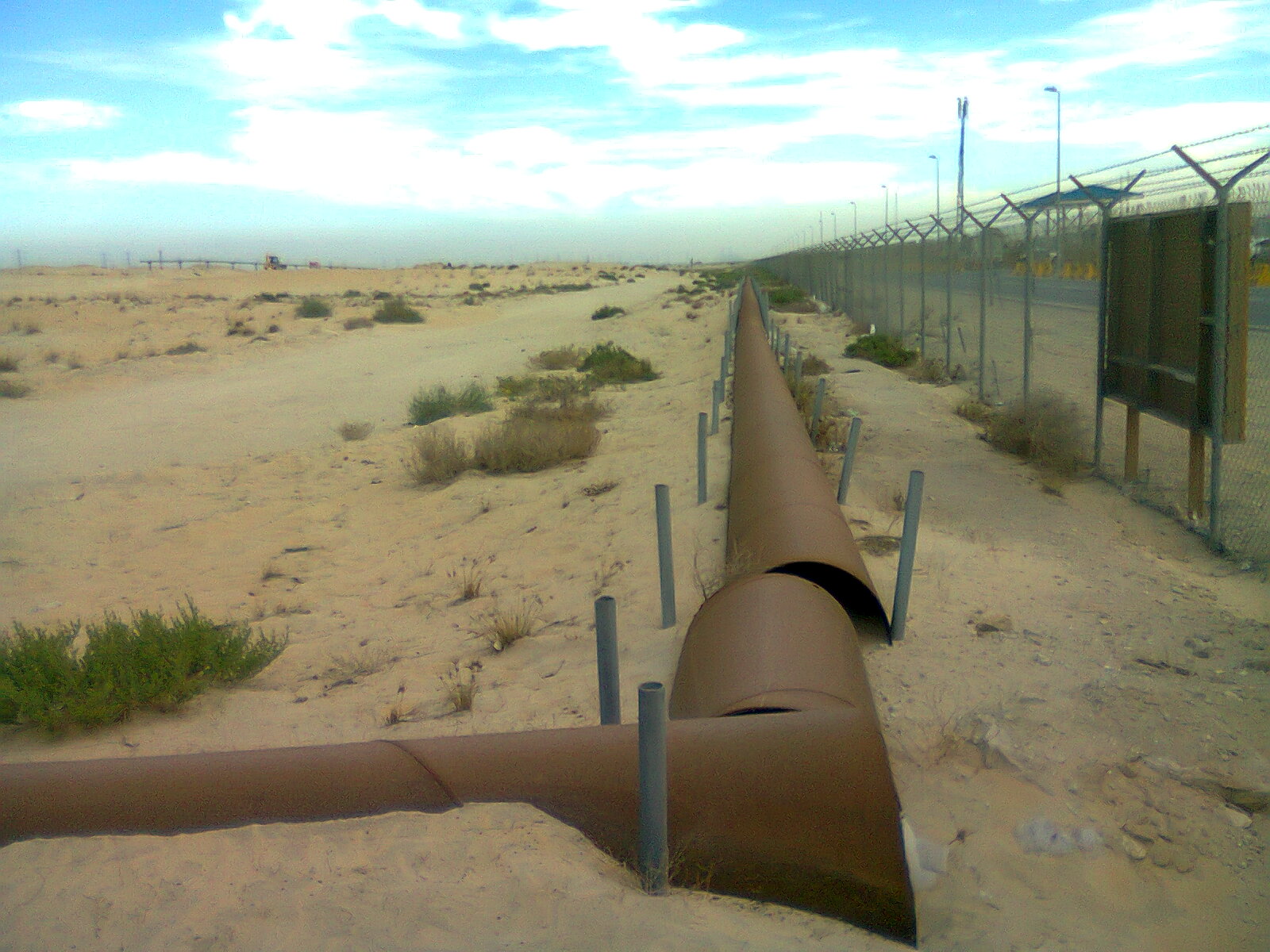
The East-West crude line is Saudi Arabia’s alternative route to the Red Sea, and the pumping stations the group says it hit belong to that system, which runs west to Yanbu. Yanbu has been under Houthi claim before: the Houthis said they had targeted an Aramco facility in what the BBC described as the Red Sea city of Yanbu, and Brent crude settled above $106 a barrel after the group claimed strikes on Aramco facilities there, Al Jazeera reported in September.
The scale of the campaign around that infrastructure is already measured. Saudi authorities said at least 21 people had been killed in attacks on the kingdom’s airports since the start of October, and that the 10 October strike on Riyadh’s airport killed 13 people and injured 308, the BBC reported. The drawdown of US diplomatic staff from Saudi Arabia that KhabarWire covered on 22 October was the first visible sign of how the escalation was being read in Washington. The reopening of two terminals at Riyadh airport is the first visible sign of the kingdom trying to reverse it.
What it means for Pakistan
For Islamabad, the pumping stations are not a distant concern. Earlier this year, when Iran closed the Strait of Hormuz, Pakistan formally asked Saudi Arabia for an alternative oil supply route through the Red Sea port of Yanbu to keep its fuel chain running, and the petroleum ministry said then that the bulk of the country’s energy supplies normally transit the strait, as KhabarWire reported at the time. The line the Houthis now say they have hit is the artery behind that request. If the East-West pumping stations are damaged, the Saudi alternative that Islamabad asked to be opened in March becomes less useful while the strait remains constrained.
The alliance obligations run in parallel. Pakistan is a signatory to the Makkah Joint Defence Agreement, and its forces are already in the kingdom in what the military describes as long-standing, multi-domain roles; the Foreign Office has said Pakistani forces would defend Saudi territory but would not cross into Yemen, as KhabarWire reported on 10 October. Nothing in Monday’s reporting changed that position, and the KhabarWire Makkah Defence Pact hub tracks the alliance’s decisions. The interceptions over the Makkah and Madinah regions are the part of the reporting Pakistani readers have direct reason to note, because both cities host the annual pilgrimage and Pakistani nationals year-round.
The response to the campaign has widened. The United States is supplying Saudi Arabia with intelligence, including a targeting tool that uses artificial intelligence, with CNN reporting that 100 to 200 US soldiers are in the kingdom as part of a joint force command, and Britain has sent warplanes, DW reported on 25 October. Alongside that, Reuters reported on Monday that Field Marshal Asim Munir, Defence Minister Prince Khalid bin Salman and Türkiye’s intelligence chief are due to meet Iranian officials in Tehran, in what would be the first high-level contact between Iran and all three Makkah Pact members since the escalation began, Samaa TV carried. Pakistan has been a key intermediary between the United States and Iran throughout, which is why a meeting in Tehran between the pact’s defence principals matters to Islamabad beyond the Gulf fighting itself.
What is still uncertain
The central question is unconfirmed damage. No Saudi official had confirmed that the pumping stations or the East-West line were hit, and the satellite image published with the Reuters report was supplied through a social media account and has not been independently examined. The coalition’s interception counts cover a single day and came from the coalition itself; Saudi authorities have not published damage or casualty assessments for the pumping stations, and the claim that Saudi strikes killed 16 people in Sanaa and in a Red Sea port city is the Houthis’ own account.
The airport’s return is partial in an undefined way. Two terminals reopened with a split between domestic and international services, and flight-tracking data showed little traffic on Sunday, Reuters reported through The Express Tribune. The Houthi military spokesman warned airlines, airport staff and travellers to stay away, describing the facility as a military target, the Express Tribune reported.
The account of a Tehran meeting between Munir, Khalid bin Salman and Türkiye’s intelligence chief was attributed to two people with knowledge of the matter, and the Saudi government media office, Pakistan’s military media wing and Türkiye’s foreign ministry had not confirmed it. No decision has been published on what the Makkah pact’s members will do about attacks on Saudi oil infrastructure, and no oil price has yet been attributed to the pumping-station claim.