Reporting snapshot · 2 October 2026 (published 3 October Asia/Karachi). Deputy Prime Minister and Foreign Minister Ishaq Dar held a press conference in Islamabad on 2 October 2026 covering four regional security files: the Makkah Joint Defence Agreement, the Strait of Hormuz, Pakistan's border with Afghanistan, and the broader Middle East situation. This article synthesises the press conference as reported by Geo News and Pakistan Today; the Foreign Office has not yet published a full transcript. Quotes are attributed to the named outlets where they are not directly verifiable against the conference footage. The expansion claims and the secretary-general nomination are official statements by a sitting minister, but the identity of the "more than six" interested states has not been disclosed.
What happened
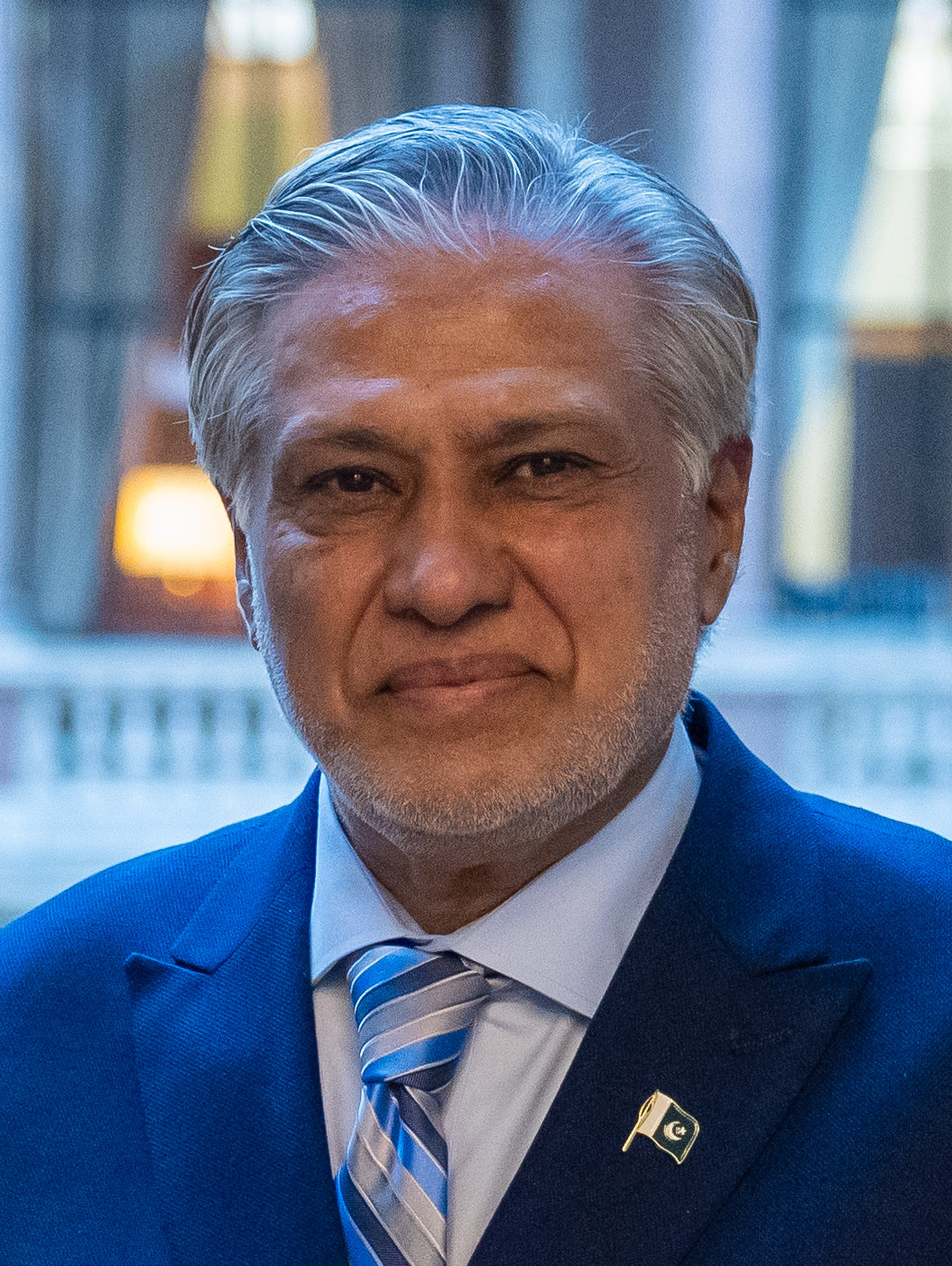
Pakistan’s Deputy Prime Minister and Foreign Minister Ishaq Dar said on Friday, 2 October 2026, that more than six countries had expressed interest in joining the Makkah Joint Defence Agreement and that Pakistan had nominated retired Lieutenant General Nauman Mahmood as the alliance’s first secretary general. Dar spoke at a press conference in Islamabad carried by Geo News and Pakistan Today.
Dar framed the Makkah pact as a defensive arrangement, not an offensive one. He said the alliance’s first meeting had been held on 31 August, that the headquarters would be located in Saudi Arabia, and that Pakistan had nominated a secretary general in keeping with the 31 August agreement. He described Mahmood, who retired from the Pakistan Army as a lieutenant general, as a “very good and pious officer,” a characterisation that signals the personal investment Pakistan is making in the new institution.
Separately, Dar confirmed that an emergency meeting under the Makkah agreement is scheduled for the week of 6 October to review the situation in Saudi Arabia after a series of attacks on the kingdom, most of them attributed to Yemen’s Houthis. He said Saudi Arabia had faced 17 to 18 attacks in recent weeks and that the three original signatories had already agreed at the UN General Assembly in New York to convene an urgent meeting of their military chiefs to consider assistance to Saudi Arabia.
The Dar press conference is the first time Pakistan has publicly named the secretary general. Until now, the 31 August secretariat announcement had spoken only of a Pakistan-led secretariat and a three-year Pakistani tenure. The new disclosure turns the agreement from a paper framework into an identifiable institution with a face.
Why the expansion matters
Dar’s claim of “more than six” interested states is the most consequential element of the press conference because it sets up the Makkah pact as a potential regional security bloc rather than a three-country understanding. The 7 August signing of the Makkah Joint Defence Agreement by Pakistan, Saudi Arabia and Turkiye was widely described as a NATO Article 5-style commitment among the three signatories, and the 31 August meeting of the Makkah pact’s Strategic Political and Defence Committee in Istanbul gave it a working institutional form.
If the expansion proceeds, the pact begins to look like the Gulf-focused mutual-defence arrangement that Saudi planners have discussed for years, with the unusual feature that a South Asian nuclear-armed state, Pakistan, would be a founding pillar. That is also why Dar repeatedly stressed the defensive framing. The Ministry of Foreign Affairs issued an explicit “defensive only” clarification on 10 September after Iran publicly questioned the agreement, and Dar reiterated the same line on 2 October.
The choice of Nauman Mahmood as secretary general is itself a message. Mahmood commanded the Pakistan Army’s Strategic Plans Division as a lieutenant general before retirement, the directorate that oversees strategic assets and is the closest part of the Pakistani military establishment to the country’s nuclear and conventional deterrence posture. Naming a retired SPD commander as the first secretary general is consistent with the government’s decision, announced by Field Marshal Asim Munir at the 277th Corps Commanders’ Conference on 2 October, to back the Makkah pact as part of Pakistan’s regional security architecture.
Hormuz, Afghanistan and the regional frame
Dar moved on from the Makkah pact to the Strait of Hormuz, where he said vessels should not be required to pay fees or service charges to cross the strategic waterway. His statement follows the renewed closure of the strait after the 28 February 2026 US–Israeli attacks on Iran and the subsequent June truce that collapsed. The position places Pakistan on the side of free transit at a time when several other Gulf states have been discussing levies on Iranian crude exports.
On Afghanistan, Dar said Pakistan wanted friendly relations with Kabul but expected the Afghan authorities to ensure Afghan territory was not used for attacks on Pakistan. He named the banned Tehrik-e-Taliban Pakistan, the Balochistan Liberation Army and Fitna al-Hindustan, and said Pakistan was aware that crops had been destroyed on the Afghan side because the frontier has been closed since October [2025]. The framing was that Pakistan is open to relations but only on condition of action against the three named groups.
The press conference had a single architecture running through it: Pakistan as the central diplomatic actor in a regional security system that now includes the Makkah pact as a Saudi-based institution, with parallel Pakistan-managed files on Hormuz and the Afghan border. Dar repeatedly cited the United Nations Charter as the legal basis for the Makkah pact, compared it to NATO’s mutual-defence principle, and described Pakistan as “bound to defend Saudi Arabia” under the agreement.
What is still uncertain
Three things remain unknown at the time of publication. First, the identity of the “more than six” interested states. Dar did not name them, and neither Geo News nor Pakistan Today was able to confirm a list. Second, the agenda and the participants of the emergency meeting scheduled for the week of 6 October; the foreign minister said the meeting would happen, but the date, venue and level of representation have not been disclosed. Third, the operational implications of Mahmood’s appointment, in particular whether the secretariat will have a standing staff in Riyadh, a Pakistani liaison, or a hybrid structure.
It is also unclear whether the three original signatories will need to approve new members individually or by consensus under the agreement’s text, which has not been released publicly. Pakistan’s framing on 2 October suggests the alliance is open to expansion on a country-by-country basis, but the formal accession procedure is not on the record. For Pakistan readers, the practical questions that follow are whether the Makkah pact will translate into joint exercises with Saudi Arabia, whether the Riyadh secretariat will become a routine venue for Pakistani-Saudi coordination, and how his three-year tenure will be staffed. Those answers are likely to come from the emergency meeting next week and from the secretary general’s first public engagements.
Sources & reporting notes
This article is a synthesis of two Pakistan-based English-language reports of DPM Ishaq Dar's 2 October 2026 press conference in Islamabad, cross-referenced against KhabarWire's earlier Makkah pact coverage. The press conference was not transcribed in full by the Foreign Office at the time of writing, so direct quotations are taken from the named outlets.
- Geo News — "More than six nations keen on joining Makkah defence pact: DPM Dar"Published 2 October 2026 · Carries Dar's statement that more than six countries have expressed interest in joining the Makkah pact, the nomination of retired Lt Gen Nauman Mahmood as first secretary general, the scheduled emergency meeting, and his positions on Hormuz and Afghanistan.
- Pakistan Today — "Dar says more than six countries interested in joining Makkah defence pact"Published 2 October 2026 · Independent Pakistan Today account of the same press conference, confirming the "more than six countries" claim, the Nauman Mahmood nomination, the Strait of Hormuz remarks and the Afghan border framing.
- Geo News — "'May 9-like situation' to be dealt with decisive force, warns army's top brass"Published 2 October 2026 · Covers the 277th Corps Commanders' Conference chaired by Field Marshal Asim Munir at GHQ on the same day, including the conference's welcome of the Makkah Defence Alliance.
- Pakistan Today — "Govt, Opposition leaders hold high-stakes talks over PTI long march"Published 2 October 2026 · Context for the same-day political backdrop, including the federal government–PPP–opposition talks at the National Assembly Speaker's chamber that ran in parallel with Dar's press conference.
- Geo News — "Pakistan slams Houthi attack on Madina power station as 'grave provocation'"Published 2 October 2026 · Covers Pakistan's condemnation of the latest Houthi attack on Saudi Arabia, which Dar cited as the trigger for the Makkah pact emergency meeting.
.jpg)