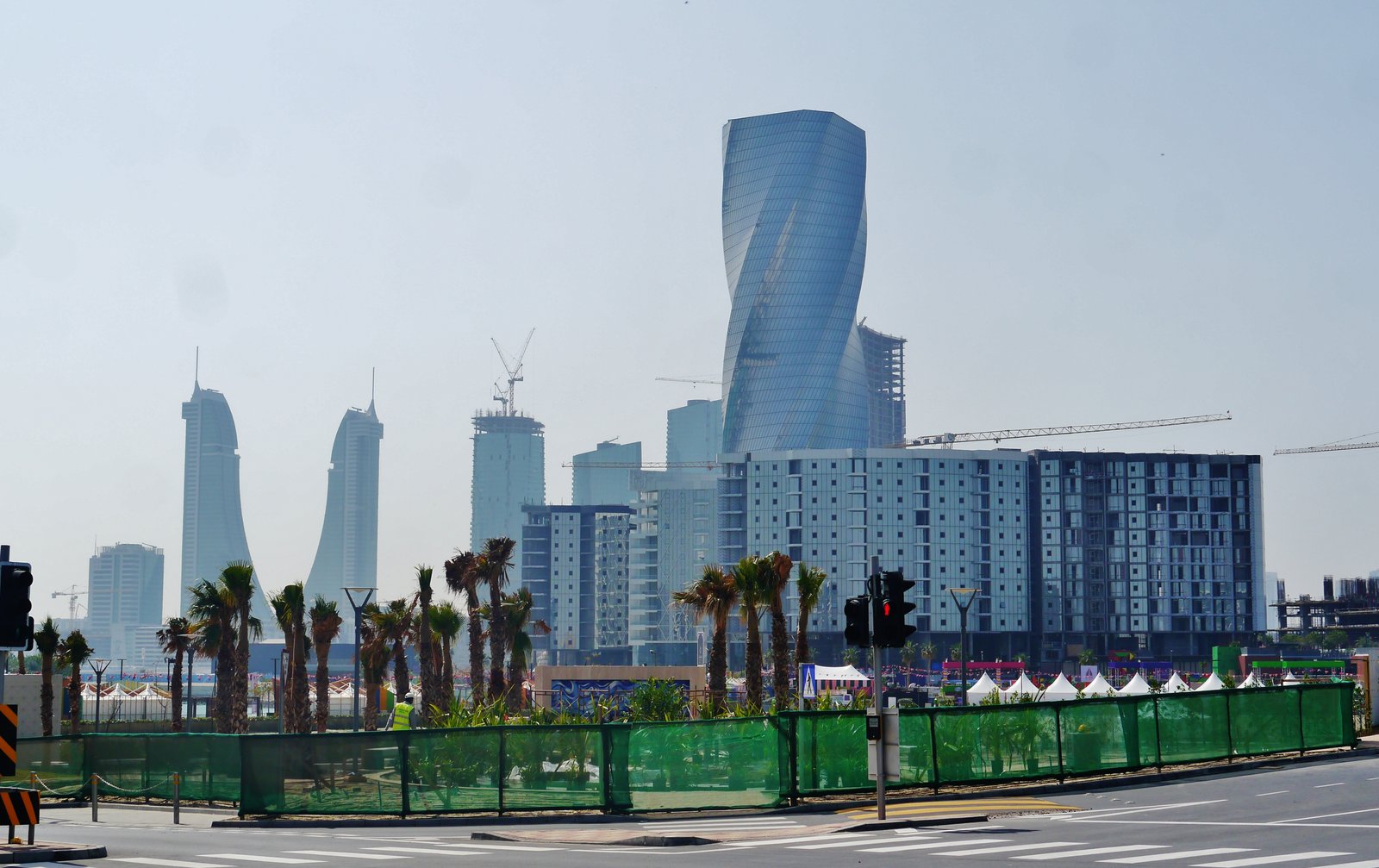
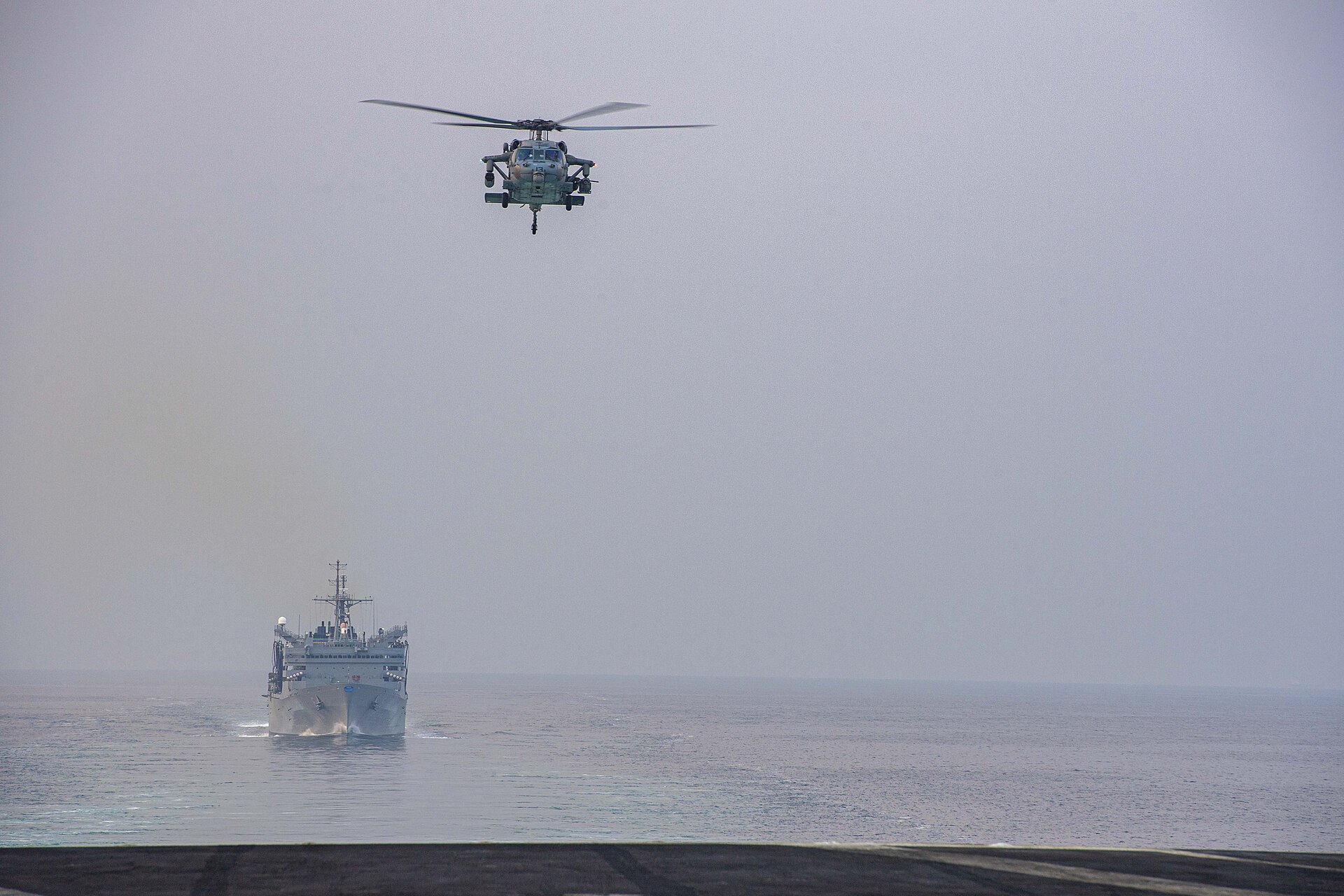
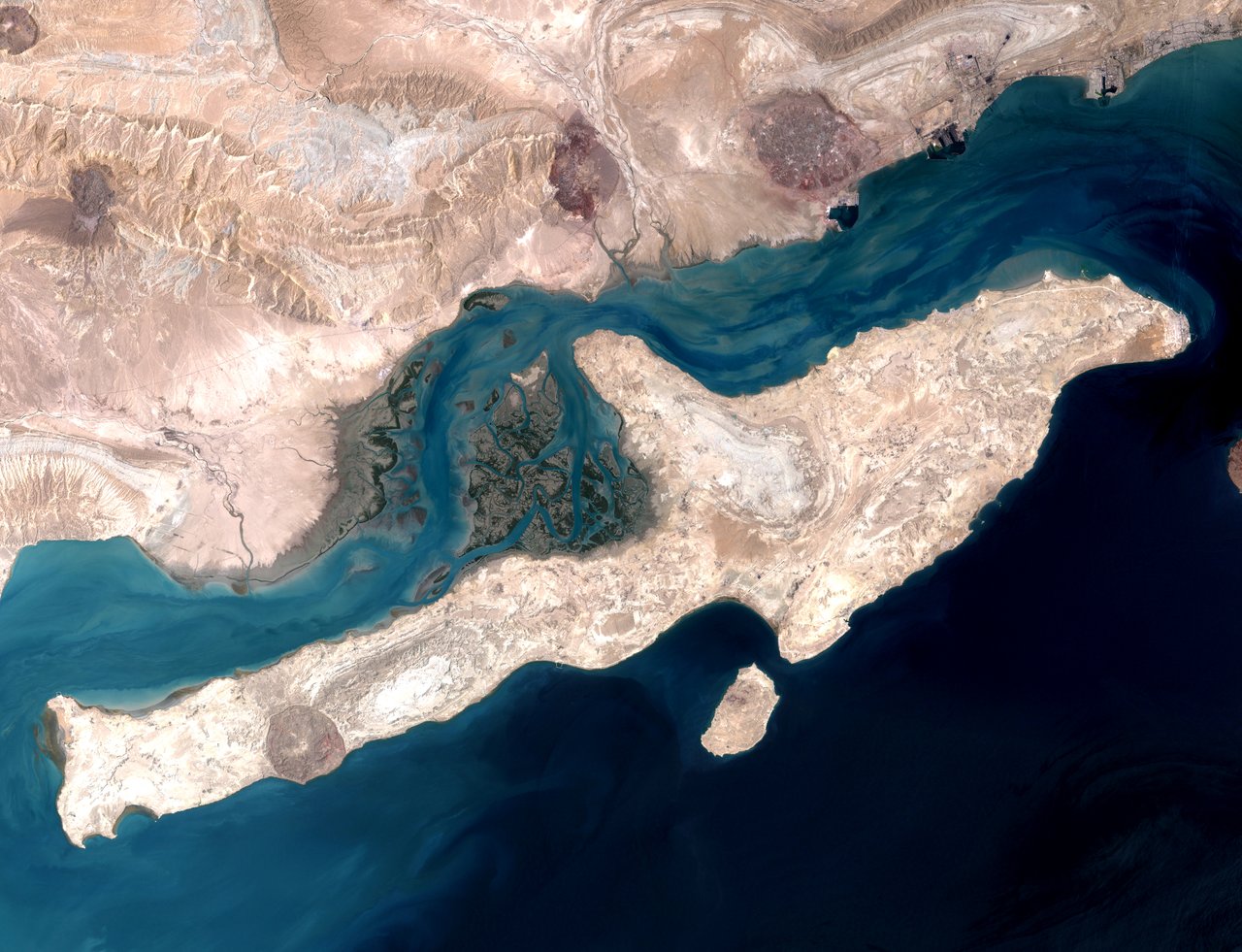
Reporting snapshot · 16 November 2026 (Asia/Karachi). The mine strikes are Tehran's own account, and Reuters said it could not verify them; the tankers were not named, no crew casualties were given and no independent assessment of the waterway is available. The carrier's arrival rests on one American official rather than a Pentagon statement. The position in the Gulf can change within hours.
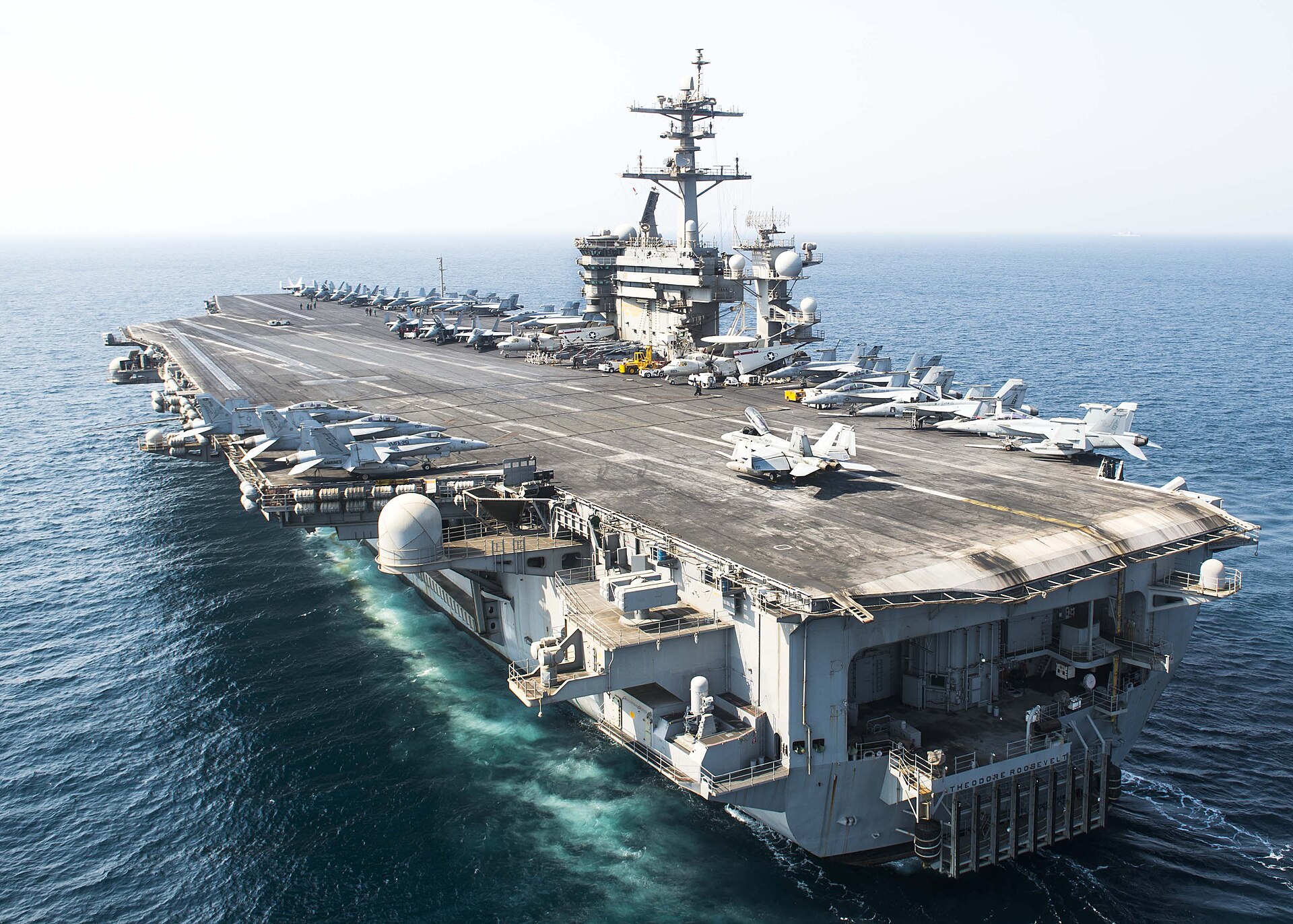
Two tankers in the Strait of Hormuz caught fire after striking naval mines, according to Iran’s Islamic Revolutionary Guard Corps Navy, and a third United States aircraft carrier has reached the Middle East, as Tehran warned on Monday that it will not wait to be attacked first. The Revolutionary Guard’s claim was carried by Iranian state media and Reuters could not independently verify it.
What has changed since Friday is the shape of the confrontation rather than its starting point. On 13 November the Guard claimed it had destroyed a United States radar site in Bahrain and that four tankers had been hit by explosions in the strait — claims that KhabarWire reported at the time. What followed over the weekend was a sharper answer from Manama, a formal rejection of the strikes by Gulf governments, and a third carrier moving into the region while Tehran’s own officials spoke of a “new rule of engagement”. KhabarWire follows the wider track in its Pakistan, Iran and the US mediation hub.
What the Revolutionary Guard says about the tankers
The Revolutionary Guard Navy said on Sunday that two tankers had suffered explosions and were on fire after striking naval mines in the Strait of Hormuz, The Express Tribune reported from a statement carried by Iranian state television. According to the same account, the vessels were attempting to pass through the waterway on what the force called an unauthorised route with their navigation and automatic identification systems switched off — the wording the Guard used when it struck a supertanker with a mine earlier in October.
The statement named neither vessel, gave no information about casualties and produced no footage that could be checked. Reuters said it could not independently verify the report, and no ship-tracking or maritime authority confirmation was available. In the same statement, carried by the state broadcaster IRIB, the Revolutionary Guard said the Strait of Hormuz remains closed, citing Washington’s “failure” to escort ships through the waterway, and warned that “any US aggression would be met with an even harsher and more devastating response”.
The Guard separately claimed it had targeted the United States radar defence site at Al Riffa Air Base in Bahrain with six drones, without claiming that the site had been damaged. Its claim two days earlier, on 13 November, was that it had destroyed a United States early-warning radar in Bahrain.
Bahrain’s answer, and who else objected
Bahrain’s Defence Force said on X that its air defences had intercepted and destroyed several Iranian aerial attacks on the kingdom and that all units “remain at the highest level of readiness”, The Express Tribune reported. When the Guard made its first radar claim on Friday, Bahrain said it had intercepted two drones.
The response that came from Manama went beyond the military. Bahrain’s Ministry of Foreign Affairs denounced what it called “a resumption of Iran’s aggression”, saying the attacks by the Revolutionary Guard violated international law and that “no pretext can legitimise violations of state sovereignty”. Al Jazeera reported that the ministry also rejected the use of Bahraini territory “to settle accounts” and held Iran fully responsible for the attacks and their consequences.
Two other governments said the same thing in different words. Jordan’s Ministry of Foreign Affairs condemned “Iran’s brutal attacks on the sister kingdom of Bahrain as a flagrant violation of its sovereignty”, and Egypt’s ministry reiterated what it called “categorical rejection of attacks threatening the region’s stability”, saying the security of Bahrain and the Gulf states is closely linked to Egypt’s own.
Tehran’s justification came from its foreign ministry. Its spokesman, Esmaeil Baghaei, said the attacks were “purely defensive in nature”, had targeted only American military bases and assets, and were justified under Article 51 of the United Nations Charter, which allows states to defend themselves against attack. Baghaei accused Gulf countries of aiding American strikes on Iran with missiles, drones, aircraft and logistics, said Tehran was taking diplomatic action on the issue and would “follow up on this issue seriously”. Al Jazeera’s Resul Serdar, reporting from Tehran, described a change in practice rather than in rhetoric: Iran had held back for weeks against intermittent American attacks, he said, but had fired twice at Bahrain in three days, and “it seems this is now the new rule of engagement”.
A third carrier and a first-strike warning
The USS Theodore Roosevelt has arrived in the Middle East, a United States official told Al Jazeera on Monday, joining two other carriers operating in the Central Command area. The outlet’s report cited a United States official rather than a Pentagon statement.
Tehran’s answer came within hours. Iran’s deputy foreign minister for legal and international affairs, Kazem Gharibabadi, said the government “will not wait for the US to attack first”, and suggested that Washington was buying time through diplomacy to prepare another strike. Inside Iran, the parliament speaker, Mohammad Bagher Ghalibaf, described the unveiling of a new Revolutionary Guard missile city as a sign of changing regional strategy, and warned the country would not tolerate “a state of neither war nor peace”, The Express Tribune reported.
How much is left in Tehran’s hands is contested. The Wall Street Journal, citing United States intelligence assessments, put Iran’s remaining arsenal at an estimated 1,500 to 2,500 missiles, against President Donald Trump’s claim that Iran’s military capabilities had been largely destroyed. The assessment was described as low confidence, and it noted that rebuilding had proceeded more slowly than during the war.
What a mined strait means for Pakistan
Pakistan has direct reasons to watch the waterway. It imports the bulk of its crude oil and a significant share of its liquefied natural gas through the Strait of Hormuz. On 13 November Pakistan’s permanent representative to the United Nations, Ambassador Syed Haider Shah, told the Security Council to protect commercial shipping and safe passage through the strait and Bab al-Mandab, and the Council, sitting at Bahrain’s request, adopted no measure, KhabarWire reported.
The defence commitments run in the same direction. Pakistan signed the Makkah Joint Defence Agreement with Saudi Arabia and Türkiye in August, and it took effect this week alongside a separate Qatari pact, KhabarWire reported on 14 November. Bahrain and Saudi Arabia are the states now under attack from Iranian drones and missiles.
The oil market is pulling in the opposite direction to the fighting. The International Energy Agency reported that world supply outstripped demand by almost two million barrels a day in October, the first surplus since the war began, and that members will accelerate the release of emergency reserves, putting roughly 71 million barrels on the market by the end of February, KhabarWire reported on 14 November. A surplus is not a shipping guarantee, and the strait is where war-risk insurance and freight premiums are decided; diesel, the tightest product market, was already at $180 a barrel in October.
Diplomacy has not stopped. Iran’s ambassador in Pakistan, Reza Amiri Moghadam, said in an interview carried by IRNA that Tehran had “never walked away from the negotiating table”, and asked for an end to the war, the release of Iran’s blocked funds and an end to the naval blockade.
What remains unverified is the part that matters most for fuel prices. Whether any of the tankers struck by mines can be identified, whether the strait is closed to commercial traffic in practice, and whether a third carrier changes Tehran’s calculation are all open questions.