Reporting snapshot · 17 November 2026 (Asia/Karachi). The communiqué and the 2035 goals were adopted at the close of Monday's session, but neither the Secretariat nor the Foreign Office has published the signed text in full, and member states can still release their own versions with different emphasis. The economic undertakings are calls on member governments rather than funded programmes, and nothing in either document is enforceable.
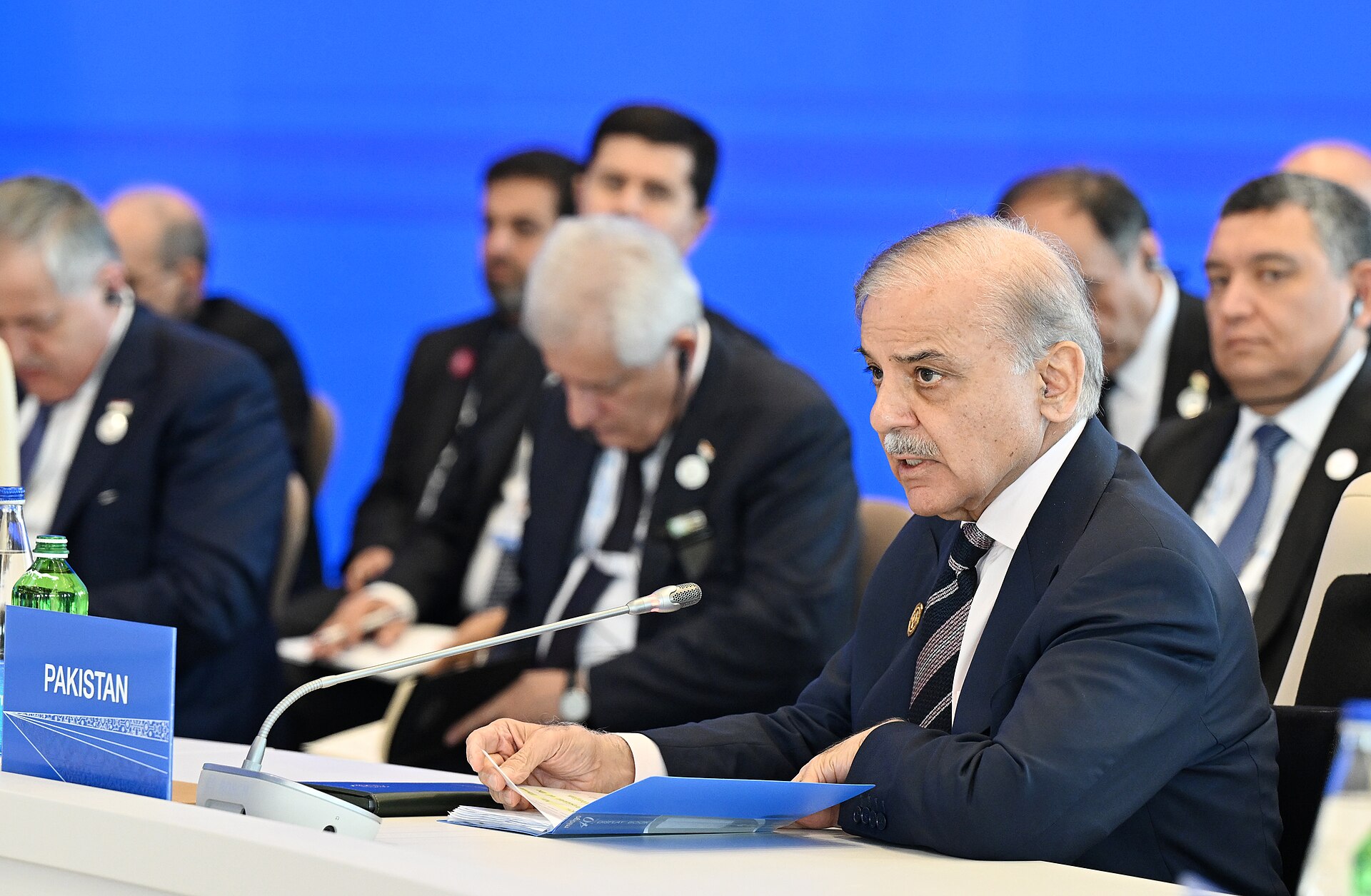
Foreign ministers of the Economic Cooperation Organization closed the 30th Council of Ministers in Islamabad on Monday, 16 November, by adopting the Islamabad Communiqué and the Strategic Goals of Economic Cooperation 2035, the two documents that set the bloc’s programme for the rest of Pakistan’s chairmanship year and for the decade after it. Geo News reported that the communiqué endorses the mediation efforts of Pakistan and Qatar and supports an Iranian initiative aimed at ending the current war, and Radio Pakistan quoted Deputy Prime Minister Ishaq Dar saying the adoption of the 2035 goals and the communiqué together “provides a shared framework for advancing the regional priorities”. KhabarWire described the ministerial as it was still running on 16 November; at that point neither outcome document had been released.
What the communiqué commits members to
The document does three separate things, and the economic list is the longest of them. On the conflict that has pulled the region apart, the ministers supported the mediation undertaken by Pakistan and Qatar, naming the Islamabad peace talks, the Islamabad memorandum of understanding and Pakistan’s participation in the follow-on negotiations at Burgenstock in Switzerland, and they separately welcomed Qatar’s work as facilitator at the 81st session of the United Nations General Assembly. They also backed an Iranian initiative aimed at “a dignified resolution of the conflict and ensuring the complete and permanent termination of the current war”, according to the communiqué as reported by Geo News. The same text rejects unilateral coercive measures, sanctions and economic pressures, and says their extraterritorial economic, technological, financial and trade effects run counter to the UN Charter and international law.
On trade and connectivity, the communiqué calls for accelerated amendment and implementation of the ECO Trade Agreement, ECOTA, and backs joint trade zones, cross-border business cooperation, regional manufacturing enterprises and value chains, simpler customs procedures and e-commerce. It also urges the full implementation of the ECO Transit Transport Framework Agreement, the development of transport corridors, better access to international seaports for the landlocked members, lower transport costs and the removal of barriers to moving goods. Energy security and the operationalisation of the ECO Clean Energy Centre in Baku are welcomed, and the ministers ask for cooperation on artificial intelligence and other emerging technologies through joint research, training and capacity building. On climate, they single out water conservation, glacier preservation, desertification and climate-resilient agriculture. The communiqué also records concern about the humanitarian situation in Gaza after the flooding around the Deir al-Balah area on 6 November, calls for the urgent delivery of food, medicines, fuel, heating equipment, tents and winter clothing, demands an immediate end to forced displacement and to the deprivation of food, and asks for full implementation of the Gaza ceasefire of October 2025.
Five priorities Pakistan will carry through the year
Dar used the closing press conference in Islamabad to set out what the chairmanship year will now be measured on, and Radio Pakistan recorded the five. The first is wider market access, stronger regional value chains and more private-sector participation, especially by small and medium-sized enterprises. The second is connectivity between Central Asia, South Asia and Pakistan’s Arabian Sea ports, which Dar said needs harmonised customs procedures and predictable transit arrangements. The third is the negotiating strategy and roadmap for modernising ECOTA, approved by the trade ministers in November 2025. The fourth is resilience: disaster preparedness, water management, energy and climate-resilient infrastructure. The fifth is human development through research, innovation, vocational training, youth employment and entrepreneurship.
The economic leg already has a document behind it. At the second informal consultative session of the Technical Negotiation Committee on the ECOTA revision, held on 19 October, the ECO Secretariat presented Pakistan’s concept note proposing a new-generation trade agreement built as a framework agreement with thematic protocols, and recorded that the Secretariat has been tasked with preparing a zero draft for member states to comment on, according to the official ECO press release. Dar told the briefing that 2026 had produced nine ministerial-level engagements, that Pakistan launched the ECO Vision 2025 in 2010 and was now hosting the launch of Vision 2035, and that the strategic goals would be turned into a phased action plan with clear priorities, realistic timelines and measurable indicators, The Express Tribune reported.
The Hormuz proposals and the sanctions question
Much of Dar’s answers at the closing press conference was about the gap between Islamabad and Washington. He said Pakistan was still waiting for a US response to its proposal and that he remained hopeful of a breakthrough now that the American midterm election commitments were behind it. On the proposals circulating on the Strait of Hormuz, he said the seven-day and two-day options being discussed had been drawn from the Islamabad memorandum of understanding rather than offered as a new initiative. Asked how the organisation, whose secretariat sits in Tehran, would deal with US sanctions on Iran, he said the restrictions “are not going to last forever” and would one day pull business back towards the region, The Express Tribune reported.
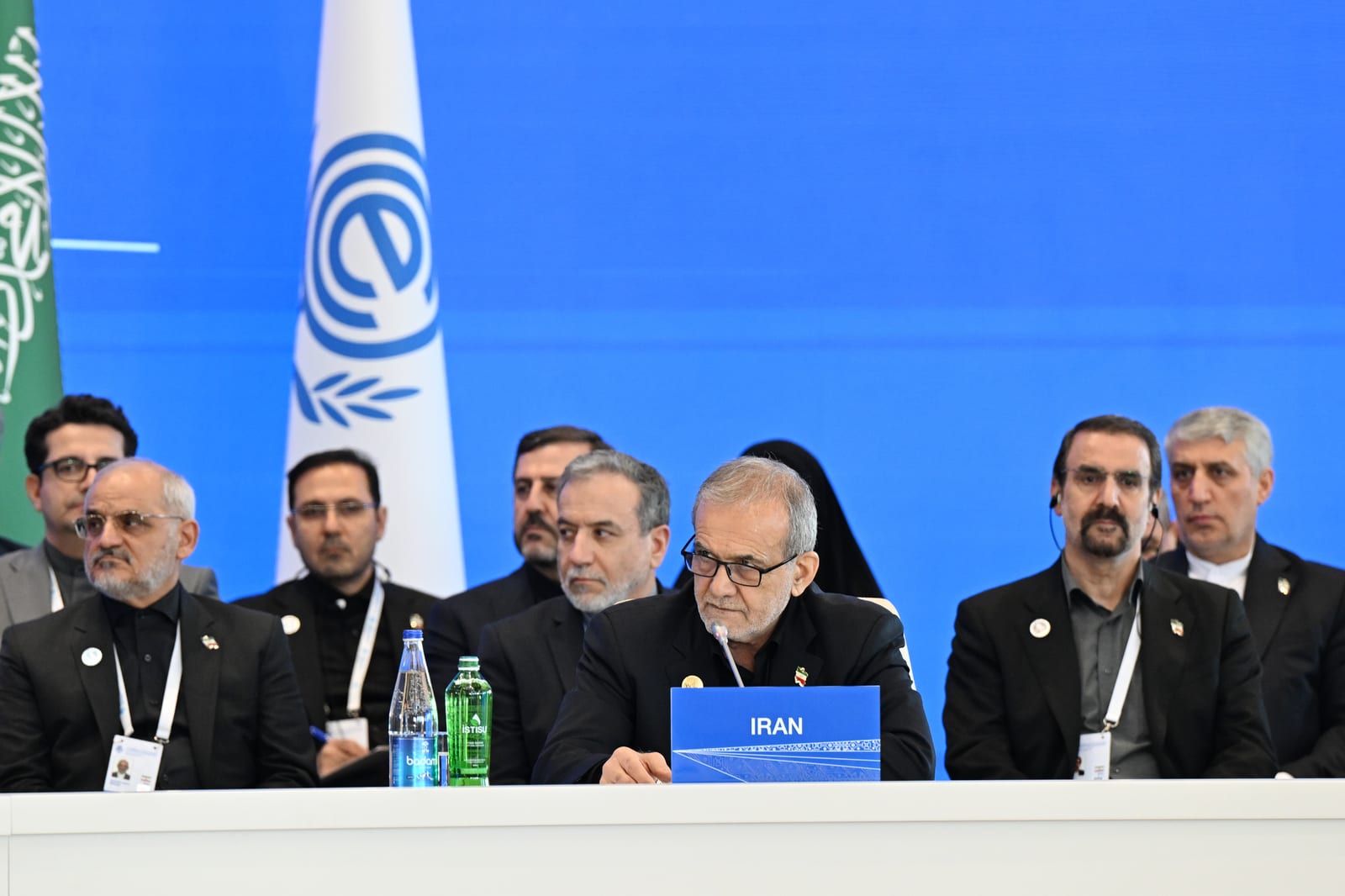
Iran’s foreign minister Abbas Araghchi addressed the same session from the other side, saying the United States “chose a completely different path” of aggression and economic pressure, and that the territory, airspace and facilities of regional countries “must not become a platform for attacks against one another”. He named trade, transport and energy as the “three strategic pillars” of cooperation inside the organisation, welcomed the negotiating committee for the ECOTA revision and urged other members to join it, and called for a reliable regional energy mechanism to safeguard flows of energy. On trade, transport and energy, then, the communiqué and the Iranian position point the same way.
Afghanistan, and the road to Tehran
Afghanistan’s absence was the other visible gap, and Dar addressed it directly. He said the country whose interim government Pakistan does not recognise has had its ECO membership suspended, that Islamabad was ready to work with Kabul on every issue, and that its condition was that Afghan territory should not be allowed to be used for terrorist activities against neighbouring countries, particularly Pakistan. He noted that Pakistan had allowed the United Nations to move 1,000 containers of humanitarian assistance into the country.
The next milestones are fixed. Dar wished Iran success as host of the 18th ECO Summit in Tehran on 3 and 4 December, the summit the Islamabad meeting was meant to prepare, and said Pakistan had invited members to the 31st Council of Ministers and the 19th ECO Summit, both of which it will host in 2027. Dar also used the briefing to confirm that Pakistan will host the apex committee of the Makkah defence alliance later this month, a meeting that KhabarWire described earlier this month when it had not been formally announced.
Neither document carries an enforcement mechanism of its own. The trade language points at a negotiation that has not yet produced a zero draft, the connectivity language points at customs procedures that each member state must adopt, and the rejection of unilateral coercive measures has no machinery attached to it at all. Dar’s own framing was that the task now is translation: “Our task now is to translate our collective commitments into concrete action”, he said, according to The Express Tribune, and the first test of whether that happens is the Tehran summit in three weeks. KhabarWire follows the chairmanship year in its Pakistan and the ECO hub.