Reporting snapshot · 11 November 2026 (Asia/Karachi). The schedule, capacity and performance figures rest on statements by the Prime Minister's Office and the Pakistan Atomic Energy Commission at the ceremony; neither published the project contract or a revised commissioning timetable. The September 2030 generation date may change as testing proceeds.
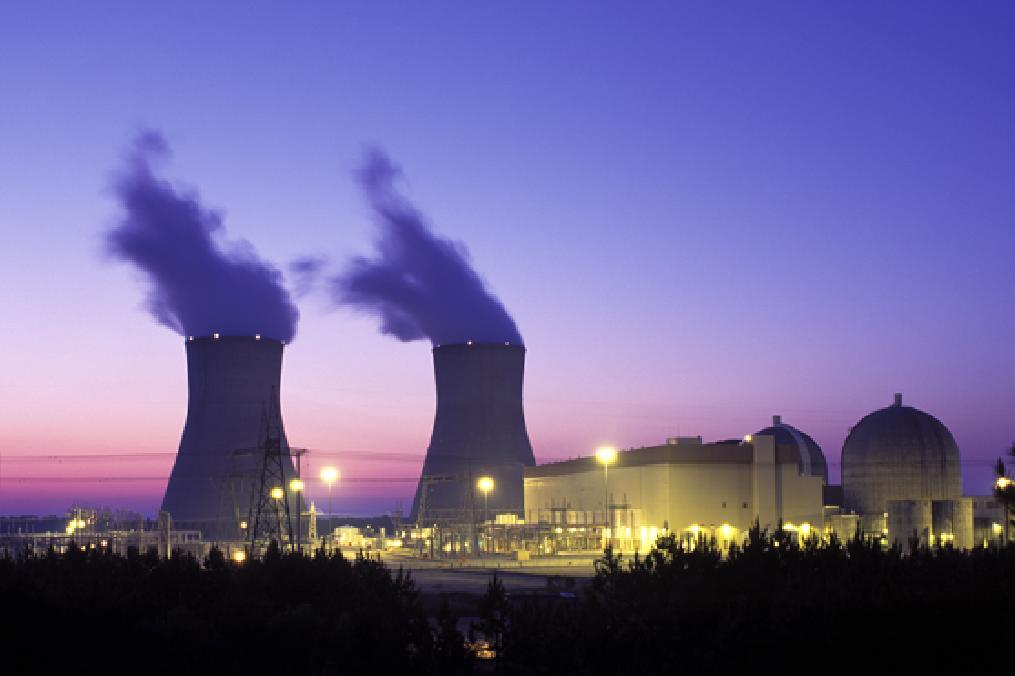
The Pakistan Atomic Energy Commission placed the dome on the containment building of the Chashma-5 nuclear reactor on 10 November, a construction milestone for a 1,200-megawatt unit that the commission expects to begin generating electricity in September 2030.
The dome was installed at the Chashma nuclear complex in Mianwali district, Punjab, where Prime Minister Shehbaz Sharif and Chief of Defence Forces Field Marshal Asim Munir attended a ceremony, the Express Tribune reported. The prime minister said the dome had gone up less than three and a half years after the July 2023 groundbreaking, ahead of schedule, and that he expected the unit to be commissioned earlier than planned.
The plant will have a gross capacity of 1,200 megawatts and use a pressurised-water reactor, the Express Tribune reported. The statement issued by the Prime Minister’s Office, carried by Pakistan Today, put the start of electricity generation in September 2030 and described the dome as the latest step in a project built with Chinese assistance.
What the dome closes off
Chashma-5’s containment building is the reinforced shell around the reactor, designed to hold in radioactive material if the reactor’s cooling system fails. The dome is its roof. Placing it closes the structure and allows work to shift from major civil construction to installing and testing the systems inside, before fuel can be loaded and the reactor connected to the grid.
The ceremony did not amount to a declaration that construction is finished. The Pakistan Atomic Energy Commission, which owns and operates the plant, did not say how much internal fit-out remains, when it expects to load fuel, or when it will apply to the Pakistan Nuclear Regulatory Authority for permission to operate. Those steps will set the real distance between the dome placement and the first unit of electricity.
The prime minister’s claim that the project is ahead of schedule is also untested. The government has not published the baseline construction schedule against which the dome placement can be measured. The comparison available is with the July 2023 groundbreaking that the prime minister cited. First concrete at the site was poured on 30 December 2024, which is the point from which construction timelines are usually measured, according to KhabarWire’s account of the World Nuclear Industry Status Report.
Seven reactors, one supplier
Sharif described Chashma-5 as the seventh nuclear unit China had helped Pakistan build, thanking Chinese President Xi Jinping, the China Atomic Energy Authority and the China National Nuclear Corporation, the state-run Associated Press of Pakistan account carried by Geo News said.
The existing fleet bears that out. Four Chinese-built units already operate at Chashma, and two larger Chinese-designed reactors, Kanupp-2 and Kanupp-3, operate outside Karachi. All six were supplied by the China National Nuclear Corporation, a relationship that has survived changes in government in Islamabad and repeated international scrutiny of China’s nuclear exports to a state outside the Nuclear Non-Proliferation Treaty.
Pakistan is not a party to the treaty. Its safeguards are applied through item-specific agreements with the International Atomic Energy Agency, and the IAEA board approved a safeguards agreement for Chashma-5 in March 2026, a step KhabarWire reported at the time. The agreement sets the terms for agency verification of the reactor’s nuclear material.
The prime minister also tied the project to the second phase of the China-Pakistan Economic Corridor, framing the reactor as part of a wider economic partnership rather than an isolated energy contract. For Pakistan, the practical value of that framing depends on the terms of the deal, which have not been published.
Where 1,200 megawatts fits
The atomic energy commission’s chairman said Pakistan’s operating nuclear plants were generating 3,530 megawatts, or about 16.6 per cent of the country’s electricity, from 8.6 per cent of its installed capacity, Geo News reported. That gap reflects the way nuclear plants run: close to full output for long periods, unlike solar farms whose output rises and falls with daylight.
Nuclear’s share of generation rises to about 26 per cent in winter, the chairman said, when hydropower output falls and the grid leans more heavily on firm generation. The same statement said the fleet avoided about 15 million tonnes of carbon dioxide emissions a year.
On the commission’s figures, Chashma-5 would increase Pakistan’s nuclear capacity by roughly a third. It would not, on its own, transform the power system. The unit is due to arrive after years in which solar has grown faster: the World Nuclear Industry Status Report found that Pakistani solar generation overtook nuclear output in 2025, KhabarWire reported in October. Nuclear still supplies steady, dispatchable low-carbon power that solar cannot, but the comparison shows how quickly the grid’s mix is changing.
The terms the ceremony did not settle
The statements issued for the ceremony did not disclose the project’s final cost, the tariff at which its electricity will be sold, the financing terms, the fuel-supply arrangement or plans for spent fuel. Nor did they give a revised construction schedule beyond the September 2030 target.
Those are not secondary details. Nuclear plants are expensive to build and cheap to run, so the price of their electricity depends heavily on how the construction debt is structured and repaid. The World Nuclear Industry Status Report, which KhabarWire reported on in October, noted that debt repayment is a large part of the cost of the Kanupp-2 and Kanupp-3 reactors, citing the Pakistan Economic Survey’s description of a 12-year repayment period against an estimated 60-year operating life.
For households and factories, the relevant question is whether Chashma-5’s output lowers the average cost of generation or adds to the capacity payments that consumers already fund through their bills. The government has presented the project as a source of affordable, round-the-clock power that is insulated from imported fuel prices. That case will be settled by numbers the ceremony did not provide.
What is verified is narrower. A 1,200-megawatt reactor building at Chashma now has its dome, and the government’s current target for first generation is September 2030. Between those two facts lie fuel loading, regulatory approval, testing and grid connection — the steps that will decide whether the target holds.