Reporting snapshot · 5 October 2026 (Asia/Karachi). The World Nuclear Industry Status Report 2026 was published on 29 September, and its Pakistan chapter was reported by Dawn and Profit by Pakistan Today on 5 October. Its solar figure is an estimate built largely from panel-import data and is likely to undercount privately installed systems. This is a dated synthesis, not a live reading of the grid.
What happened
Pakistan generated more electricity from solar panels than from its nuclear reactors in 2025, the first time that has happened, according to the World Nuclear Industry Status Report (WNISR) 2026. The independent report, released on 29 September and reported by Dawn and Profit by Pakistan Today on 5 October, puts Pakistani solar generation at 36.3 terawatt-hours (TWh) against a record 22.5 TWh from nuclear — about 60 per cent more from the sun than from the atom.
Nuclear output rose 3.7 per cent from 21.7 TWh in 2024, an all-time high for the fleet, the report says. Solar grew far faster. WNISR describes the 36.3 TWh figure as “highly underestimated”, because a large share of Pakistan’s panels sit behind the meter, on rooftops and in fields, and never pass through the public grid. The report’s data run to July 2026.
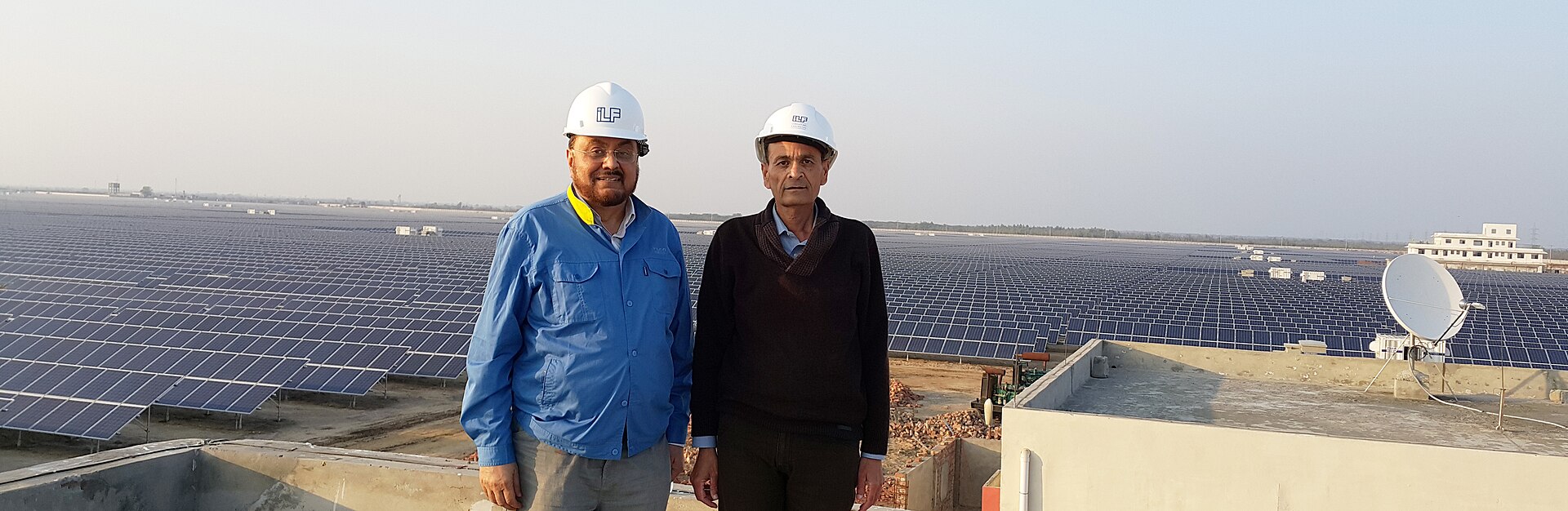
The mechanism behind the surge is visible in trade statistics. Pakistan imported more than 58 gigawatts (GW) of solar panels from China between the start of 2017 and mid-2026, of which about 40 GW — 69 per cent — arrived in the two and a half years from 2024 to mid-2026. That made Pakistan the second-largest single-country market for Chinese panels after the Netherlands, a European distribution hub, and China’s biggest customer in 2025. “Pakistan installed in five years about twice as much solar capacity as France did in a decade,” the report says. By the summer of 2025, solar had become the country’s single largest source of electricity.
The nuclear picture is more mixed. Pakistan operates six reactors with a combined capacity of 3,262 megawatts (MW), all built by the China National Nuclear Corporation: two Hualong One units, Kanupp-2 and Kanupp-3, outside Karachi, and four 300 MW CNP-300 units at the Chashma plant in Mianwali district. The 90 MW Kanupp-1 reactor, a Canadian CANDU unit, closed in 2021 after 50 years. A fifth Chashma unit, the 1,000 MW Hualong One known as C-5, is under construction after a first concrete pour on 30 December 2024 and is expected to be completed by 2030. WNISR calls it China’s only ongoing nuclear new-build project abroad.
Why it matters
The finding is a milestone in a transition that has been driven mainly by households and businesses rather than by state planning. WNISR attributes the shift to economics: grid electricity has become expensive enough that self-generation pays, and Pakistan’s position at the end of a long, crisis-prone fuel supply chain — a Hormuz-centred energy system that KhabarWire examined in March — has sharpened that calculation. The same import data help explain a puzzle officials had struggled with: electricity consumption from the public grid has fallen despite economic growth, because much of the new demand is being met off-grid.
For policymaking, the report is a reminder that official energy statistics lag reality. If solar is already the largest single source of electricity but a large slice of it is invisible to the grid operator, then tariff assumptions, capacity payments and fuel-import forecasts may all rest on an undercount. The government has already been adjusting the rules around the boom: in April, Nepra withdrew a licence requirement and a Rs1,000 per kilowatt fee for small net-metering consumers, a retreat after public criticism, while debate over net-metering tariffs and taxes on panels continues.
The report also complicates the argument that nuclear is the cheap, low-carbon backbone of Pakistan’s future. Nuclear output is growing and provides firm, dispatchable power that solar cannot, and the fleet’s expansion continues through Chashma-5, whose IAEA safeguards Pakistan secured in March. But WNISR notes that debt repayment is a large part of nuclear generation cost: for Kanupp-2 and Kanupp-3, it cites the Pakistan Economic Survey 2025-26 as saying the 12-year repayment period amounts to just 20 per cent of the reactors’ estimated 60-year economic life. Solar’s cost curve, meanwhile, keeps falling, and its fuel is free at the point of use.
What is still uncertain
The central caveat is the one WNISR itself supplies: its Pakistan solar figure is an estimate, not a metered total, and the report says it is probably too low. There is no independent government figure for behind-the-meter generation to check it against, and no third-party audit of the import-to-generation model.
The report is also not a neutral industry scorecard. It is funded by the German Federal Office for the Safety of Nuclear Waste Management, the Austrian environment ministry, the Greens/EFA group in the European Parliament and the Swiss Energy Foundation — backers with a documented interest in nuclear scepticism. Its nuclear data are drawn largely from the sector’s own reporting, but readers should weigh the framing accordingly.
Two further questions are unresolved. First, whether the solar boom continues at this pace depends on policy the government can change: net-metering terms, import duties and whether the grid can absorb more variable supply. Second, the report does not settle how much of the private solar fleet is displacing grid electricity as opposed to supplementing supply in places that never had it reliably. The direction of travel is clear; the precise size of the shift is not.
Sources & reporting notes
This is a synthesis of published material, not eyewitness reporting. Sources were reviewed on 5 October 2026 (Asia/Karachi). All Pakistan-specific generation, capacity and import figures are taken from the World Nuclear Industry Status Report 2026 as reported independently by Dawn and Profit by Pakistan Today; the underlying PDF was not independently audited. The report's data set ends in July 2026, and its solar estimate is modelled from import and capacity data rather than metered generation.
- World Nuclear Industry Status Report 2026 — primary reportPublished 29 September 2026 · The 596-page report's Pakistan findings: nuclear output of 22.5 TWh, the comparison with 36.3 TWh of solar, the six-reactor fleet, the Chashma-5 timeline and the Kanupp-2 and Kanupp-3 debt-repayment note.
- Dawn — Nuclear power output rises 4pc to record highPublished 5 October 2026 · Khaleeq Kiani's account of the WNISR 2026 findings, including the 36.3 TWh solar figure, the 58 GW of panel imports since 2017 and the report's funding sources.
- Profit by Pakistan Today — Pakistan's solar generation overtakes nuclear power for first timePublished 5 October 2026 · Independent carry of the same figures, including the 69 per cent share of panel imports that arrived in 2024 to mid-2026 and the "twice as much as France in a decade" comparison.