Reporting snapshot · 8 November 2026 (Asia/Karachi). The committee has published no auction date, reserve price or draft rules, and its decisions are known from ministerial briefings rather than a standalone text, so the timetable, bidding terms and price effect may change. The price figures below are market reports, not a new official rate.
What the committee decided
Pakistan’s new committee for liquefied petroleum gas (LPG) held its first meeting in Islamabad on 7 November and agreed the operating rules for auctions of locally produced fuel: 10 per cent of output will be reserved for state-owned marketing companies serving remote areas, 90 per cent will be sold through public auctions attended by the media, and no single company will be allowed to buy more than 20 metric tonnes a day. Geo News reported the decisions on 7 November, and Pakistan Today carried the same figures on 8 November, attributing them to a Petroleum Division statement and to Petroleum Minister Ali Pervaiz Malik.
The committee is chaired by the petroleum secretary and includes representatives of the Oil and Gas Regulatory Authority (OGRA), the state explorer Oil and Gas Development Company Limited, Pakistan State Oil and United Energy Pakistan Limited, Pakistan Today reported. It will review supply arrangements, assess bidding and pricing rules, and send daily production figures to Prime Minister Shehbaz Sharif, the newspaper said.
The federal cabinet approved the deregulated framework on 4 November, when it decided to replace discretionary LPG quotas with competitive sales, as KhabarWire reported. That announcement said locally produced gas would be auctioned in lots of five and 10 tonnes but did not set a buyer cap, name the full committee or say how daily output would be reported. The 7 November meeting filled in those points.
Why the 20-tonne limit matters
The cap is the most consequential of the new rules because it decides how the market is shared out. Freed of quotas, a single large marketer could in principle outbid smaller rivals for most of the fuel on offer; a daily ceiling forces the auction to spread supply across more buyers. Pakistan Today reported that the limit is intended to give smaller firms a chance to compete.
The arithmetic shows how strong that constraint could be. The petroleum minister has put domestic production at about 2,000 to 2,500 tonnes a day, The Express Tribune reported after the 4 November announcement. If 90 per cent of that reaches auction, about 1,800 to 2,250 tonnes would be divided each day. At 20 tonnes a buyer, the auction would need roughly 90 to 112 participating companies to clear the volume — a scale that would test the number of licensed marketers and the logistics of daily allocation. That calculation assumes every tonne is auctioned every day and that no company buys through more than one entity, both of which the published rules do not settle.
A cap also has costs. Daily parcels of 20 tonnes are small for a fuel that is moved in bowsers and stored at filling plants, and splitting supply among many buyers can raise handling and transport costs that are eventually passed to households. The government’s case is that the gain from breaking concentration and ending discretionary allocations outweighs that friction. Whether it does will depend on how the auctions are actually run, a question the committee is still working through.
Prices, imports and the winter squeeze
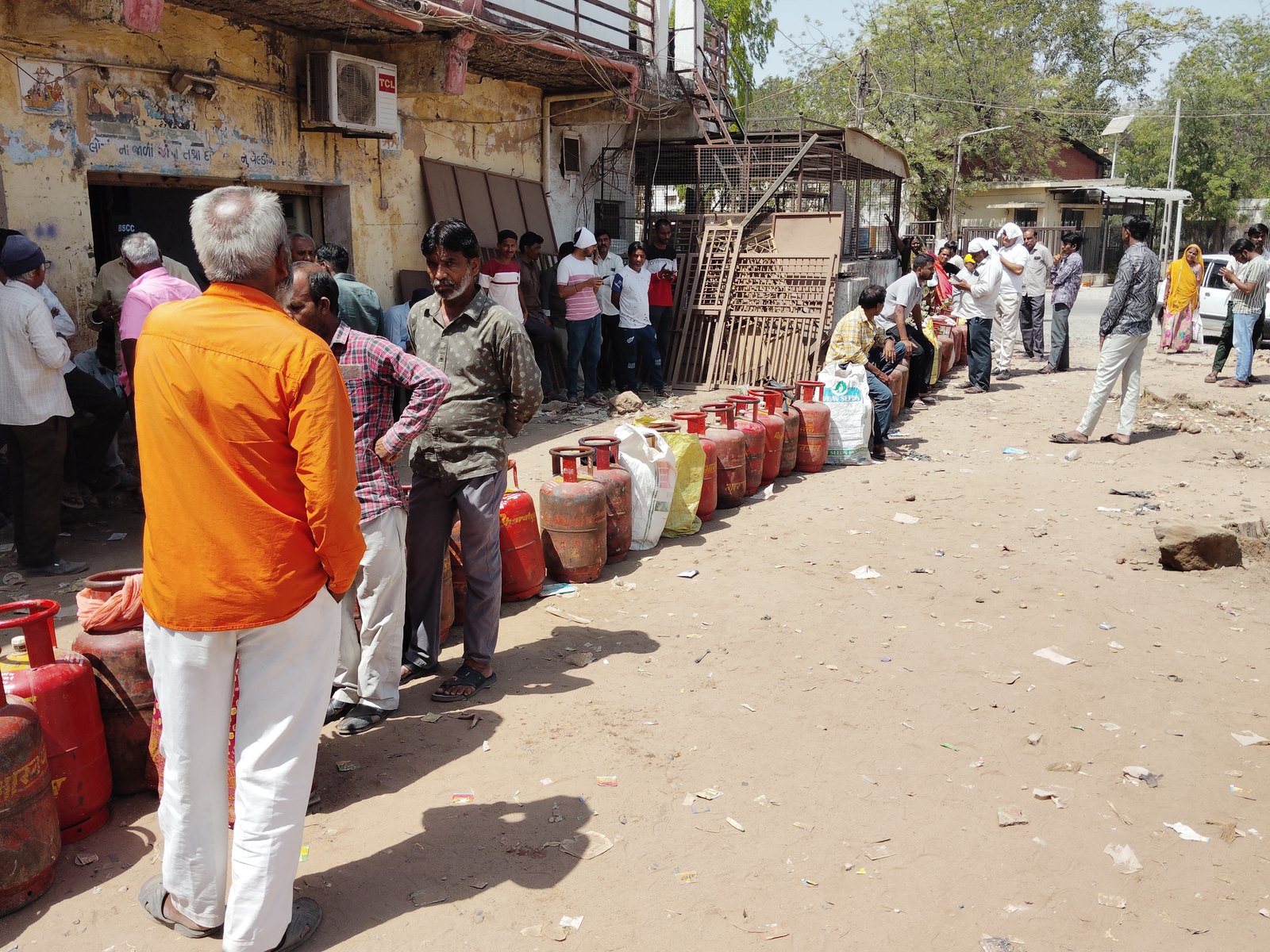
The rules land in the middle of a price squeeze. Pakistan Today reported that the price of a 12-kilogramme cylinder rose from about Rs4,500 to around Rs7,000 after the Gabd-Rimdan and Taftan crossings with Iran closed on 17 October, cutting off overland imports. The report, citing the Pakistan LPG Association, put normal imports from Iran at about 7,000 tonnes a day. The crossings have since reopened, but the episode exposed how quickly the market reacts to a border closure.
The disruption compounded an existing gap between official and market prices. At the 4 November briefing, Malik said some sellers had charged Rs700 to Rs800 a kilogramme, The Express Tribune reported, describing a market in which supply had moved into informal channels. KhabarWire documented the same divergence in its report on the cylinder-price crisis and in its account of the pricing formula and paused imports.
Geo News reported that four state-owned companies would re-enter the import business under the cabinet’s framework, that the government plans subsidised LPG at Rs300 to Rs350 a kilogramme for Benazir Income Support Programme beneficiaries, and that about $1 billion of investment in terminals, storage, cylinders and transport is planned over three to five years. The same report put existing storage capacity at about 100,000 tonnes, including roughly 14,000 tonnes at seaports, with about 2,600 bowsers and five million cylinders in circulation.
Demand rises in winter, when households without piped gas cook and heat with cylinders. That seasonal pressure is why the government wants the mechanism running before the coldest months. It is also why the auction rules are being watched beyond the companies involved: for consumers, the practical question is whether more competition at the wholesale stage reaches the cylinder price on the street.
What is still uncertain
The first unknown is timing. No date has been given for the first auction, and the committee has not published reserve prices, bidder eligibility rules or the legal instrument behind the mechanism. Without those, companies cannot know the cost of participating or the volume they will secure.
The second is how auctions interact with regulated pricing. The new framework does not say whether OGRA’s monthly price notifications will continue, whether they will reflect auction results, or how the 10 per cent reserved for state companies will be priced. If the two systems diverge, the auction price may have little bearing on what households pay.
The third is the subsidy. The government has said it intends to sell LPG at Rs300 to Rs350 a kilogramme to eligible households through the Benazir Income Support Programme, but it has not published eligibility thresholds, the funding source or how the subsidy will be delivered at the cylinder. A subsidy that does not reach the counter would leave low-income buyers exposed to the market rate.
The fourth is enforcement. A 20-tonne daily limit is only meaningful if the committee can track purchases across affiliated companies and verify daily production. The committee’s plan to report production figures to the prime minister suggests close monitoring, but the rules do not yet describe the records companies must keep, the penalties for breaching the cap, or how auctions in different cities will be coordinated.
Until those details are published, the 7 November decisions should be read as the operating outline of a reform rather than a settled market design. KhabarWire follows the LPG file in its Pakistan LPG Policy & Prices hub.