Reporting snapshot · 16 November 2026 (Asia/Karachi). The redeployment was announced on 15 November and the front is still moving, so how much of the strait the Houthi forces can now hold is not established. Both sides' claims about missile launches and aircraft losses rest on their own statements, and no independent assessment of the ground around Bab al-Mandeb was available when this was written.

Yemen’s government forces announced on Sunday, 15 November, that they were pulling their troops out of the Bab al-Mandeb area and Dhubab airport to reinforce the interim capital, Aden. The Southern Armed Forces said the redeployment was “based on the priority of securing the capital, Aden, and the neighbouring governorates, as well as strengthening the front lines and addressing existing threats”, Al Jazeera reported.
The announcement came on a day when the Saudi-led coalition fighting the Houthis said it had shot down two ballistic missiles fired towards Riyadh and intercepted drones over the Mecca and Medina regions, the same outlet reported. Taken together, the two developments describe a war that has shifted from a counteroffensive at the mouth of the Red Sea to a stand around Aden, while the Houthis widen their strikes against Saudi Arabia.
The army gives up its strait positions
The withdrawal undoes most of a September counteroffensive. Houthi fighters had swept along Yemen’s western coast that month, almost seizing the strait, and the Saudi-backed government forces answered with a rapid push that retook Dhubab and other positions near the waterway, though it never dislodged the Houthis from Mocha or other coastal towns, Al Jazeera reported. The Guardian described the September Houthi drive as a lightning-strike offensive and called the strait “another chokepoint in the flow of oil and energy supplies from Gulf producers”, The Guardian reported.
Reinforcements are also to be sent to Taiz, where the Houthis’ siege has blocked aid deliveries and trapped civilians, and where about half of Yemen’s displaced population is now living. The World Health Organization put the fighting’s toll since the 2022 ceasefire collapsed at 11,755 casualties, including 2,098 people killed, as of 8 November, Al Jazeera reported.
The Houthis say they have taken highland areas north of Aden and are preparing to advance on the city itself. On the government side, the army spokesman Majed al-Nuzaili called on the international community to help return Bab al-Mandeb and Yemen’s west coast to government control, stressing that the strait was vital for freedom of maritime navigation and international trade.
Missiles over Riyadh and a strike near Aden
Coalition spokesman Major General Turki al-Maliki said air defences had “intercepted and destroyed two ballistic missiles launched by the Houthi terrorist militia towards Riyadh”, and that three drones were shot down in Saudi Arabia’s Eastern region, Al Jazeera reported. Two suspected Houthi drones had been intercepted in the Riyadh and southern regions the previous day. The Houthis denied the Mecca claim as “a blatant lie”, while their military spokesman Yahya Saree said the group had shot down an armed Saudi reconnaissance aircraft over al-Jawf, the fifth such claim since the escalation began.
The salvos were not the only casualties of the day. A Houthi missile strike on a checkpoint in Khor Omeira, in Lahj province near Aden, killed five people and injured eight, Agence France-Presse reported. Saudi Arabia’s authorities said at least 26 people had been killed in suspected Houthi drone and missile attacks since 23 September, and the US embassy in Riyadh issued a nationwide security alert, warning that hostilities could spread “rapidly”, Al Jazeera reported.
The Houthis have repeatedly targeted King Khalid International Airport, the East-West pipeline and oil infrastructure in eastern and southern Saudi Arabia, Al Jazeera reported. The International Organization for Migration put the number of Yemenis displaced since August at more than 340,000, the same report said.
What the strait controls
Bab al-Mandeb is the southern gate of the Red Sea and the chokepoint that guards the sea lane towards Suez, which is why a withdrawal from its approaches matters beyond Yemen. Forces aligned with the Houthis already hold territory north of Aden, and a push down the coast would put Houthi-controlled territory across the seaward approaches to the Gulf of Aden, where the Red Sea, the Gulf of Aden and the Indian Ocean meet.
That is the same reasoning Pakistan used at the United Nations Security Council on 14 November, when its ambassador, Syed Haider Shah, told the council that the “strategic importance” of Bab el-Mandeb and the Strait of Hormuz made threats to navigation and attacks on merchant vessels a danger to seafarers, international commerce and food and energy security, Geo News reported. Islamabad has been pressing the council for protection of Gulf shipping since the war widened, as KhabarWire reported.
Where Pakistan stands
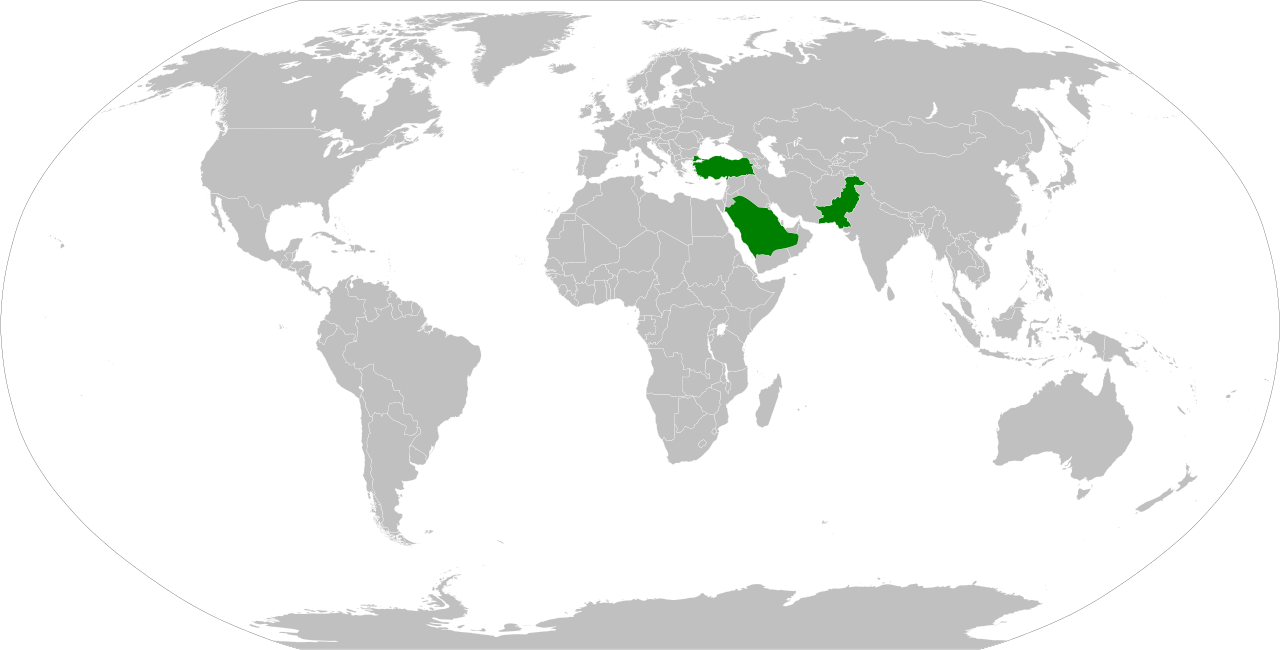
The strike towards Riyadh lands on a state that Pakistan has bound itself to. Under the Makkah Joint Defence Agreement signed with Saudi Arabia and Türkiye in August, an attack on one signatory is treated as an attack on all three, and Türkiye’s ratification law entered force when it was published in the Official Gazette on 14 November, The Express Tribune reported. Pakistan’s military chief has already set out the defensive measures that commitment involves, as KhabarWire reported, and the pact’s terms are tracked in the Makkah defence pact hub.
The wider war is not pausing to let any of this settle. Iran struck a US radar site at Bahrain’s Riffa air base twice in three days, on 13 and 15 November, and KhabarWire reported on Sunday’s attack. Islamabad’s mediation work now runs against a widening set of fronts: The Guardian reported that Iranian media expect foreign minister Abbas Araqchi to travel to Oman on Tuesday for talks with his Omani counterpart, one of the channels that has carried the ceasefire track.
The next markers
Three things will show whether the withdrawal holds. The first is whether the Houthis push south towards Aden’s southern districts and the port, which would open the interim capital itself to direct assault. The second is whether the Houthi fire continues at the same rate against Saudi airfields and energy sites, where so far the coalition’s account of the interceptions is the only confirmation. The third is whether the Security Council takes any step on the maritime-security appeals Pakistan has pressed, or whether the diplomatic channel through Oman and Qatar survives a war now spanning Yemen, Bahrain, Saudi Arabia and Iran.
For Pakistan, the exposure is not abstract. Its mediation role, its defence commitments in the Gulf and its interest in keeping the region’s sea lanes open are all being tested at once, and the retreat from Bab al-Mandeb has added one more chokepoint to the list of places where the region’s fighting can be felt.