Reporting snapshot · 22 October 2026 (Asia/Karachi). The State Department says its order covers Saudi Arabia only and disputes reports of wider Gulf withdrawals; the attribution of Wednesday's attacks and the prospect of renewed US strikes on Iran remain unsettled. Casualty figures are those released by Saudi authorities.

What happened
The US State Department ordered non-emergency US government employees and their family members to leave Saudi Arabia on Wednesday, 21 October, citing a wave of Houthi attacks on civilian airports and other infrastructure. Spokesperson Tommy Pigott said the Houthis had “increasingly engaged in hostilities against Saudi Arabia”, including attacks on airports that caused civilian casualties and severe travel disruption, the Guardian reported. The order covered the embassy in Riyadh and its satellite consulates, according to the newspaper.
The announcement followed another night of attacks. Saudi authorities said one Saudi resident was killed and eight people were injured in attacks on King Fahd International Airport in Dammam, on the Gulf coast, the Guardian reported. Flight-tracking service Flightradar24 said flights had been diverted from the airport. Separately, the Saudi energy ministry said falling debris from the interception of a drone targeting an oil facility in the south-east killed two people, a Filipino and a Nepali, and injured two others, AFP reported via Geo News. The ministry did not identify who launched the drone.
The Houthis did not immediately claim either attack. The group has said it is targeting Saudi airports and energy sites in retaliation for Saudi-led strikes on territory it controls in Yemen. Saudi Arabia and its allies blame the Iran-aligned movement for the campaign, which has intensified since a four-year truce in Yemen’s civil war collapsed in June.
The State Department’s order was narrower than some early reports suggested. Pigott described reports that Washington was also withdrawing families from missions in the United Arab Emirates, Jordan, Qatar and Bahrain as “inaccurate”, stressing that the order applied to Saudi Arabia only, the Guardian reported. Reuters, citing four US officials, had said other Gulf missions would also order family members to leave, Al Jazeera reported. AFP’s diplomatic source said families had been told to leave the UAE, Jordan, Qatar and Bahrain as well, Geo News reported. The discrepancy had not been resolved by early on 22 October.
Why Washington is drawing down now
The US embassy in Riyadh was badly damaged at the start of the US war on Iran in late February and had been operating with a skeleton staff for months. Some diplomats had returned in recent weeks before Wednesday’s order, the Guardian reported. Washington had also ordered non-essential staff to leave the Gulf before the war began and again in July, when President Donald Trump called off a new wave of strikes, Al Jazeera reported.
The immediate trigger is the pace of the Houthi campaign. Saudi Arabia has faced near-daily missile and drone attacks this month, including a strike on Riyadh’s King Khalid International Airport that was the deadliest on the kingdom in more than a decade. The BBC reported that Saudi authorities said last week that 19 people had been killed in attacks on the kingdom’s airports, including the 10 October strike on Riyadh’s airport. Saudi Arabia has struggled to intercept the attacks because much of its air-defence capacity was used against Iranian attacks earlier this year, the BBC reported.
The drawdown is also a political signal. The Guardian reported that the New York Times had said the US and Israel were developing plans for a “short but intensive operation” against Iran after the US midterm elections on 3 November, and that Trump had publicly said he did not intend to restart the war before the vote. No decision has been announced, and the White House has not published an operational timetable.
Regional allies are moving in parallel. Britain said it would deploy RAF Typhoon jets to defend Saudi cities and infrastructure, in a defensive role, the BBC reported. Egypt’s President Abdel Fattah al-Sisi said Cairo would defend Saudi Arabia and other Arab states if requested, but ruled out military action against Yemen, The Express Tribune reported. Türkiye plans to seek parliamentary authorisation to send military personnel to Saudi Arabia under its defence agreement with Riyadh and Islamabad, the paper reported, citing a ruling-party lawmaker. French President Emmanuel Macron also made a surprise visit to Riyadh.
Why Pakistan is exposed
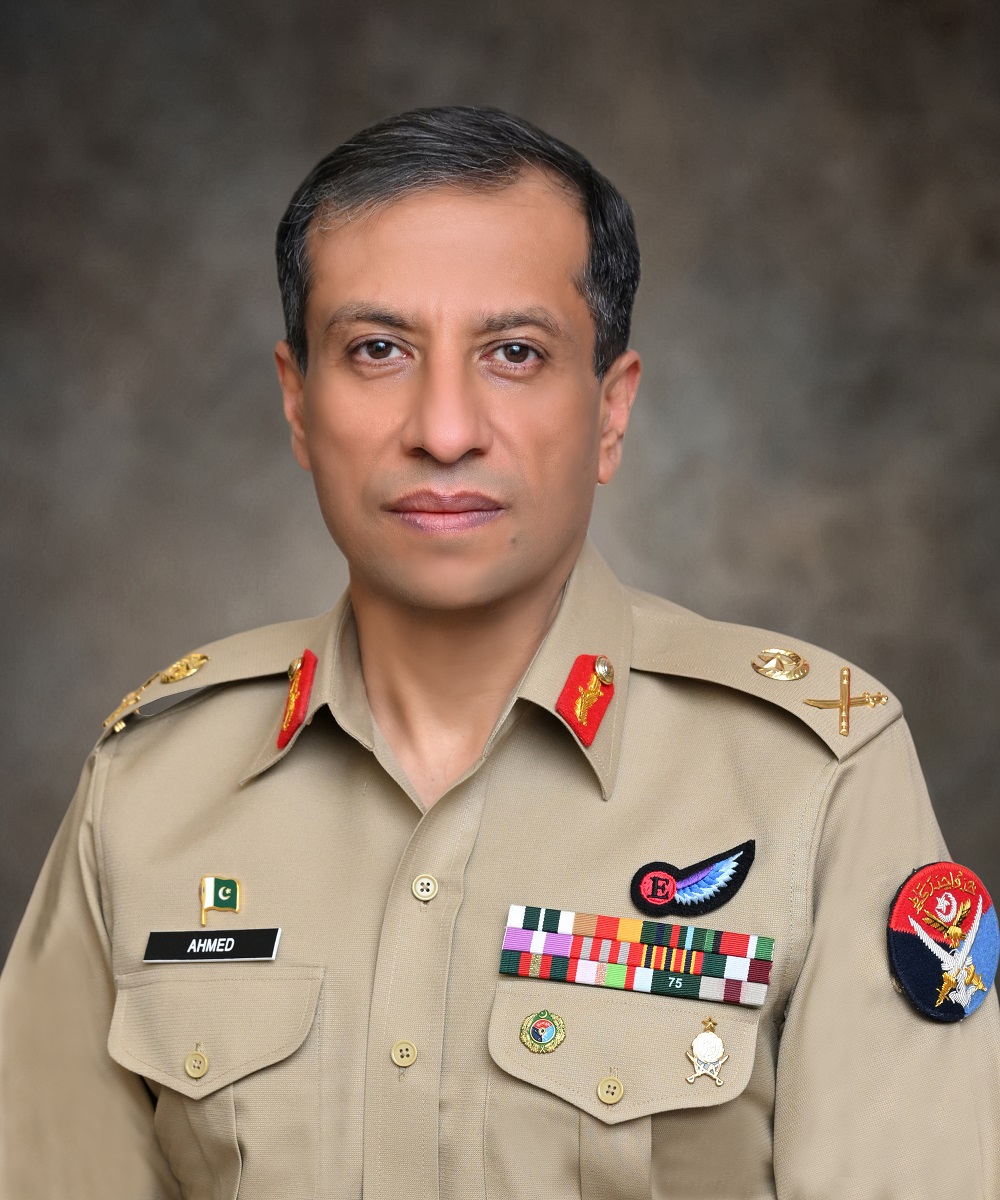
Pakistan is a signatory to the Makkah Joint Defence Agreement with Saudi Arabia and Türkiye, and its forces are already in the kingdom in what the military describes as long-standing, multi-domain roles. On 7 October, the director-general of Inter-Services Public Relations, Lieutenant General Ahmed Sharif Chaudhry, confirmed that Pakistani troops were present in Saudi Arabia in “multiple capabilities and domains”, Geo News reported. Pakistan’s Foreign Office has said its forces would defend Saudi territory but would not cross into Yemen.
The evacuation order does not change those obligations directly. It is a US diplomatic decision, not a change to the Makkah pact or to Pakistan’s deployment. But it is a measure of how seriously Washington views the threat to the kingdom, and it lands as Pakistan tries to balance three interests: the security of about two million Pakistanis working in the Gulf and their remittances, the energy costs of a wider Gulf war, and its diplomatic channel between Washington and Tehran.
Türkiye’s planned parliamentary mandate is the next test of how far the alliance’s members are willing to go. The Express Tribune reported that the initial Turkish deployment would involve technical personnel and experts providing air-defence assistance, electronic warfare technology and other defensive support, and that they would not take part in offensive operations. Ankara has not published a timetable or force size. KhabarWire reported on 20 October that Türkiye had sent the Makkah pact to parliament for ratification, a separate step from the deployment mandate.
For Pakistan, the immediate risk is economic and consular rather than military. A wider war would threaten shipping through the Strait of Hormuz, push up oil and gas prices, and complicate the repatriation of workers from Gulf states. It would also narrow Islamabad’s room to mediate between Washington and Tehran, a role it has cultivated since brokering the April ceasefire and the June Islamabad memorandum. KhabarWire’s Makkah Defence Pact hub tracks the alliance’s decisions.
What is still uncertain
The first open question is whether the United States will extend the drawdown beyond Saudi Arabia. The State Department says no; Reuters and AFP have reported that families in several other Gulf states were also told to leave. Until the department publishes a formal travel notice or the embassies issue matching alerts, the scope remains contested.
The second is attribution. Saudi Arabia blames the Houthis for the campaign, and the group has claimed some attacks, but it did not immediately claim Wednesday’s strikes on Dammam airport or the oil facility. No independent investigation has established who launched the attacks, and Saudi officials have not published a full damage assessment.
The third is whether Washington will restart strikes on Iran. The New York Times report on planning for a post-election operation is attributed to unnamed officials and has not been confirmed by the White House. Trump has said he does not intend to act before the midterms; no operational decision has been published. A restart would widen the war, expose Gulf bases and shipping, and put Pakistan’s mediation effort under greater strain.
Finally, the casualty figures from Wednesday’s attacks are preliminary. It is not yet clear whether the person killed at Dammam airport was a passenger or an employee, and the nationality breakdown of the injured has not been published. The two people killed at Shaybah were a Filipino and a Nepali, according to the energy ministry. Further details may emerge as hospitals and investigators release more information.