Reporting snapshot · 17 October 2026 (Asia/Karachi). The Foreign Office briefing covered in this article was held on 17 October 2026 in Islamabad. Saudi Arabia's accusation that Iran continues to arm the Houthis was first made on 16 October by Saudi Foreign Ministry Deputy Minister for Public Diplomacy Dr Rayed Krimly, and Iran's denial was issued on 17 October by foreign ministry spokesman Esmaeil Baqaei. Pakistan's spokesperson for this briefing was Foreign Office Director-General and spokesperson Sajjad Haider Khan. No element of the FO briefing has been independently corroborated beyond the spokesperson's statements at the weekly press conference; the spokesperson did not name sources and remained noncommittal on a timeline for any Makkah pact invocation.

What happened
At the Foreign Office’s weekly press briefing on 17 October 2026 in Islamabad, spokesperson Sajjad Haider Khan declined to take a position on Saudi Arabia’s accusation that Iran continues to arm, train and support Yemen’s Houthi militia in violation of United Nations Security Council resolutions, while reiterating Pakistan’s broader position that regional conflicts should be resolved through diplomacy.
Asked about the Saudi Foreign Ministry’s 16 October claim that Iran was “encouraging” the Houthis’ renewed escalation against Saudi Arabia, Khan told reporters: “I would not be able to comment on the alleged accusation against Iran that you mentioned.” He added that Pakistan was “keen to see peace and stability return to the entire region, including the Middle East and West Asia, and will continue to engage with all relevant stakeholders”. The spokesperson said there was “no solution through war. Peace can only be restored through negotiations and the peaceful settlement of disputes.”
Pakistan simultaneously reaffirmed its commitment to Saudi Arabia’s security, condemned the latest Houthi attack on King Khalid International Airport in Riyadh, and said one Pakistani had been killed and six others injured in the recent attacks on the kingdom. The Pakistani mission in Riyadh was in contact with the injured and their families, Khan said. He also said Pakistan supported Saudi Arabia’s right to defend itself under Article 51 of the UN Charter.
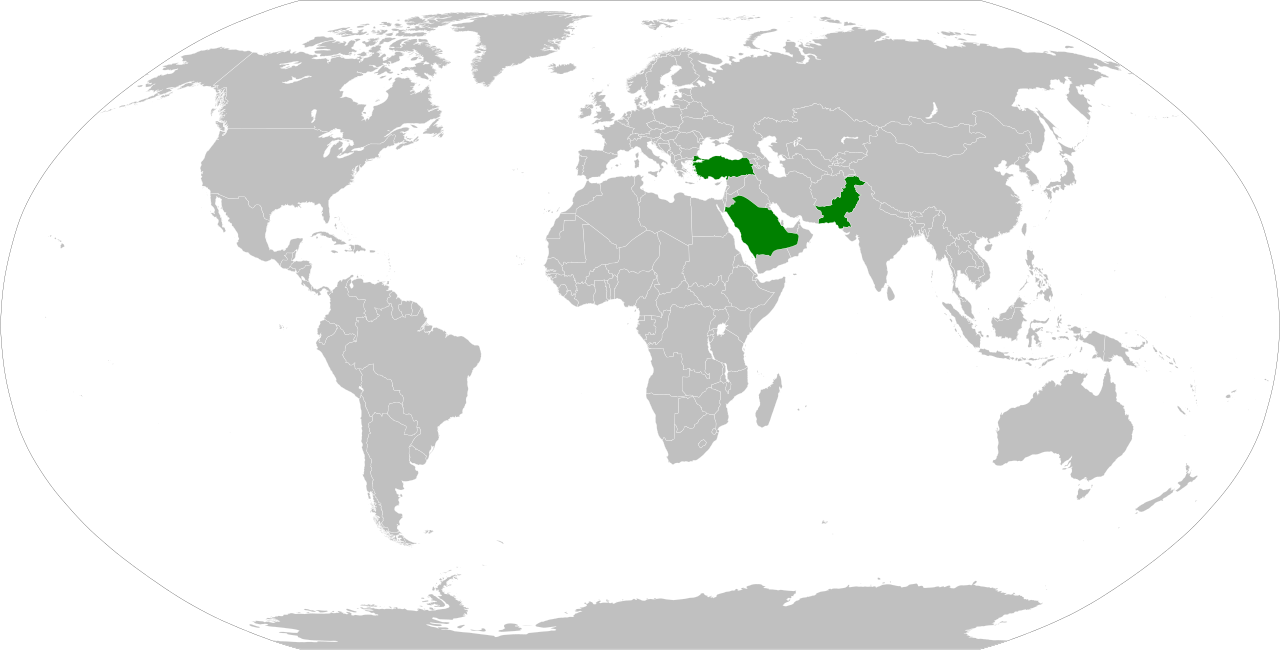
The spokesperson stopped short, however, of giving any operational timeline for the Makkah Joint Defence Agreement — the mutual-defence pact Pakistan signed with Saudi Arabia and Türkiye on 7 August 2026. Asked whether the pact could be practically invoked after repeated strikes on Saudi territory, Khan said only that “Pakistan will fulfil its obligations under these agreements” and that operational matters, including deployment and action on the ground, fell within the domain of the armed forces, the ISPR and the General Secretariat of the Makkah Joint Alliance.
In a second line of questioning, Khan played down remarks by Iranian lawmaker Mohsen Zanganeh made during a recent visit to Kabul, in which the lawmaker was reported to have questioned Pakistan’s mediation between Iran and the United States and to have suggested that even a Pakistani tweet on the issue had been written by Americans. Khan said Iran remained a “brotherly country” and that Pakistan’s role in facilitating the Islamabad MoU between Iran and the US had been appreciated by the Iranian leadership. “They may also have been taken out of context, as Iran’s leadership and people are grateful for Pakistan’s efforts,” he added, framing the comments as those of an individual lawmaker rather than an official position.
On Afghanistan, Khan said Pakistan remained open to dialogue with the Taliban but insisted on a “verifiable mechanism” ensuring a complete cessation of terrorist activities emanating from Afghan soil. He said he was “not aware of any separate, formal Russian mediation initiative”, but noted that Pakistan welcomed any “sincere efforts by friendly countries” and that the absence of a joint communiqué after the recent Moscow Format meeting was significant. “The fact that no joint communiqué was issued after the Moscow Format is self-evident that Afghanistan did not accept the formulation which had been acceptable until last year particularly about presence of terrorist network in Afghanistan,” Khan said.
Pakistan also used the briefing to formally reject renewed threats from Indian Defence Minister Rajnath Singh, with Khan warning that any aggression would receive a “forceful response”. “Our restraint and commitment to peace must never be mistaken for weakness,” he said.
Why it matters
The 17 October briefing is the clearest articulation yet of Pakistan’s tightrope between two regional allies whose dispute has escalated sharply since Yemen’s civil war flared again in July 2026. On the same day, Iran’s foreign ministry spokesman Esmaeil Baqaei formally rejected the Saudi allegation: “The Islamic Republic of Iran rejects any claim that Iran has played a role in Yemeni (Houthi) operations,” he said, while reiterating Tehran’s offer to mediate.
Pakistan’s response does not contradict its defence commitments. By reaffirming support for Saudi Arabia’s right to defend itself and reiterating Pakistan’s willingness to fulfil its Makkah pact obligations, Islamabad preserved the security guarantees in its bilateral relationship with Riyadh. By declining to endorse Saudi’s claim about Iranian involvement in Houthi operations, however, it kept open the diplomatic channel to Tehran on which Pakistan’s recent US-Iran mediation role, and the Islamabad MoU that grew out of it, depend.
The dual position is consequential because the Makkah pact does not specify the trigger conditions for collective defence, leaving each signatory to balance its commitments with its other relationships. The spokesperson’s refusal to comment on the Saudi allegation leaves operational timing a question for the armed forces and the Makkah Alliance secretariat rather than the foreign-policy spokesperson, and lets Pakistan decline to choose between the Saudi and Iranian accounts of the Houthi war without publicly contradicting either.
Pakistan’s separate handling of the Iranian lawmaker’s remarks is the second test of that balance in the same briefing. Khan’s decision to attribute the comments to an individual rather than an institutional position, and his framing of Iran as a “brotherly country”, is designed to insulate the broader Tehran relationship from a single set of reported remarks and to keep the door open for the OIC foreign ministers session in Baghdad on 17-18 October, where Pakistan and Iran were already due to hold fresh de-escalation consultations. See KhabarWire’s existing Pakistan-Iran OIC Baghdad talks read-out for the immediate backdrop to those consultations.
What is still uncertain
The spokesperson did not specify what level of Houthi attack on Saudi Arabia would trigger Makkah pact operations, and did not name a timeline for any deployment. The Foreign Office did not publish a written transcript of the briefing; the record relies on reporters who attended in person. Iran’s denial of Saudi’s allegation was issued through a foreign ministry statement carried by wire services and not in a direct exchange with Pakistan or Saudi Arabia. Pakistan’s balancing language was first developed in its 9 October FO “defensive mandate” briefing; the 17 October read-out extends that framing to Riyadh’s specific Iran accusation but does not resolve whether the Makkah pact’s invocation question can remain indefinitely open as Houthi attacks on Saudi civilian infrastructure continue.
Sources & reporting notes
This is a synthesis of published material, not eyewitness reporting. Sources were reviewed on 17 October 2026.
- Primary source — "Pakistan walks a diplomatic tightrope: FO skirts KSA-Iran row over Houthi attacks," The Express Tribune, 17 October 202617 October 2026 · Read-out of Foreign Office spokesperson Sajjad Haider Khan's weekly press briefing, including the "could not comment" line on Saudi's Iran accusation, the Makkah pact invocation question, the Iranian lawmaker remarks, the Moscow Format absence of joint communiqué and the India rejection.
- Independent source — "Iran denies backing Houthi attacks on Saudi Arabia amid fresh missile, drone interceptions," Geo News (via Reuters), 17 October 202617 October 2026 · Reuters-datelined account of Iranian foreign ministry spokesman Esmaeil Baqaei's rejection of Saudi's allegation, the Saudi-led coalition's interceptions and the UN Security Council condemnation.
- Second independent source — "Pakistan stands 'shoulder to shoulder' with Saudi Arabia, vows PM amid Houthi attacks," Geo News, 16 October 202616 October 2026 · Pakistan Prime Minister's Office statement after the new Saudi ambassador's courtesy call, recording the "shoulder to shoulder" language, the Strategic Mutual Defence Agreement and Makkah Joint Defence Alliance references, and the separate acknowledgement that one Pakistani was killed and six injured in the Riyadh attacks.