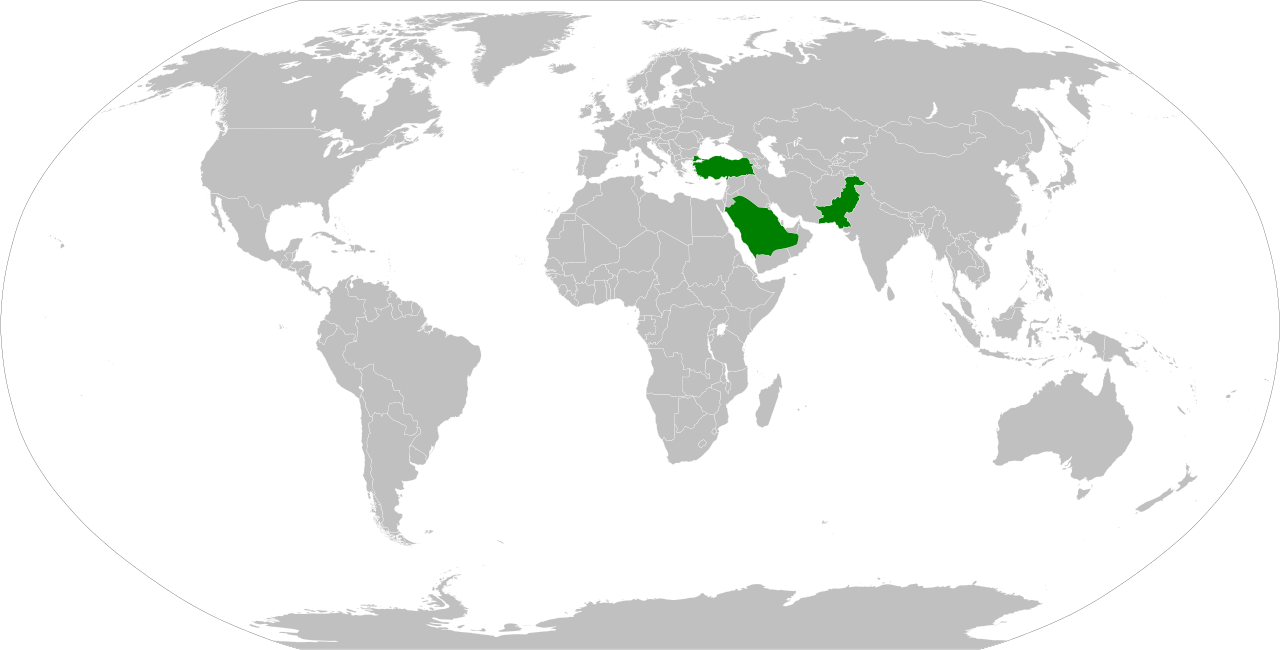
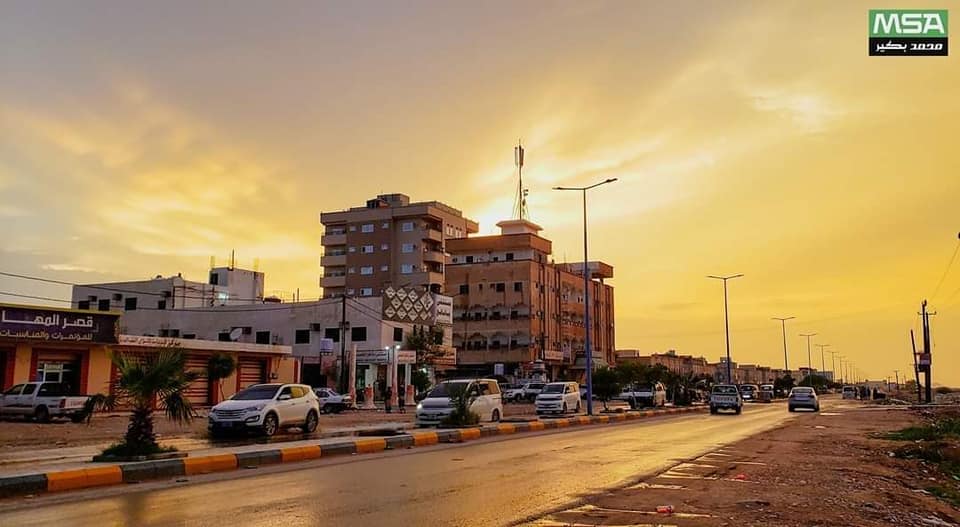
Reporting snapshot · 19 October 2026 (Asia/Karachi). DG ISPR Lieutenant General Ahmed Sharif Chaudhry told Independent Arabia on 19 October that Pakistan would "evaluate" any direct military request from Yemen's internationally recognised government and warned that the Makkah pact's "instrument of collective deterrence will definitely come into play" if Middle East diplomacy fails. The interview was carried by Geo News with Reuters input and confirmed by The Express Tribune. No Yemeni request, force package, basing detail or rules of engagement have been published.
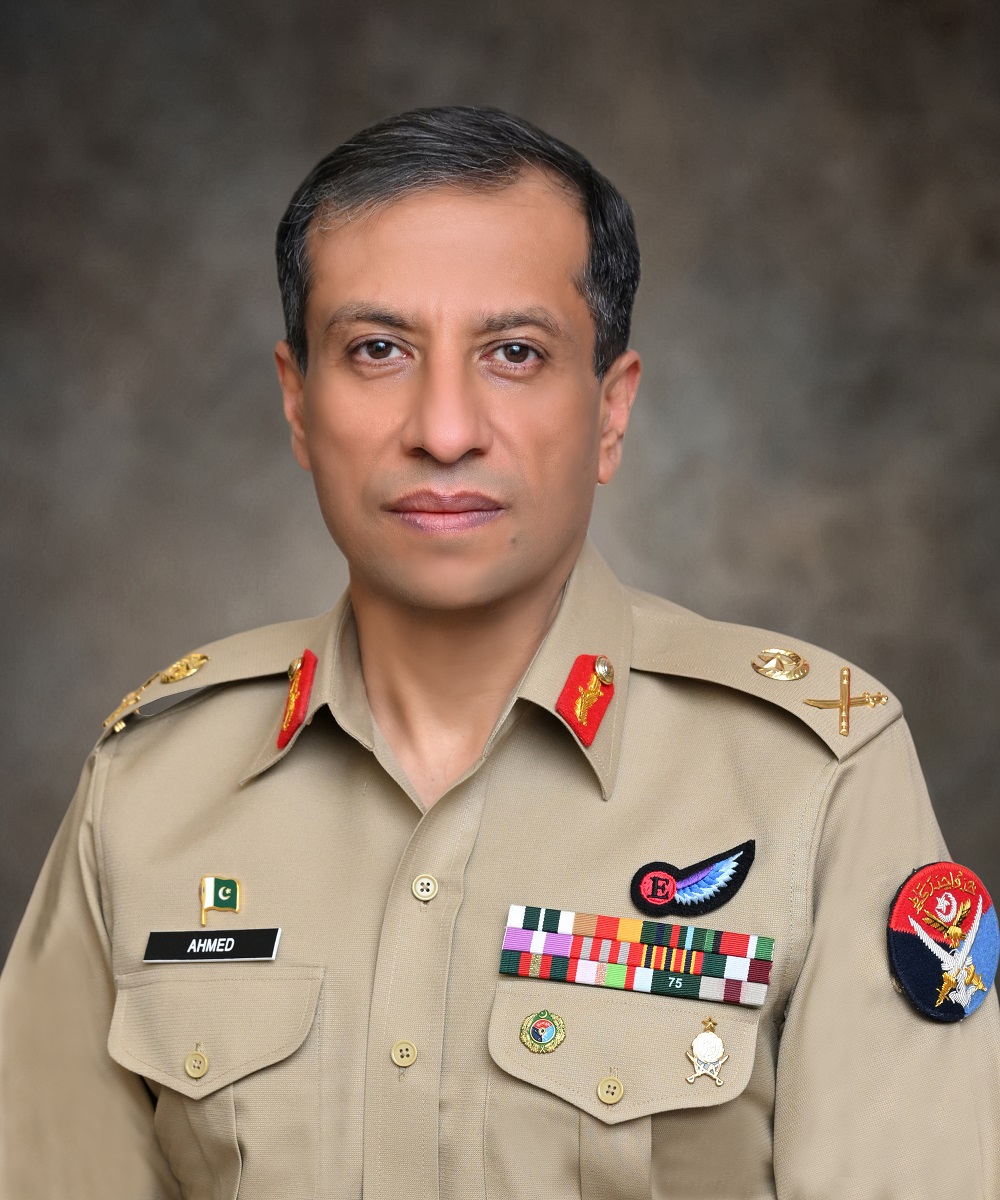
What the DG ISPR said
Lieutenant General Ahmed Sharif Chaudhry, in an interview with Independent Arabia published on Sunday 19 October, addressed three questions that have shaped coverage of the Makkah Joint Defence Agreement since early October: whether Pakistani forces would cross into Yemen, whether the alliance’s collective-deterrence clause would be triggered, and whether new states could join.
Asked whether Pakistan had received a military request from Yemen’s internationally recognised government, Chaudhry said: “I think not in my knowledge that there has been any formal request. If there is any request, then that is for the government of Pakistan to evaluate that and respond to that.” He framed the question as one for the civilian government, Geo News reported, with Reuters providing additional material.
On the second question, Chaudhry gave the clearest formulation yet from a Pakistani official: “If we are unable to come to a negotiated outcome and we turn into a military conflict, then this instrument of collective deterrence of the Makkah alliance will definitely come into play, as it is coming into play,” The Express Tribune reported, quoting the same interview. The phrase “as it is coming into play” framed the deterrence as already active.
He drew a hard line on Saudi sovereignty and the two holy mosques: “The Saudis’ sovereignty and territorial integrity, security, and foremost, the security of the Haramain Sharifain is paramount. It’s non-negotiable. It’s absolute as far as Pakistan is concerned. So once we say that, whatever support is needed to do that is being provided and will be provided.”
On the alliance’s character, he said it was “purely defensive” with “no offensive intent”; on its operational details, he said “quantification” and “specifics” were not made public; and on expansion, he said the pact “remains open to all those countries that believe in collective deterrence, peace, stability and security of the region”, with the three members deciding who joins, how and when.
How the interview fits the 9 October FO line
The new formulation sits between two earlier, narrower lines. On 9 October the Foreign Office had said, through spokesperson Ambassador Sajjad Haider Khan at the weekly briefing in Islamabad, that “these forces would not cross the border into Yemen to launch attacks against the Houthis.” That line was meant to close down speculation that the Pakistani contingent now in the Kingdom could be used inside Yemen. It is not directly contradicted by Chaudhry’s interview, because he was asked about a hypothetical request from Yemen’s recognised government, not about unilateral Pakistani cross-border action.
The DG ISPR did, however, frame the deterrence as already live: “We need to come to a negotiated outcome. If this failed, then this collective deterrence, this instrument of collective deterrence of the Makkah alliance will come into play, as it is coming into play.” That is stronger than any Pakistani formulation since the pact was signed on 7 August. The 9 October line spoke of defending Saudi territory; the 19 October line speaks of deterrence being put into effect.
A second piece of context is Egypt. The Egyptian National Defence Council pledged on 18 October to extend “all necessary and possible forms of support” to Saudi Arabia, and President Abdel Fattah el-Sisi asked parliament to authorise military assistance if Riyadh requests it, KhabarWire reported on 19 October. Chaudhry’s interview lands a day after that Egyptian move and on the same day as Deputy Prime Minister Ishaq Dar’s phone call with Egyptian Foreign Minister Badr Abdelatty on the next R-4 ministerial meeting, as the Foreign Office read out. The interview reads, in that context, as part of a regional diplomatic tightening around Riyadh.
What triggered the interview
The interview was given against a sharp escalation in the Saudi-Houthi war. The Saudi-led coalition said two officers were killed when their AH-6i helicopter crashed near the Yemen border on 18 October, the coalition’s first military fatalities since the conflict reignited in July, Pakistan Today reported. The Houthis also struck Riyadh’s King Khalid International Airport twice in eight days, including a strike on 11 October that Saudi authorities said killed 12 and wounded more than 300, KhabarWire reported at the time.
The Houthi campaign has also threatened the Bab el-Mandeb strait after a four-year truce collapsed in July. The Saudi-led coalition said overnight on 18 October that it intercepted two drones in the Riyadh area and a third over the Eastern Province. The attacks on Riyadh’s airport and Saudi Aramco sites have made the war an energy-infrastructure issue as well as a humanitarian one, KhabarWire reported separately.
It is in this setting that the DG ISPR used “non-negotiable” and “absolute” about Saudi sovereignty and the holy sites, and described Pakistan’s reaction as running “from the streets, from a young boy or girl, up to our military leadership” in one emotion of anger. He linked the diplomatic ceiling and the military floor: “We need to come to a negotiated outcome. If this failed, then this instrument of collective deterrence of the Makkah alliance will come into play.”
Why the DG ISPR, not the Foreign Office, made the statement
The Foreign Office handles diplomatic framing; ISPR is the military’s public-information wing. By giving the interview to an Arabic-language outlet published in the Gulf, the Pakistani military placed the deterrence line on the record in front of the audiences it most directly addressed: Saudi decision-makers, the Houthis and their backers, and the wider Arab public.
Chaudhry avoided any commitment of forces. Asked about the “domains, specifics, quantification” of the alliance, he replied: “If you want to go into the domains, specifics, quantification, no alliance does that. No military does that. Because there is operational confidentiality.” The 19 October statement is therefore a posture statement, not a deployment plan: it does not name a threshold for collective-deterrence activation, a force package, a basing plan or rules of engagement, nor say whether Pakistani forces, if called on, would operate only inside Saudi Arabia or across the border.
What to watch next
Four signals will tell readers whether the statement hardens into an operational posture or remains a posture statement. First, whether Yemen’s internationally recognised government — the Presidential Leadership Council, which declared all-out war on the Houthis on 5 October — formally requests Pakistani support. Second, whether the Egyptian parliament authorises President Sisi to deploy forces to Saudi Arabia. Third, whether the next R-4 ministerial meeting produces a joint deployment framework. Fourth, whether the alliance attributes further interceptions of Houthi missiles publicly.
For Pakistan, the immediate effect is to bring the Yemen question into public discussion and to raise the cost of any future refusal to act, should the Yemeni government ask. The DG ISPR said Pakistan was engaging the parties to the US-Iran war “with the singular intent of restraint and to reduce the temperature”, and described the alliance’s posture as deterrence, not escalation.
Sources & reporting notes
This is a synthesis of published material, not eyewitness reporting. Sources were reviewed on 19 October 2026.
- Geo News — Pakistan may review military help to Yemen if requested, says ISPR chief amid Houthi attacks on Saudi Arabia19 October 2026 · The DG ISPR's quote that any Yemeni military request would be evaluated by Pakistan's government, and the deterrence statement. Reuters contributed additional material.
- The Express Tribune — Any direct or indirect attack on Makkah alliance member state will trigger 'collective response': DG ISPR19 October 2026 · The fuller text of the Independent Arabia interview, including the "as it is coming into play" formulation, the holy-sites framing, the alliance expansion remarks and the link to the original Independent Arabia article.
- Pakistan Today / Reuters / Anadolu Agency — Cairo vows support for Riyadh as 2 Saudi officers killed in helicopter crash near Yemen19 October 2026 · The Saudi coalition helicopter crash near the Yemen border on 18 October, the Egyptian National Defence Council pledge, the Sisi request for parliamentary authorisation, and the Foreign Office read-out of the Dar-Abdelatty call.