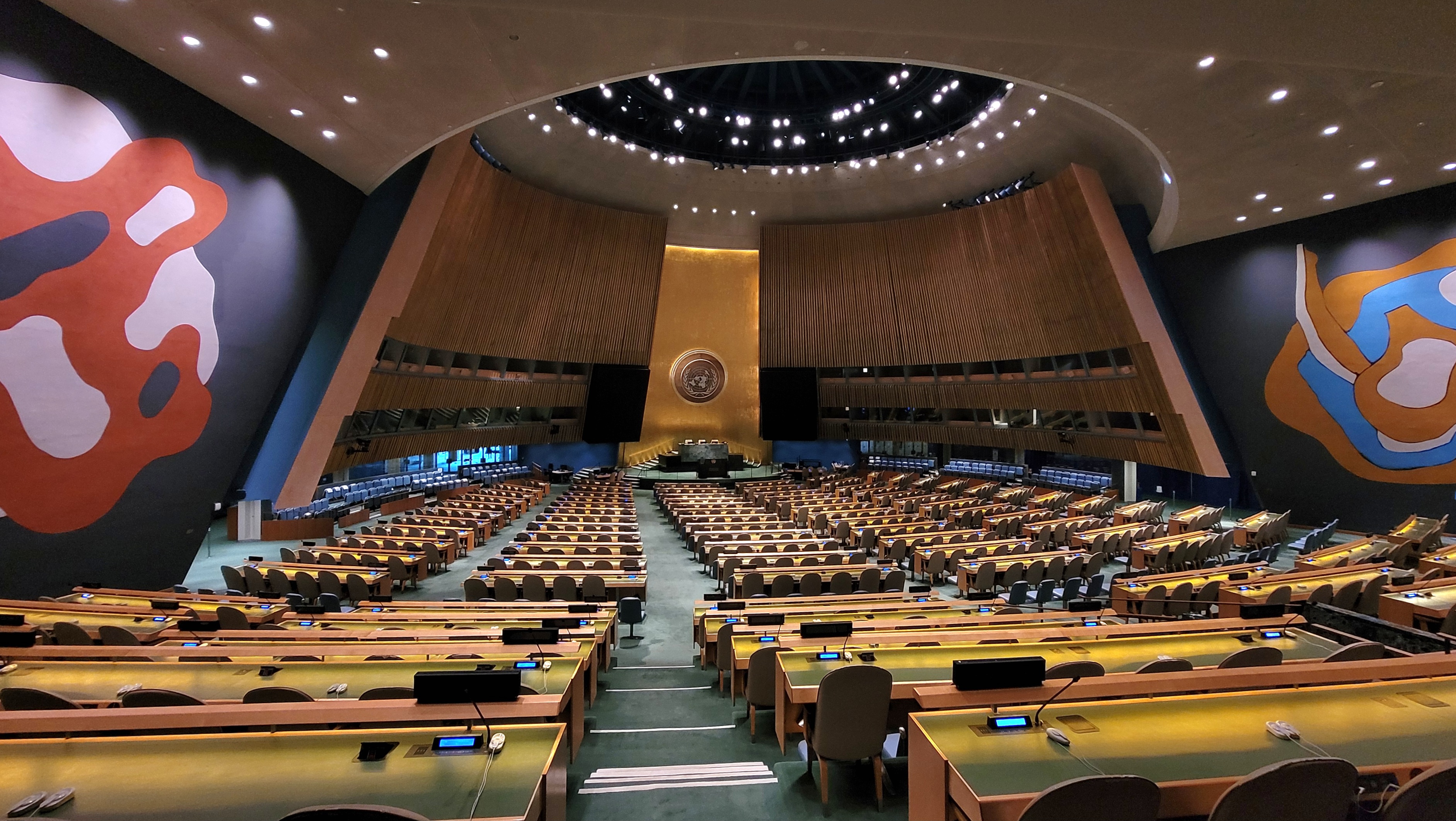
Reporting snapshot · 23 September 2026. President Donald Trump told reporters at the United Nations on Tuesday that US officials had held a three-hour meeting with an Iranian delegation in New York — the first confirmed direct contact between the two governments since an interim deal collapsed in July. Iran's state media said Foreign Minister Abbas Araghchi met US Special Envoy Steve Witkoff and that Tehran conveyed its conditions for reopening the Strait of Hormuz. Trump said another meeting is scheduled. Details of who attended and what was discussed remain thin, and the two sides have not said the war is any closer to ending. This is a dated snapshot, not a live tracker.
What happened
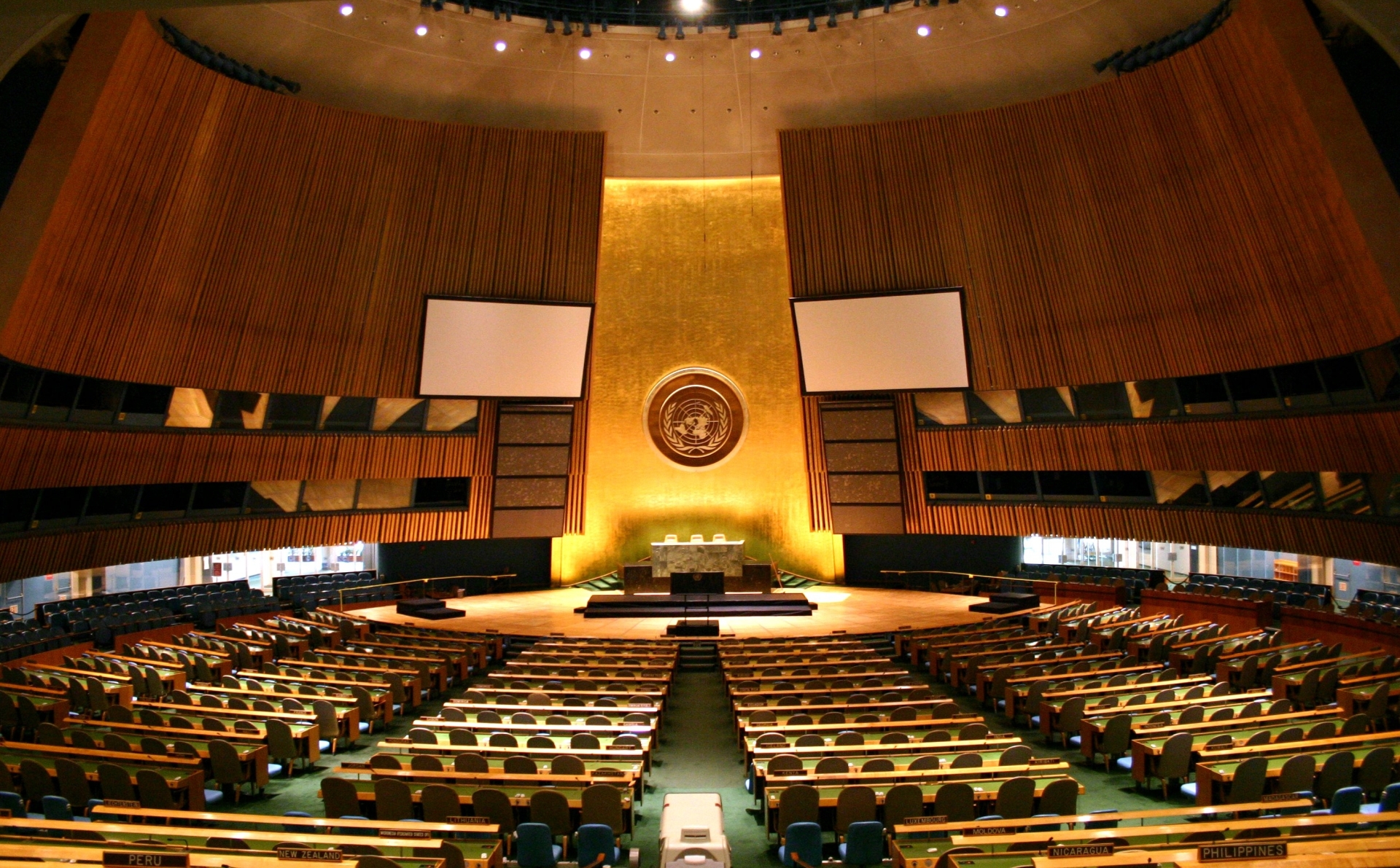
President Donald Trump confirmed on Tuesday that senior US officials held a three-hour meeting with an Iranian delegation in New York on the sidelines of the United Nations General Assembly, the first confirmed direct contact between the two governments since their interim deal collapsed in July. Trump described the meeting as “very good” and “very productive” and said another session was scheduled “in the very near future”, according to reporters at the UN. He gave no details of what was discussed, telling reporters he could not imagine why Iran would not want to make a deal given the potential consequences of renewed US military action.
US envoys Steve Witkoff and Jared Kushner, who have led the American negotiating effort with Tehran, took part in Tuesday’s meeting, Trump said. Iran’s state media reported that Foreign Minister Abbas Araghchi met Witkoff, and Reuters reported that the discussions focused on the conditions for renewing negotiations, with the reopening of the Strait of Hormuz at the top of the agenda. No agreement was reached on most of the outstanding disputes, according to reports, and no face-to-face meetings between the two governments had been confirmed since July, when an interim deal reached weeks earlier collapsed.
The meeting came hours after Trump used his address to the assembly to call for Iran’s complete economic isolation and to repeat his threat that he could “annihilate the Islamic Republic” if it did not strike a deal. The contrast between the president’s public ultimatum and the confirmed contact on the sidelines underscored how far the war — now approaching its seventh month — has pushed both sides toward diplomacy even as they keep the option of escalation open.
Iran’s conditions for reopening Hormuz
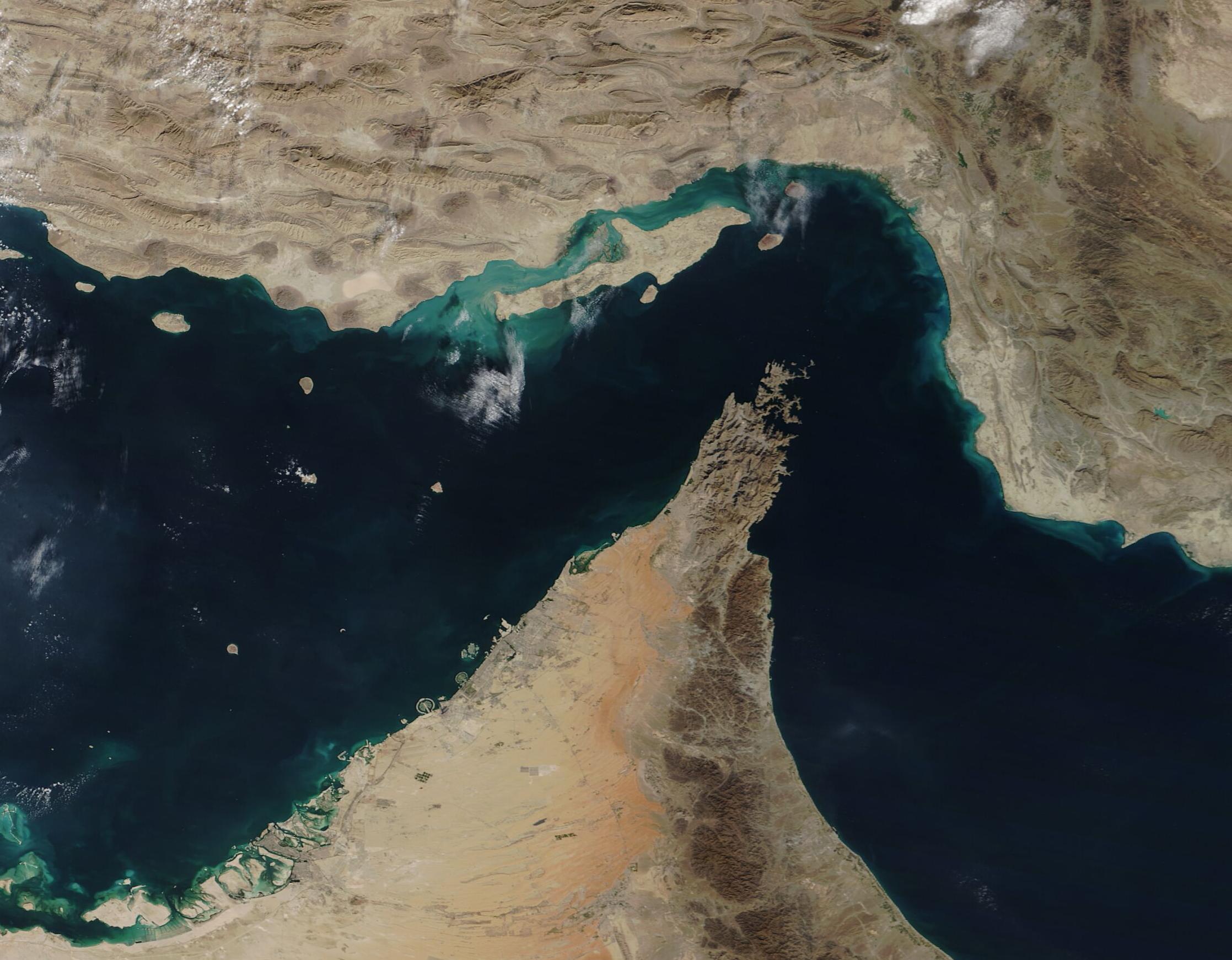
Iran’s state media said that during the meeting with Witkoff, Tehran conveyed its conditions for reopening the strategic Strait of Hormuz, which Iran has in effect closed to most shipping since the war began. Reuters reported that the conditions include the immediate lifting of the naval blockade on Iranian ports, the immediate release of frozen Iranian assets and an end to the war across all fronts. Iran had earlier signalled, through a senior official who spoke to Reuters and Kyodo News, that it could reopen the strait within seven days if the United States eased military pressure and lifted the blockade.
The waterway carried roughly a fifth of the world’s oil and gas shipments before the war, and its closure has pushed oil prices toward $100 a barrel, feeding directly into fuel prices in Pakistan, which imports nearly all of its petroleum. Iran’s leadership has said its delegation at the assembly has full authority to revive diplomacy, and an official told Reuters that Tehran had conveyed its latest proposal to Washington through mediators the previous week.
The Pakistan angle
Pakistan and Qatar have acted as the principal mediators between Washington and Tehran since the war began in late February, and both were active in the days before the New York meeting. Pakistan’s Interior Minister Mohsin Naqvi held talks in Tehran with President Masoud Pezeshkian and Interior Minister Eskandar Momeni on Monday, his sixth visit to the Iranian capital since the conflict started. A spokesman for Qatar’s Foreign Ministry, Majed al-Ansari, reiterated on Tuesday that Doha is working to facilitate an agreement between Tehran and Washington in coordination with Pakistan.
Pakistan’s mediation has a longer arc: Islamabad brokered the ceasefire that led to the Islamabad Memorandum of Understanding signed in June, hosted US and Iranian delegations in April, and has since worked with Qatar to keep a channel open as that agreement collapsed and intermittent strikes resumed. For Pakistan, the stakes are concrete: an agreement that reopens Hormuz would relieve the oil-price pressure that has shaped the country’s fiscal policy this year — the KSE-100’s July plunge, when Washington reinstated the blockade, showed how directly the conflict reaches Pakistani markets, as KhabarWire reported — while a collapse of the talks would extend the energy shock into its import bill.
What the meeting does and does not change
The confirmation of direct contact is a shift in itself. For months after the July collapse, the two sides communicated only through intermediaries, with no confirmed face-to-face meetings between American and Iranian officials. Trump’s own openness to meeting Pezeshkian had been signalled in advance, but Iranian officials repeatedly ruled out a meeting between the two presidents, and Pezeshkian did not attend the three-hour session. The meeting therefore appears to have been a working-level encounter between Witkoff, Kushner and Iranian officials, not a presidential summit.
The meeting also does not indicate that an agreement is close. Trump’s public position — that Iran must never acquire a nuclear weapon and that the deal must serve his administration’s interests — was unchanged after the contact. Iran’s leadership has said it will not accept pressure or coercion, and hardliners in Tehran have criticised even Pezeshkian’s decision to attend the assembly. US sources told reporters that the meeting had been planned in advance and that no agreement was reached on most of the disputes, while Iran’s state media said its purpose was to convey conditions rather than to sign anything.
Why it matters
The three-hour meeting is the strongest signal since the July collapse that both governments are willing to talk directly, even as they continue to threaten each other. For a region that has spent seven months absorbing strikes, a naval blockade and the closure of the world’s most important oil chokepoint, a direct channel with Pakistan and Qatar as mediators is the first concrete step toward reopening Hormuz. For Pakistan’s readers, the significance is immediate: the channel is one Islamabad helped build, and its success or failure will shape fuel prices, the import bill and the economy in the months ahead.
What is still uncertain
The key unknowns are who precisely attended the meeting, what was actually said, and whether the contact leads anywhere. Neither Washington nor Tehran has released a detailed account, and Iran’s state-media description of the session has not been independently confirmed in full. Trump said another meeting is scheduled but gave no date, location or format. Whether the direct channel survives the public threats, whether Iran’s conditions for reopening Hormuz are met, and whether the Gulf states — whose territory has been drawn into the conflict — back any arrangement remain open questions. Iran’s official position is that the strait stays closed until its demands are met, and no official on either side has said a deal is near.
Sources & reporting notes
This is a synthesis of published reporting, not eyewitness reporting. Sources were reviewed on 23 September 2026. The account of the meeting rests on President Trump's own confirmation as reported by Reuters, The Washington Post and Al Jazeera; the details of who attended and Iran's conveyed conditions rest on Iran's state media as reported by Reuters and on reporting citing Iranian officials. The Pakistan and Qatar mediation context is drawn from Al Jazeera and Reuters reporting from 21–22 September.
- Reuters — Iran submits conditions for reopening of Hormuz to U.S. representative, state media says22 September 2026 · Iran's state media confirmation that Araghchi met Witkoff and that Tehran conveyed its conditions for reopening the Strait of Hormuz.
- Reuters — Iran ready to reopen Strait of Hormuz if US eases military pressure and lifts blockade22 September 2026 · The senior Iranian official's seven-day reopening offer, the delegation's authority to revive diplomacy, and the proposal delivered through mediators.
- The Washington Post — U.S. and Iran had 'very good meeting' over ongoing war, Trump says22 September 2026 · Independent confirmation of the three-hour meeting and Trump's remarks to reporters in New York.
- Al Jazeera — US, Iran hold 'very good' talks, Trump says at UN meeting22 September 2026 · Independent confirmation of the meeting, Witkoff's and Kushner's participation, and the scheduling of another round.
- Al Jazeera — Iran's Pezeshkian meets Pakistan's Naqvi in Tehran as tensions with US rise22 September 2026 · Naqvi's sixth visit to Tehran and Qatar's statement that it is working, in coordination with Pakistan, to facilitate a US-Iran agreement.