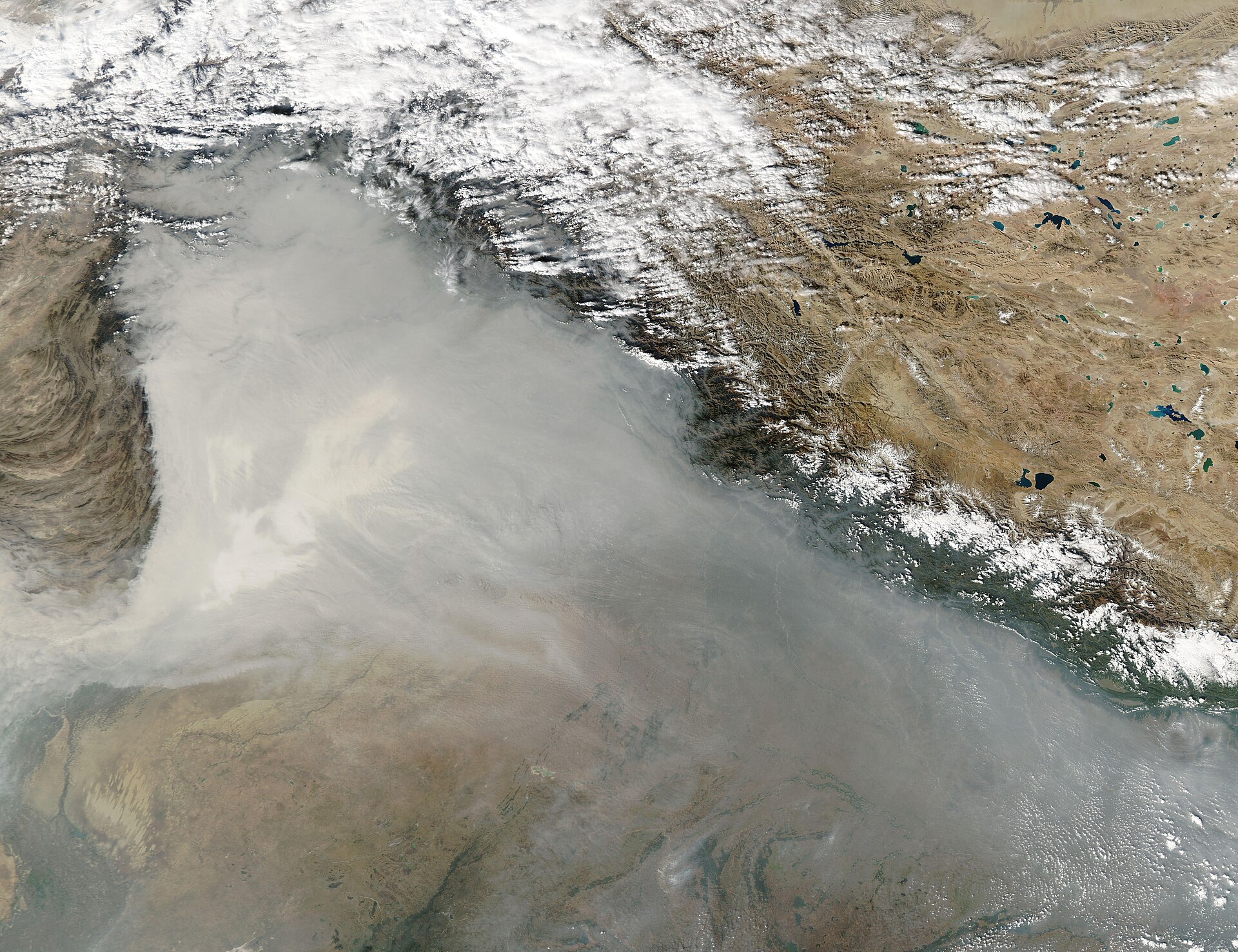
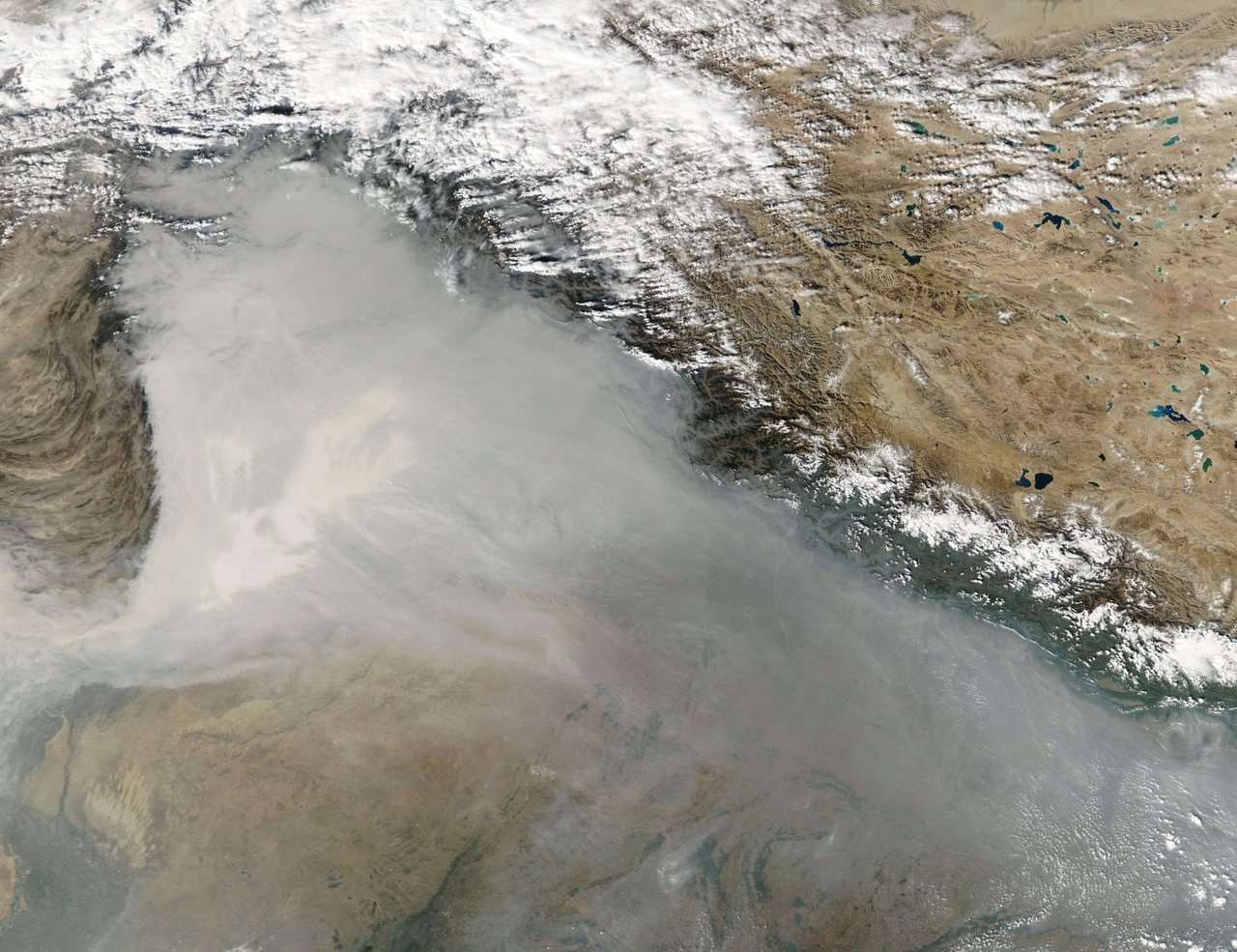
Reporting snapshot · 9 November 2026 (Asia/Karachi). The air quality index is a live reading that changes through the day and differs between monitoring networks, so the figure below is a snapshot rather than a daily average. The main limitation is that no published measurement yet separates pollution arriving from India from pollution produced inside Punjab.
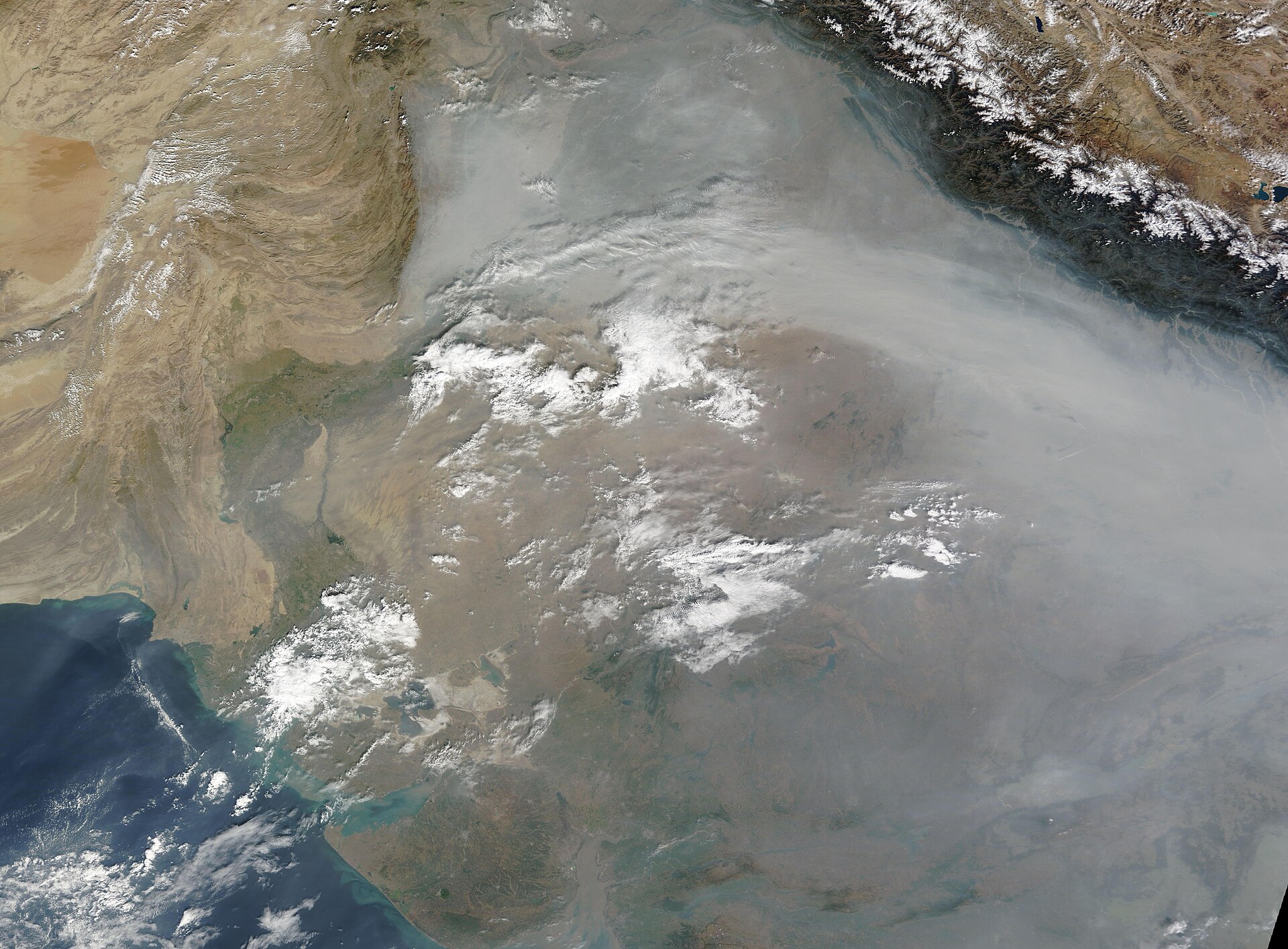
What changed on Monday
Lahore’s air quality index crossed 600 on Monday, 9 November, reaching 647 and putting the city first among major cities worldwide on Monday morning, Geo News reported. Delhi ranked third on the same morning, Geo News reported.
That single figure sits alongside other measurements of the same week, and the differences are instructive rather than contradictory. The 647 reading is an instantaneous value from a live ranking. The Pakistan Air Quality Initiative’s weekly review, published the same day, put Lahore’s average for the first week of November at 268 with a peak of 335 on 2 November, The Express Tribune reported, while the Environment Protection Department’s readings on 2 November produced the 535 figure KhabarWire reported. These come from different monitoring networks, station sets and averaging methods. The wider ranking has also swung repeatedly: Delhi was the worst major city in the world on 7 November with a reading of 581, more than double Lahore’s 285 at that hour, Reuters reported via The Express Tribune.
The new development is not the reading but the explanation Punjab attached to it. Senior Environment Minister Marriyum Aurangzeb said polluted winds entering through the eastern corridor from Indian cities contributed to the increase in Lahore’s index, and linked the province’s worsening smog to large-scale fireworks during Diwali celebrations in India, Geo News reported. On 5 November she had said more generally that winds from the Indian cities of Amritsar and Attari contribute to Lahore’s pollution, The Express Tribune reported. The Diwali attribution is the sharper claim, and it arrives as India grapples with its own post-festival emergency: in Delhi, the cancer-causing PM2.5 concentration at the Mandir Marg locality hit 879 micrograms per cubic metre early on Monday, nearly 59 times the World Health Organization’s recommended daily maximum, AFP reported via The Express Tribune.
Marriyum also said local pollution was being controlled under the direction of Chief Minister Maryam Nawaz Sharif, and that preventive measures had kept the index below forecast levels despite the festival pollution, unlike in previous years. She advised children, older people, pregnant women and those with heart, lung or respiratory disease to stay indoors until the reading improved, asked residents to suspend morning walks, jogging and cycling, to keep car windows closed and use the air conditioning’s recirculation mode, and not to burn rubbish or leaves. She expected air quality to improve within two or three hours as wind direction and speed changed and sunshine returned, Geo News reported.
What the week’s own data shows
The Pakistan Air Quality Initiative’s review of the first week of November, published on Monday, cuts against a simple cross-border reading of the spike. Lahore’s average index over that week was 268, with the peak at 335 on 2 November; the city sat in the very unhealthy band for five days and in the hazardous band for two, The Express Tribune reported. Average fine particulate matter over the week was 215.5 micrograms per cubic metre, nearly 14 times the World Health Organization’s recommended limit of 15, and 25 per cent higher than in the same period a year earlier.
The same analysis found that on days when the contribution of winds from India was higher, Lahore’s average index was lower, at 160, than the 187 recorded on other days. That does not prove local pollution dominates, and the review did not establish source apportionment. It does mean the weekly pattern is not what a simple wind-borne explanation would predict.
Fire activity tells a similar story. A satellite-based analysis of the week to 2 November counted 3,712 fire hotspots within 300 kilometres of Lahore, of which 2,753 were in Pakistan and 957 in India; Pakistan’s count was 15 per cent higher than the same week a year earlier and 51 per cent above the eight-year average, while India’s was well below its own eight-year average of 10,448, The Express Tribune reported. Separate monitoring by HamariHawa recorded 10,494 hotspots within 250 kilometres of Faisalabad and 10,115 around Lahore in the preceding week, against 8,892 around Amritsar and 6,853 around Ludhiana, The Express Tribune reported.
Those counts have limits that the same report sets out: a satellite detection covers roughly 375 metres, cloud cover can hide fires, and a detection confirms heat rather than the activity responsible or the smoke it produced. Researchers used the NOAA HYSPLIT model to trace air masses reaching Lahore over the previous 72 hours at 500 metres altitude and mapped trajectories from Afghanistan and India, but trajectory modelling shows possible movement of air rather than establishing the source of pollutants, The Express Tribune reported.
Why the standard matters
Pakistan’s national clean-air policy sets a 24-hour PM2.5 limit of 75 micrograms per cubic metre and an annual average target of 35, according to the National Clean Air Policy. The week’s average PM2.5 of 215.5 micrograms per cubic metre was measured across days the city spent entirely in the very unhealthy and hazardous bands, and because it is an average rather than a single peak it indicates persistently elevated exposure rather than one episode. The policy also estimates that full implementation of five priority interventions, including enforcement of industrial emission standards and an end to the burning of agricultural residues, would cut PM2.5 emissions by 38 per cent in 2030 against the baseline scenario.
The federal response took shape alongside the smog season. In a record published on 2 November, the Pakistan Environmental Protection Agency said the Pakistan National Clean Air Conference had closed with the adoption of the Islamabad Clean Air Compact, committing federal and provincial stakeholders to time-bound implementation, stricter enforcement, regular emissions inventories and annual review meetings, with the agency citing advance planning before the smog season and stronger monitoring, according to the agency. The federal government announced a $10 million clean-air startup fund at the same conference, as KhabarWire reported. The Lahore Smog and Air Quality file follows the readings, the sources and the responses.
What is still uncertain
The reading itself is provisional. Provincial Environment Protection Agency stations on Saturday evening, 7 November, ranged from 500 at Wagah border, in the hazardous band, to 148 at GT Road, while the city’s own IQAir figure on Saturday morning was 275 and Lahore sat seventh on the live major-city ranking with a reading of 161 when the ranking was accessed, The Express Tribune reported. The same paper noted that the gap between IQAir and the agency’s figures reflects differences in monitoring networks, station locations and the scales used, and that the Pakistan Meteorological Department forecast dry conditions for most of Punjab, The Express Tribune reported.
The attribution remains unresolved in both directions. Punjab’s own weekly analysis shows the Indian-wind correlation running the other way from the minister’s claim, and the hotspot counts place more burning on the Pakistani side of the border, but no published source apportionment for Lahore separates the two. Whether the cross-border claim survives scrutiny depends on measurements that have not yet been made public.
What is not in doubt is the exposure. Delhi’s own numbers, published on Monday, show what a festival week of fireworks does to a city of 20 million, with India’s environment ministry attributing 23 per cent of Delhi’s winter pollution to vehicles, 20 per cent to biomass burning including crop stubble, and 27 per cent to secondary particles formed in the atmosphere, AFP reported via The Express Tribune. A 2024 study in The Lancet Planetary Health estimated that air pollution was linked to 3.8 million deaths in India between 2009 and 2019.