What happened
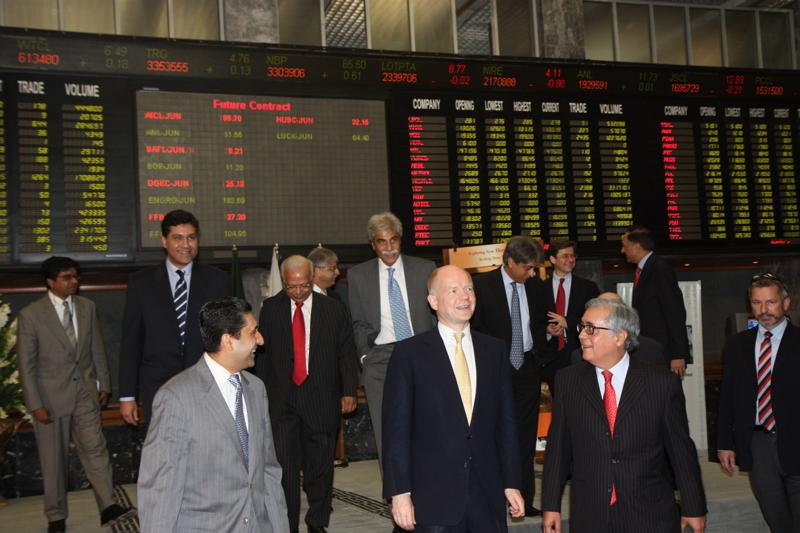
Pakistani stocks recorded their sharpest one-day selloff in months on Tuesday, 14 July 2026, after the United States reinstated a naval blockade of Iran and floated a 20 percent charge on cargo passing through the Strait of Hormuz, Independent Pakistan reported.
The benchmark KSE-100 Index closed at 173,518.81, down 6,408.23 points, or 3.56 percent, wiping out several weeks of gains in a single session. It was the index’s second straight day of losses, following a 1.27 percent decline on Monday when it slipped below the 180,000 mark.
Trading was volatile from the opening bell. The index touched an intraday high of 178,112.04 before selling across cyclical sectors dragged it lower, with losses accelerating in the final hour to a low of 173,349.41. Turnover rose to 912.6 million shares from 845.2 million a day earlier, with the value of shares traded at about 45.6 billion rupees. Of the 498 companies traded, only 40 advanced while 439 declined.
Why markets fell
The selloff followed President Donald Trump’s announcement on Monday that the US would reimpose its naval blockade of Iranian shipping and charge a 20 percent fee on other cargo transiting the Strait of Hormuz, a waterway that carried roughly a fifth of the world’s daily oil and liquefied natural gas supplies before the conflict escalated. The US Navy said the blockade would take effect at 4 p.m. in Washington on Tuesday.
Iranian Foreign Minister Abbas Araghchi rejected the proposed toll, saying Iran rather than the US controls the strait and should be compensated. The International Maritime Organization said it opposed fees for transit through international straits.
The renewed hostilities have already caused casualties. The United Arab Emirates’ Ministry of Defence said one Indian crew member was killed and eight others wounded after two Emirati oil tankers were struck by Iranian cruise missiles in the strait.
Crude prices rose to their highest levels in about a month. Brent crude climbed as much as 3.81 percent to $86.47 a barrel, the highest since 12 June, while West Texas Intermediate rose 2.75 percent to $80.29, after both benchmarks posted their biggest single-day gains in years on Monday.
What it means for Pakistan
Pakistan imports the bulk of its oil, so the surge in crude threatens to add pressure to inflation, the external account and corporate profit margins at a time when the domestic economy had otherwise been showing signs of stabilisation.
Analysts attributed the Karachi decline to a combination of geopolitical risk and profit-taking. Awais Ashraf, director of research at AKD Securities, said the fall was broad-based, with cyclical sectors seeing the sharpest percentage losses amid heightened uncertainty over the medium-term outlook. Ahfaz Mustafa, chief executive of Ismail Iqbal Securities, said the market was reacting to the sharp rise in oil prices and the new uncertainty in the Middle East. Independent analyst AAH Soomro said any de-escalation or renewed diplomatic progress could help restore confidence, while further escalation risked worsening conditions.
What is still uncertain
The direction of Pakistani equities will depend heavily on whether the US-Iran confrontation eases and how long the strait remains disrupted. The report said volatility was likely to persist as investors track both the conflict and international oil prices in the sessions ahead.
Sources & reporting notes
This is a summary of published reporting, not independent reporting. Details are as carried by the cited source, which was reviewed on 2026-07-14.
- Independent Pakistan — "Pakistan stocks post steepest drop in months as Hormuz blockade returns"14 July 2026 · The KSE-100 closing level and percentage fall, intraday levels, trading volumes and market breadth, the US blockade and cargo toll, the oil price moves, the Emirati tanker casualties and analyst comment.
.jpg)