What happened
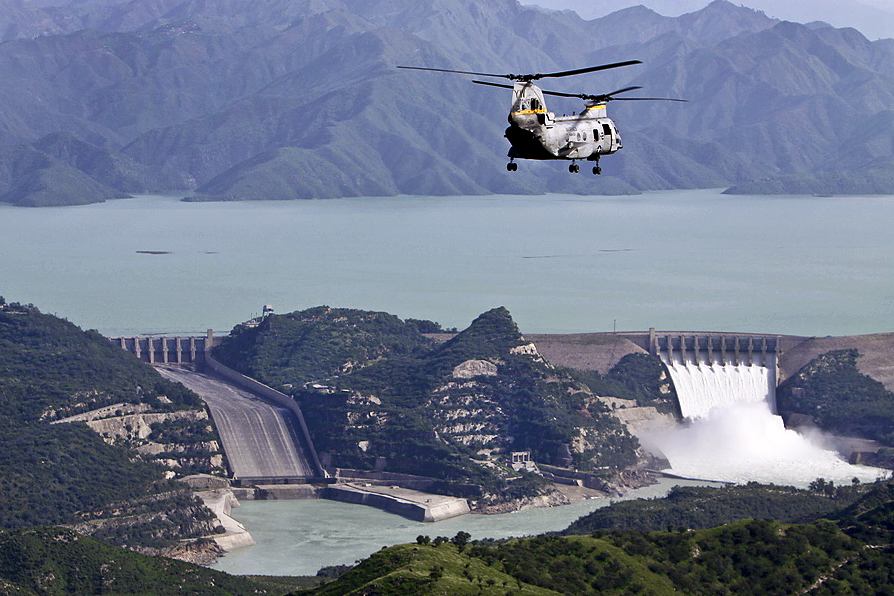
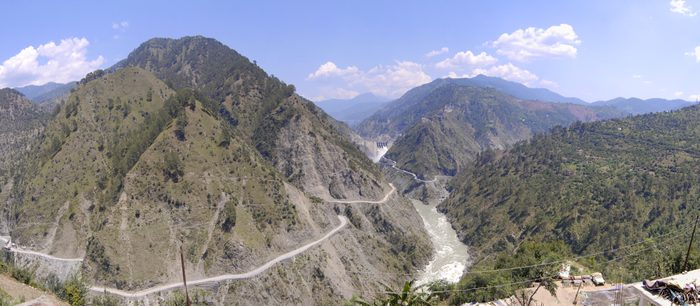
Deputy Prime Minister and Foreign Minister Ishaq Dar accused India on Thursday of pursuing at least 17 infrastructure projects on the Indus river system to give New Delhi what he called the tools for “hydro-hegemony”, saying the works threatened the survival of the 1960 Indus Waters Treaty.
In a pre-recorded address to a Brussels conference on transboundary water governance titled “Transboundary Water Resources: A Weaponised Global Common”, Dar said India had moved beyond hostile statements to concrete actions. He listed the construction of reservoirs, the expansion of existing structures and, most seriously, diversion projects on the Indus, Chenab and Ravi rivers.
“It is important to underscore that our concerns are not merely based on Indian statements,” Dar told the seminar. “India has followed up its belligerent statements with illegal actions.”
The treaty and the dispute
The Indus Waters Treaty, brokered by the World Bank after nine years of negotiations and signed in 1960, divides the six rivers of the Indus system between the two countries. The eastern rivers — the Ravi, Beas and Sutlej — were allocated to India, while the western rivers — the Indus, Jhelum and Chenab — were largely reserved for Pakistan.
India announced in April last year that it was holding its obligations under the treaty “in abeyance” after the killing of 26 tourists in Pahalgam, in Indian-administered Kashmir, which New Delhi blamed on Islamabad. Pakistan denied involvement and called for an independent investigation. The two countries later fought a brief military confrontation, during which Islamabad warned that any attempt to block or divert treaty-guaranteed flows would be treated as an act of war.
Pakistan sought international arbitration. In June last year the Permanent Court of Arbitration issued a Supplemental Award of Competence holding that India could not unilaterally suspend its obligations, a ruling Islamabad cites as confirmation that the treaty remains in force. India has argued that demographic pressures, technological change and climate adaptation warrant revisions.
Warning to the international community
Dar framed the dispute as a test of the international legal order rather than a purely bilateral quarrel. He warned that India’s stated policy amounted to a “catastrophe in the making of unparalleled magnitude” that threatened to deprive 240 million Pakistanis of water they were legally entitled to receive.
He quoted the late United Nations secretary general Kofi Annan on water crises being crises of governance rather than absolute scarcity, and said: “Water must never be viewed as an instrument of coercion. It is a shared resource, a common responsibility and ultimately a prerequisite for human dignity and sustainable development.”
“The sanctity of treaties is the bedrock of the international order,” he added. “Respect for treaty obligations is therefore not merely a regional concern but a global imperative.”
Why it matters
Pakistan has already taken its case to the United Nations Security Council, warning that India’s conduct carries grave consequences for regional peace and security. The Brussels address was an attempt to widen the argument beyond South Asia and to enlist European governments, whose own cooperation on shared waterways Dar cited as a model. The immediate dispute remains unresolved, with World Bank-brokered processes and arbitration running in parallel with a hardening diplomatic standoff between the two nuclear-armed neighbours.
Sources & reporting notes
This is a summary of published reporting, not independent reporting. Details are as carried by the cited source, which was reviewed on 2026-06-18.
- Independent Pakistan — "Pakistan raises alarm over India's 17 water projects designed to give it 'hydro-hegemony' over the Indus"18 June 2026 · Dar's Brussels address, the 17 projects, the treaty history, the Pahalgam trigger, the arbitration ruling and his quotations.