What happened
Pakistan has urged the World Bank and the United Nations to take immediate action over what officials and experts described as repeated violations of the Indus Waters Treaty (IWT) by India, warning that millions of people face hunger and starvation and that the country’s agriculture and livestock sectors are under severe threat.
The appeal, reported from Peshawar by the state-run Associated Press of Pakistan and carried by Pakistan Today on 15 February 2026, followed an “extraordinary reduction” of water flow in the Chenab River that experts said has put food and water security at risk in Azad Kashmir and Punjab.
The flow measurements
Professor Dr Zilakat Malik, a former chairman of the Economics Department at the University of Peshawar, told APP that water levels at the Marala headworks fell to 870 cusecs in December 2025, far below the ten-year minimum of 4,000 to 4,400 cusecs.
Dr Malik said satellite imagery from 8 and 13 December 2025 showed a notable decrease in the surface area of India’s Baglihar dam, suggesting water retention that contributed to the reduced flow at Marala. He warned that the reduction could lead to shortages in staple crops, meat and milk production, and that nearly 40 per cent of wheat and rice cultivation could be affected. The situation in December followed a similar incident in May 2025, indicating a repeated pattern, he said. Dr Malik described the use of water as a weapon and said such interference violates international law, calling on the World Bank, as treaty guarantor, and the UN to intervene.
The treaty-law argument
Professor Dr Adnan Sarwar Khan, a former chairman of the International Relations Department at the University of Peshawar, said India’s unilateral decision to hold the IWT in abeyance threatens water security, food production and energy stability for millions in Pakistan. He said the move contradicts international legal frameworks, conventions and rulings of the Permanent Court of Arbitration.
Barrister Noman Kakakhel, a senior member of the Peshawar High Court Bar Association, said India’s unilateral suspension of the treaty lacks legal and diplomatic basis, citing an August 2025 PCA ruling that he said reaffirmed the treaty’s binding status and rejected unilateral abeyance. He noted that Article XII(4) allows termination only through mutual agreement.
Why it matters
The IWT was signed in 1960 between President Ayub Khan of Pakistan and Prime Minister Jawaharlal Nehru of India and is guaranteed by the World Bank. It allocates the western rivers — the Indus, Jhelum and Chenab — to Pakistan, and the eastern rivers — the Sutlej, Beas and Ravi — to India, with no provision allowing unilateral suspension or termination.
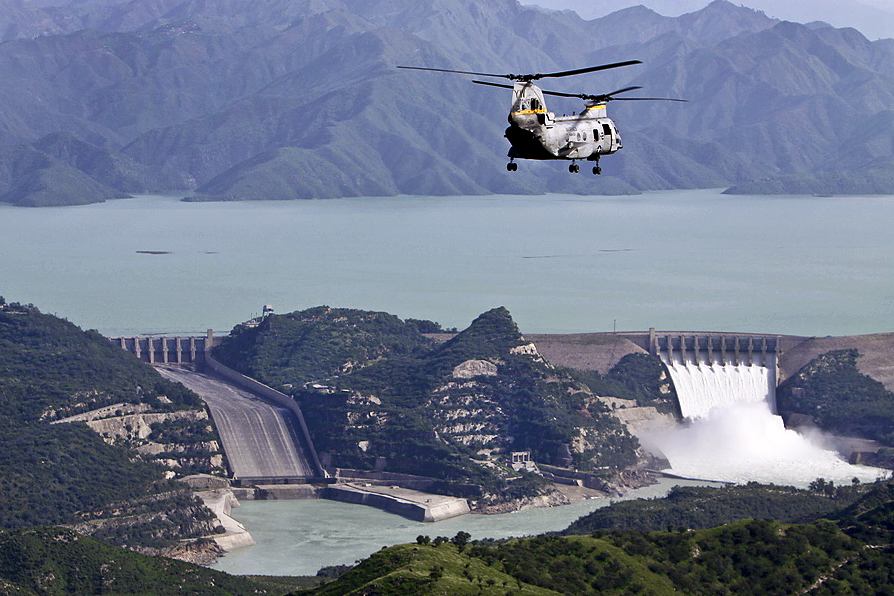
Experts quoted by APP said the Indus Basin supports nearly 300 million people and that disruptions to water flows could compromise agriculture, hydropower generation and livelihoods, placing more than 245 million people at risk of hunger. Major infrastructure including Tarbela Dam, the under-construction Diamer-Bhasha Dam and the Dasu Hydropower Project relies on uninterrupted river flows, while barrages such as Jinnah, Chashma, Taunsa, Guddu and Sukkur could face operational challenges.
Former ambassador Manzoorul Haq noted that the treaty has historically survived periods of conflict, including the wars of 1948, 1965 and 1971 and the 1999 Kargil conflict. Professor Dr Minhas Majeed Khan, chair of the International Relations Department at the University of Peshawar, warned that unilateral action by an upper riparian state could set a dangerous precedent in international water law and destabilise the region.
Sources & reporting notes
This article summarises published reporting, not eyewitness coverage. Sources were reviewed on 15 February 2026.
- Pakistan Today — "Pakistan calls on WB and UN to act as IWT violations by India threaten food security, agriculture"15 February 2026 · Reports the Peshawar expert appeals, the Marala and Baglihar flow data, the treaty-law arguments and the agriculture and hydropower risks.