What happened
Pakistan’s Foreign Office said on Thursday that India’s move to build the Chenab-Beas Link Tunnel would “weaponise” water and amounted to a grave violation of the Indus Waters Treaty, after New Delhi invited bids for a project that would divert river water from a basin allocated to Pakistan.
Foreign Office spokesperson Tahir Hussain Andrabi told a weekly media briefing in Islamabad that Pakistan had taken note of reports and of the public tender document issued by the Indian government for the project. According to the plan, the tunnel would transfer an estimated 1.9 million acre-feet of water annually from the Chenab River into the Beas system.
“An inter-basin diversion of water from the Chenab into the Beas River system constitutes a grave violation not just of the Indus Waters Treaty, but also of the law of treaties, particularly the Vienna Convention on the Law of Treaties, as well as the broader framework of international water law, including the principles reflected in the 1997 UN Convention on Watercourses,” Mr Andrabi said.
He said India had neither officially communicated nor shared any notice of the projects, and had not sought consultations with Islamabad.
The projects
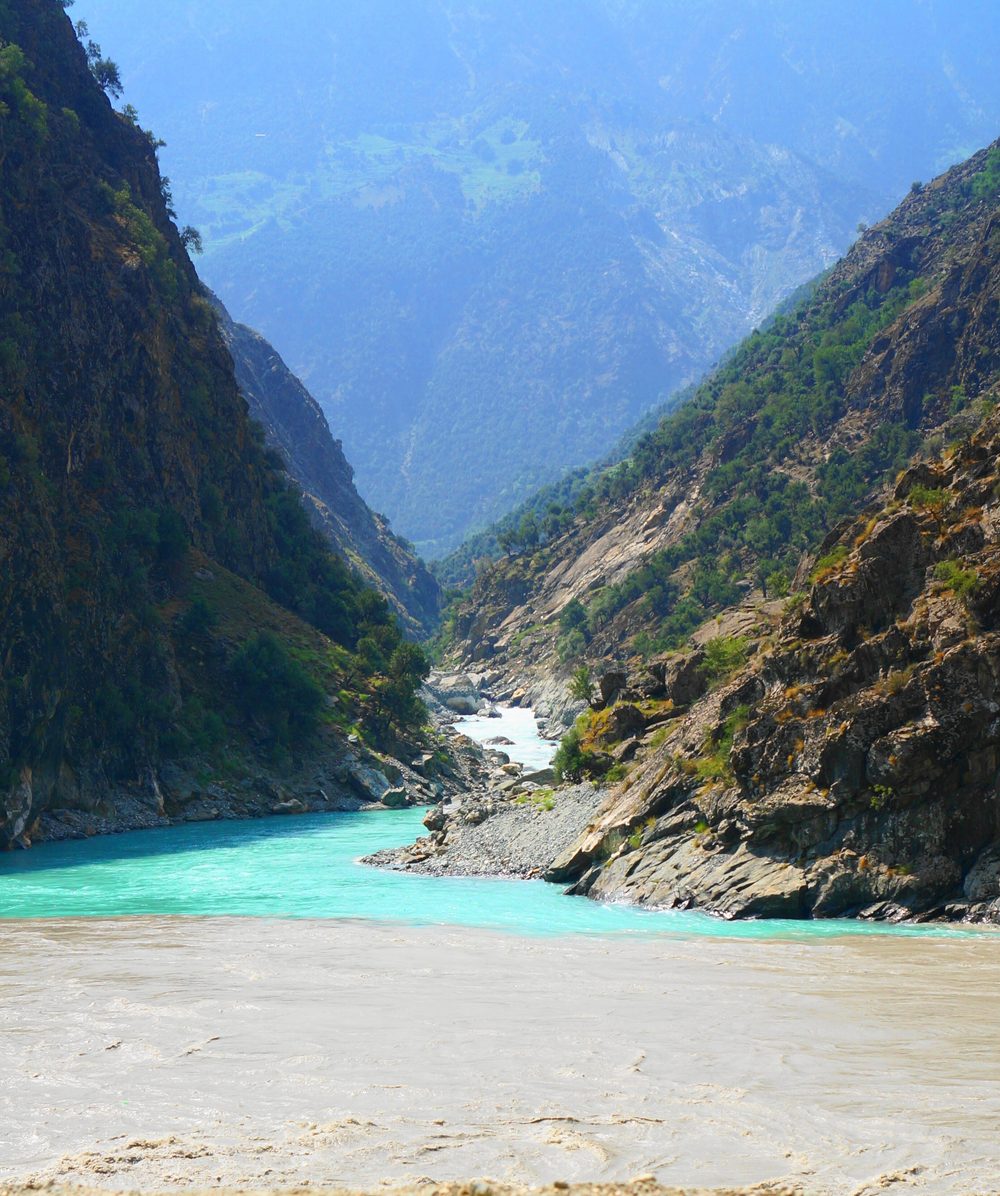
Dawn reported that the project, approved by India in May, envisages an 8.7-kilometre tunnel in Himachal Pradesh to divert water from the Chandra River, an upper tributary of the Chenab, into the Beas basin. India’s state-owned National Hydroelectric Power Corporation invited bids for the work.
Under the 1960 Indus Waters Treaty, brokered by the World Bank, the three western rivers — the Indus, Jhelum and Chenab — are allocated to Pakistan, while India has rights over the three eastern rivers, the Ravi, Beas and Sutlej. The Chenab is a western river, and the Beas an eastern one.
The Foreign Office spokesperson also raised concern over Indian plans to flush silt from the reservoir of the Salal Dam on the Chenab in occupied Kashmir. He said the operation would give India a degree of water-flow control that is not permissible under either the Indus Waters Treaty or the 1978 Salal Agreement.
Why it matters
Mr Andrabi said the projects confirmed that India “seeks to weaponise water”, warning that this carried dangerous implications not only for Pakistan’s economy but also for regional stability and international peace and security.
He said Pakistan had exercised restraint and remained committed to dialogue and the peaceful resolution of disputes, but made clear that any action endangering the country’s water, food and economic security, and the wellbeing of its 250 million people, was unacceptable. He said Pakistan retained all options necessary to safeguard its rights and entitlements under the treaty, and urged the international community to press India to desist from water coercion and restore full implementation of the treaty.
The dispute follows India’s unilateral suspension of its obligations under the treaty in April 2025, after an attack in occupied Kashmir’s Pahalgam that killed 26 people. India’s Foreign Ministry has said its decision to hold the treaty “in abeyance” remains in force, and rejected a May 2026 decision by the Hague-based Court of Arbitration that Pakistan said supported its position. Pakistan has raised the treaty repeatedly, including at a United Nations-backed water conference in Dushanbe that KhabarWire reported here.
Sources & reporting notes
This is a summary of published reporting and official statements, not independent reporting. Details and quotations are as carried by the cited sources, which were reviewed on 2026-06-04.
- Dawn — "FO slams fresh Indian bid to 'weaponise' Indus waters"5 June 2026 · Reports the weekly briefing, the tunnel and Salal Dam details and the treaty background.
- ARY News — "Pakistan retains 'all options' against India's Chenab-Beas water diversion project: FO"4 June 2026 · Carries the spokesperson's remarks and the "all options" position.
- The Hindu — "Pakistan accuses India of weaponising water after treaty suspension"4 June 2026 · Reports the briefing and India's suspension of the treaty.