Reporting snapshot · 20 November 2026 (Asia/Karachi). The account of the PML-N coordination committee rests on party sources rather than a published notification naming its members or terms. The Presidency statement did not mention new provinces, a referendum or a 28th Amendment, and no draft amendment or referendum question has been published. Whether Thursday's pledge changes the government's timetable is not yet known.
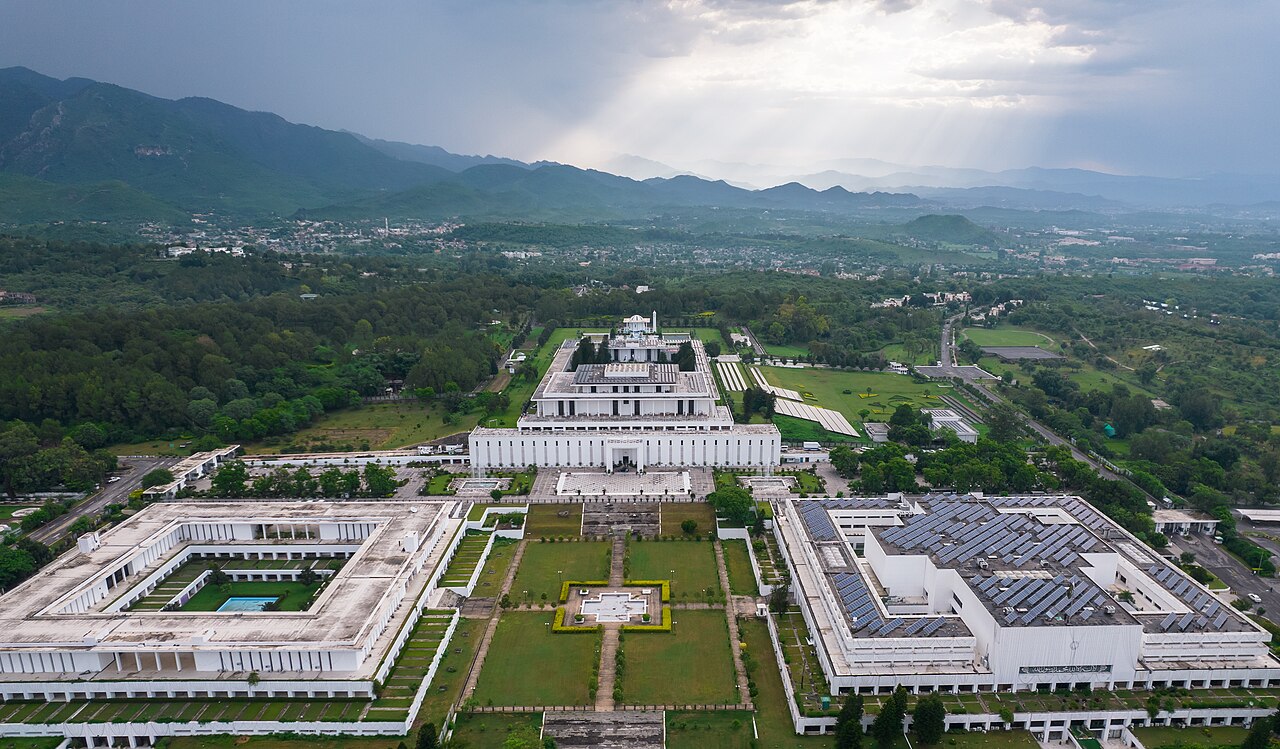
President Asif Ali Zardari and Prime Minister Shehbaz Sharif met at Aiwan-e-Sadr in Islamabad on Thursday, 19 November, and agreed that all outstanding issues would be resolved through dialogue and mutual consultation, the Presidency said. Interior Minister Mohsin Naqvi attended the meeting, which the Presidency described as a detailed review of the “current political situation” that also covered the conflict in the Middle East. Pakistan Today reported the statement, and The Express Tribune carried the same account.
The statement did not name new provinces, a referendum or a 28th Constitutional Amendment. It did address the argument at the centre of the coalition’s dispute: whether the 26th and 27th Amendments had been imposed on allied parties. According to the Presidency, the two leaders noted that previous constitutional amendments were introduced “through mutual consultation among all allied parties” and decided that the leadership would “sit down together on all matters” and resolve them through consultation. The formulation answers Pakistan Peoples Party (PPP) Chairman Bilawal Bhutto-Zardari’s claim that the 27th Amendment was carried by a “brute majority”, without naming him.
The wording the Presidency chose
The trigger was Bilawal’s speech at the Karachi Press Club on 17 November. He opposed any administrative division of Sindh, warned that a forced split could lead to bloodshed, suggested the government was preparing a 28th Amendment and said the 27th had been forced on his party’s lawmakers. The Express Tribune reported those remarks and the reaction that followed: Adviser to the Prime Minister Rana Sanaullah said the claim could raise disqualification questions, Defence Minister Khawaja Asif questioned Bilawal’s standing to lecture the coalition, and Information Minister Attaullah Tarar defended the referendum route the PPP chairman had rejected.
Against that backdrop, the Presidency’s language was notably softer than the statements coming from ministers. It recorded agreement to consult, not a decision on any of the contested questions. It also placed the previous amendments inside a tradition of allied consultation, a point the government has made repeatedly since Bilawal’s speech. The statement’s only concrete institutional commitment was that the leadership would sit together on “all matters”; it set no date, named no forum and did not say who would attend beyond the three men in the room.
A coordination committee, not yet a negotiation
The more specific plan came from the Pakistan Muslim League-Nawaz (PML-N). Party sources told The Express Tribune that the leadership would form a political coordination committee of senior figures to engage parliamentary parties, including the PPP and the Muttahida Qaumi Movement-Pakistan (MQM-P), and to develop a common position on constitutional and political questions. Pakistan Today reported the same plan, saying the committee would work towards consensus on new provinces and other national issues.
According to those accounts, the party is reviewing the constitutional and legal requirements for creating new administrative units, including the possibility of a referendum. The federal government is also considering a national political conference, after which proposals could go to Parliament and a committee could examine the constitutional changes needed if consensus emerges. The consultations would range beyond the provincial map to counter-terrorism, the economy and local government reform.
None of that amounts to a negotiation yet. No notification naming the committee’s members has been published, no date for a national conference has been set, and the PPP has not said whether it will join a process framed by the party whose ministers Bilawal had criticised two days earlier. The plan is best read as an attempt to move the argument from television studios and press clubs into a structured channel, not as evidence that the channel has been agreed.
The conditions a minister attached
Minister of State for Interior Talal Chaudhry gave the plan its clearest public defence. Speaking on a private television programme, he welcomed the Zardari-Shehbaz meeting as “a mature and democratic approach” and said political matters should be settled through negotiation. He described Bilawal as a young and emotional leader, contrasted him with his father, and argued that the government had shown restraint in its response.
More important for the provinces question, Chaudhry said no political party, particularly the PPP, could be excluded from the process, and that major decisions would neither be taken nor could be taken without consensus. He ruled out legislation on new administrative units without taking coalition partners into confidence, particularly the PPP, and said all legislation had passed after consultation with allied parties. He also argued that the governance debate should cover the whole country rather than focus on a single province.
That is a stronger commitment than the Presidency statement, but it remains a statement of intent by a junior minister. It does not withdraw the referendum proposal, abandon the possibility of a 28th Amendment or change the PPP’s position on Sindh. It does, however, set a political price for proceeding without the PPP: the government would be acting against a public assurance from within its own ranks.
Why the provinces question remains unresolved
The underlying dispute has not moved. Interior Minister Mohsin Naqvi opened it on 31 July by calling for additional administrative units; the MQM-P has long sought a division of Sindh; and the PPP, which governs the province, has opposed it. On 4 September the Sindh Assembly passed a resolution rejecting any attempt to divide the province, and Chief Minister Murad Ali Shah said there would be no compromise on its territorial unity. The Express Tribune and Pakistan Today both set out that history alongside Thursday’s meeting.
The government’s route to a referendum, as KhabarWire reported on 15 November, was described by PML-N sources as depending on a joint session of Parliament, with a court fallback and a Balochistan Assembly resolution. It was always contingent on the behaviour of the PPP and the Pakistan Tehreek-e-Insaf (PTI) rather than on the government’s own numbers. The 12-province map that KhabarWire described on 9 November has not been introduced as a bill, and the opposition’s demand to repeal the 26th and 27th Amendments, reported on 17 November, has not produced a draft either.
Thursday’s meeting therefore changes the atmosphere more than the arithmetic. The PPP still opposes a division of Sindh; the MQM-P still wants one; the PTI still wants the coalition to make way for a national government and fresh elections. A coordination committee can narrow those differences or merely postpone the confrontation. The difference will show in whether the PPP names a delegation, whether the committee is formally notified, and whether the referendum proposal is shelved or simply left unmentioned.
What would count as progress
The first test is procedural. A committee that exists only in briefings cannot bind anyone; a notified body with named members from the PML-N, the PPP and the MQM-P would be a different matter. The second is whether the government stops describing a referendum as the route to a decision while talks are under way. The third is whether the PPP, which has refused to negotiate under pressure, treats the committee as a serious channel rather than another attempt to split the opposition’s position.
For now, the public record shows a meeting, a pledge to consult and a plan that has not yet been constituted. The Presidency’s statement is careful enough to survive several different outcomes: it commits the leadership to dialogue without conceding any of the substantive questions. That is why the next few days matter more than Thursday’s photographs. If the committee is named and the PPP joins, the coalition will have converted a public row into a negotiation. If it is not, the provinces dispute will return to the same place it was before the meeting, with the same numbers and the same warnings.