Reporting snapshot · 9 November 2026 (Asia/Karachi). The 12-province plan rests on sources briefed on a proposal, not on a published document. The government has announced no formal plan, timetable or draft amendment, and Khawaja Asif's remarks support the principle without confirming that the cabinet has approved a map. Boundaries, the referendum question and the response of the PPP-led Sindh government remain unknown.
What was reported
On Sunday, 8 November, The News reported that a proposal to reorganise Pakistan into 12 provinces was under consideration, with a nationwide referendum envisaged before a possible 28th Constitutional Amendment. Citing sources familiar with the proposal, the newspaper said Punjab could be divided into four provinces, Khyber Pakhtunkhwa and Balochistan into three each and Sindh into two. It said the amendment could be taken up in the first half of 2027, with preparatory steps possibly beginning in the first quarter, while stressing that no final decision had been taken on boundaries, administrative structures or the constitutional process. The News published the report as its top story.
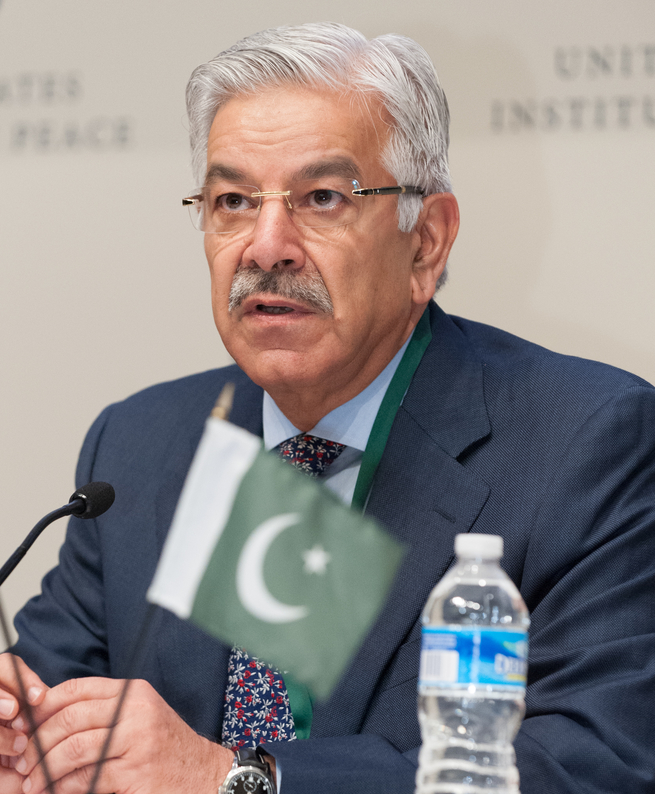
The same day, Defence Minister Khawaja Asif told Geo News in Sialkot that he supported creating new provinces, saying even 12 could be considered if the units were drawn on administrative rather than ethnic, linguistic or political grounds. “If there is a proposal for 12 provinces, then make it 12, but they should not be created on the basis of language, ethnicity or political interests,” he said, according to Geo News. He said power should not remain concentrated in Lahore, Karachi, Quetta and Peshawar, and that funds sent from the Centre remained at the discretion of provincial governments instead of reaching local bodies.
The News also reported his remarks, and Pakistan Today described the interview as being with a private television channel. Pakistan Today added that the government had not announced a formal plan or timetable for creating additional provinces or administrative units. The News said the exercise was not intended to target any particular province or weaken the standing of an existing unit.
Why the proposal is back
Pakistan has had four provinces since the provincial structure was restored after One Unit was dissolved in 1970. Arguments for smaller units have recurred for decades, usually around population, the concentration of resources in provincial capitals and the weakness of local government. Asif returned to that history on Sunday, recalling One Unit and citing Afghanistan as an example of a country that had expanded its number of provinces.
The immediate political context is a debate that has been running since the summer. In August, Interior Minister Mohsin Naqvi said the existing governance system had collapsed and called for more provinces; the PPP’s Sindh chapter demanded his resignation, while MQM-P renewed its call for a referendum on new administrative units, as KhabarWire reported at the time. MQM-P then opened a national dialogue on new provinces and Article 140-A, the constitutional provision requiring devolved local government, which KhabarWire also covered. The wider debate is tracked in KhabarWire’s New Provinces hub. Pakistan Today noted that Planning Minister Ahsan Iqbal had proposed 12 to 15 provinces in September and called for a national debate.
What is different now is the specificity and the sequence. The report describes a particular map, a referendum before the amendment and a possible legislative window in 2027. It also puts a senior cabinet minister, rather than a party leader or a backbencher, on record in favour of the number. The 28th Amendment label is not new: MQM-P pressed the government in March to use it for local-government reform under Article 140-A, KhabarWire reported then. No draft of a 28th Amendment has been published.
The constitutional obstacle
Creating a province is not a matter of a cabinet decision or a referendum alone. Pakistan Today noted that it would require a constitutional amendment, including a two-thirds majority in Parliament and, where the boundaries of an existing province are changed, a two-thirds majority in that province’s assembly. Under that procedure, the affected province has a veto over its own division, and the opposition in the Senate and National Assembly has leverage over the package.
That arithmetic is the central difficulty. The PPP, which leads the Sindh government, has opposed dividing Sindh; Sindh’s information minister rejected MQM-P’s push in August, saying the province would not be divided. Punjab’s division would cut across the PML-N’s main electoral base, and Balochistan’s reorganisation would reopen questions about resource distribution and provincial representation. The PPP’s Nisar Khuhro argued in August that a fragile economy could not sustain additional provincial governments, chief ministers and bureaucracies, KhabarWire reported.
A referendum would add a popular mandate but would not replace those votes. The report says the vote would be nationwide but does not say who would set the question, what wording would be used, or how its result would bind parliamentarians. Those choices would determine whether the exercise builds consensus or becomes another contest over identity and resources.
What it would change
Supporters present the plan as administrative reform: smaller units, services closer to citizens and less concentration of authority in four capitals. Asif’s argument on Sunday was chiefly about local government finance, saying funds transferred from the Centre were ultimately meant for local institutions but remained under provincial control. The plan does not, on the available reporting, settle how revenue would be shared among 12 provinces or how the National Finance Commission award would be recalculated.
The costs are also unresolved. More provinces would mean more governors, chief ministers, assemblies and bureaucracies, at a time when the federal government is trying to hold down spending under its IMF programme. The report says the proposal is intended to distribute development more equitably, but it gives no estimate of the fiscal effect.
For the political system, the proposal lands amid an unfinished constitutional dispute over Khyber Pakhtunkhwa, where emergency rule and governor’s rule have been in force since 11 October. The opposition has its own All Parties Conference track, whose agenda includes new provinces, KhabarWire reported. A 12-province plan would give that track a concrete demand to attack or negotiate over, and would test whether the coalition can agree on a constitutional package at all.
What is still uncertain
The first unknown is whether the proposal has any official standing. The News attributed it to sources; Pakistan Today said no formal plan or timetable had been announced; and no cabinet summary, draft amendment or referendum bill has been published. The newspaper’s report and the interview remain the original public accounts of the 12-province figure.
The second is the map. The reported four-four-three-two split is one version, and the report itself says boundaries and administrative structures have not been decided. Whether a new province would be carved out of south Punjab, Hazara or Karachi, and how existing divisions would be grouped, is not settled.
The third is the politics. The PPP has not responded on the record to the latest report, and Sindh’s government has rejected division in the past. MQM-P’s priority has been Article 140-A and administrative units rather than a specific 12-province map. Any package would need support across the coalition and from parties outside it, including groups that would lose or gain seats under a new map.
Until a draft is published, the plan is a proposal with a timetable attached, not a decision. The next signals to watch are a cabinet meeting, a change in parliamentary business, or a formal statement from the Prime Minister’s Office or the PPP.