Reporting snapshot · 15 November 2026 (Asia/Karachi). The constitutional route described here comes from unnamed PML-N sources and is not in the prime minister's office statement, which records only a general discussion of the country's political, economic and security situation. A senator who was present told The Express Tribune on Saturday that new provinces were not discussed at all, so the two accounts cannot be reconciled from the public record.
President Asif Ali Zardari and Prime Minister Shehbaz Sharif discussed on Saturday, 14 November, how Pakistan would put the question of creating new provinces to the public, with a joint session of parliament named as the decision point. PML-N sources quoted by The News International in its 15 November top story said the two leaders worked through the legal and constitutional process for a referendum on smaller provinces, and that the federal government has already prepared the procedure for holding one.
The meeting was held at the prime minister’s Model Town residence in Lahore, and it was the president’s second political engagement in two days: he had met Interior Minister Mohsin Naqvi in Nawabshah on Friday, a meeting the President’s House said concerned national security and the regional situation. According to The News, the Saturday conversation covered the legal and constitutional process for a referendum on creating more provinces across the country, and Shehbaz’s team, including his son Hamza Shehbaz, briefed the president on the arrangements the federal government has made. Sources close to Hamza Shehbaz said the former Punjab chief minister had been given a particular assignment at the prime minister’s office, where he met the Attorney General for Pakistan, the federal law minister and senior officials of the Law and Justice Department.
The route the government says it has prepared
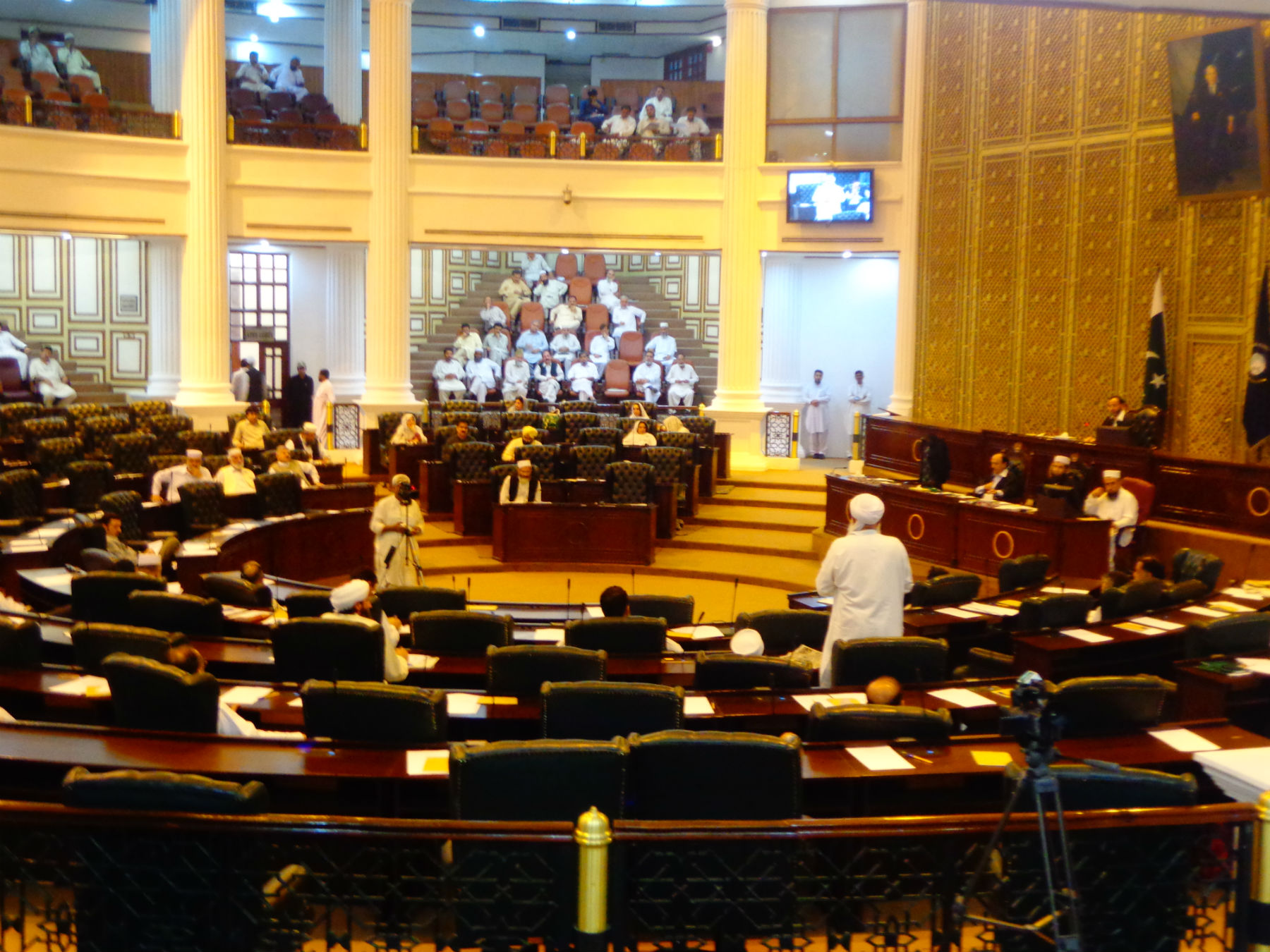
The machinery the sources described is specific. The president was told, The News reported, that the federal government has completed its homework on a proposal to adopt the procedure for holding a referendum under clause 6 of article 48 of the Constitution, and that the prime minister can, if needed, obtain parliament’s permission for a referendum on an issue of national importance. Approval to hold the referendum, the sources said, would come from a joint session of parliament, with both houses sitting together, and the PPP delegation was told that if the government failed to win a majority there, it could approach the Federal Constitutional Court to settle the referendum’s constitutional status.
That last step is what makes the route different from the one already tried. The Constitution provides for provincial assemblies to move resolutions on the creation of new provinces, a route both the PPP and the PML-N have insisted must come first. The Express Tribune reported that a referendum could bypass the existing requirement for resolutions by provincial assemblies, and that the proposal has found support among cabinet members and within the ruling party.
The map and the sequence are not new. KhabarWire reported the 12-province proposal on 9 November — Punjab divided into four, Khyber Pakhtunkhwa and Balochistan into three each and Sindh into two — together with the order The News had described then: a referendum first, a possible 28th Constitutional Amendment afterwards. What is new is the constitutional route the government says it has now prepared, the deadline attached to it and the arithmetic that would decide it.
Where the official record and the anonymous account diverge
The prime minister’s office statement is far thinner. It records only that the two leaders held detailed discussions on the country’s overall political, economic and security situation, that Shehbaz briefed the president on his recent visit to Türkiye and his participation in the 31st Conference of the Parties, and that both reaffirmed their commitment to economic stability, coalition cooperation and public welfare work. Pakistan Today reported that the same meeting was held against a backdrop of renewed debate over new provinces, with the PPP opposing any move to divide Sindh and sections of the PML-N backing a referendum. Neither the statement nor the accounts of the meeting mention a constitutional procedure.
A senator who was in the room told The Express Tribune something different. Saleem Mandviwalla said the creation of new provinces had not been discussed and that the PPP had yet to take a position; he described a long conversation about the state of the country, sugar prices and wheat imports, and about keeping the ruling coalition intact. Information Minister Attaullah Tarar, asked about the substance of the meeting, said he had not attended it and was therefore unaware of what had transpired. The two accounts cannot be reconciled from the public record: either the party strategy was discussed without appearing in the official statement, or the people speaking to The News are describing a different conversation.
The arithmetic behind a joint session
If the sources’ account is right, the decision has been handed to the parties rather than taken by the government. The PML-N’s position, they said, is to wait and see: it will watch what the PPP and the PTI do, and if both back the proposal it will follow them; if the PPP backs out, the PML-N may join the PPP’s ranks. The same sources said progress on the provinces has been judged necessary before the Senate elections expected in the first week of March 2027, a deadline that would put a constitutional amendment beyond the reach of a single parliamentary session.
Neither opposition party is where the government needs it to be. The PTI is weighing the proposal internally and has not said whether it will support a constitutional amendment, The News reported, while the PPP’s opposition to dividing Sindh was the position Pakistan Today recorded. The route described by the sources also assumes the provinces move first: a resolution on creating new provinces was expected to be presented in the Balochistan Assembly in the coming weeks. Balochistan’s interest in a redraw is not new either — the interior minister’s call for a governance reset and the PPP’s demand that he resign over it, together with MQM-P’s renewed push for a referendum, KhabarWire covered in August.
The question the speaker put to the Constitution
The constitutional argument is already being made in public. Punjab Assembly Speaker Malik Muhammad Ahmad Khan asked whether elected representatives could override the will of people who had expressed their desire for a separate province through a referendum, saying the people were sovereign and their representatives could not negate their expressed wishes. The Express Tribune reported that he raised the question at two ceremonies in Lahore, having been prompted by Naqvi’s referendum proposal. Referring to the PPP’s position that the Sindh Assembly is a stakeholder in any division of Sindh, he asked what position a provincial government could take against the wishes of its own people, and said the matter raised a constitutional question requiring constitutional interpretation.
He also made the case for smaller units on administrative grounds, arguing they were needed for improved service delivery, and pressed for a provincial finance commission and effective local government. Defence Minister Khawaja Asif has taken the same line, saying even 12 units could be considered if they were drawn on administrative rather than ethnic, linguistic or political grounds, Geo News reported.
What still has to move
Three things would have to happen before a referendum question could reach the people. Parliament would have to agree to hold one, either in a joint session or after the Federal Constitutional Court had settled the route. A provincial assembly would have to move a resolution, with the Balochistan Assembly the first expected to do so. And the parties would have to settle their own positions, since the government’s plan was described as contingent on the behaviour of the PPP and the PTI rather than on its own arithmetic.
None of that has happened. No referendum rules, draft amendment or timetable have been published, and the only public record of Saturday’s discussion remains the prime minister’s office statement. Until the procedure is settled in public, the joint-session route is a plan described by unnamed sources rather than a decision that exists on paper. KhabarWire’s New Provinces hub follows the proposals, the constitutional requirements and the political resistance they meet.