Reporting snapshot · 26 November 2026 (Asia/Karachi). The declaration binds the provincial courts and the bench has directed the Registrar to circulate it, but it leaves Section 10 untouched and no legislation has followed. The copy of the judgment on the court's case-law site ends at a blank date line, so the date of delivery rests on the reporting.
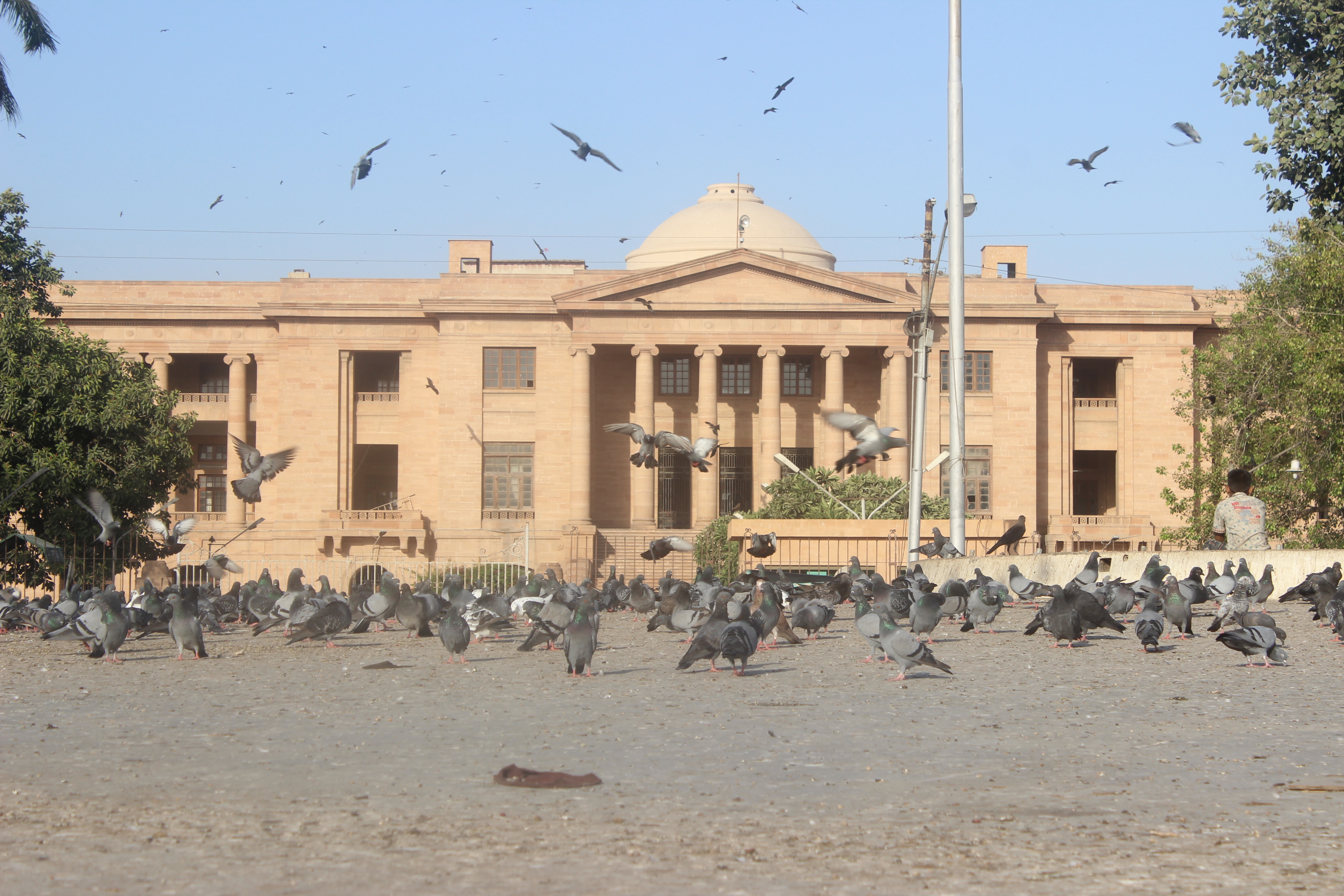
Christian couples in Sindh can once again ask a court to end a marriage that has failed without first proving adultery. The Sindh High Court revived Section 7 of the Divorce Act 1869 in a judgment delivered on Wednesday, Dawn reported, restoring a provision struck from the statute by a military government in 1981.
The two-judge bench of Justices Yousuf Ali Sayeed and Abdul Mobeen Lakho declared that the omission of Section 7 was inconsistent with Articles 9, 14, 20 and 25(2) of the Constitution and void, by virtue of Article 8, to that extent. Section 7 now stands revived in Sindh in the form it took on 8 July 1981, to be read together with Section 10 rather than in place of it. The judgment is published in full on the court’s case-law site as C.P. D-1773 of 2023, and The News International reported that its declarations govern proceedings under the Act already pending on the date of the judgment and those instituted later.
Practically, a spouse in Sindh may now seek the dissolution of a marriage that has irretrievably broken down, without proving any matrimonial fault. The bench ordered the Registrar to circulate the judgment to every provincial court with jurisdiction under the Act. Section 10 itself survives: the petitioners did not challenge the grounds it lists, and the first and fourth prayers were not pressed.
The case that reached the High Court
The petition was filed in 2023 by Peter Jacob, whom the Express Tribune reported as executive director of the Centre for Social Justice, the Legal Aid Society and a Christian woman resident in Karachi who said she had endured an unhappy and abusive marriage. The respondents were the Federation of Pakistan and the provincial government; the Archbishop of Karachi was impleaded in March 2024 and filed a written statement. The bench heard the petitions on 21 and 29 October and 10 November.
Section 7 of the Divorce Act 1869, as amended in 1975, directed courts to give relief on the principles of the English court for divorce and matrimonial causes. It was omitted by Item 7(2) of the Second Schedule of the Federal Laws (Revision and Declaration) Ordinance 1981, read with its Section 3, promulgated on 8 July 1981 while the Constitution stood in abeyance under martial law, and later affirmed by Article 270A.
What the omission left was Section 10 alone: a husband could petition on his wife’s adultery; a wife on her husband’s conversion followed by a further marriage, on rape, sodomy or bestiality, or on adultery coupled with bigamy, incest, cruelty or desertion of two years. Cruelty and desertion alone supported only judicial separation, which lets a couple live apart while the marriage bond survives.
The Lahore High Court had answered the constitutional question in Ameen Masih v Federation of Pakistan (PLD 2017 Lahore 610), declaring the same omission unconstitutional and restoring Section 7. But by Article 201 of the Constitution that judgment binds only courts subordinate to the Lahore High Court, so Christian litigants in Sindh stayed confined to Section 10, the bench said, noting an order of the XVI Family Court, Karachi South, showing the relief was not extended to them.
The constitutional reasoning
On liberty and dignity under Articles 9 and 14, the court asked what the law leaves a couple who have stopped living together: a dead marriage, a false accusation of adultery, or the renunciation of their faith. Since adultery is itself a criminal offence in Pakistan, the court wrote, a spouse who wants out must expose the most intimate parts of a relationship to scrutiny and in effect accuse the other of a crime. “We are unable to conceive of a more intrusive restriction on personal liberty than one that obliges an individual to remain bound in a relationship from which all substance has departed,” the judgment said.
On Article 25(2), the court said the omission discriminated between men and women: English law had long since stopped distinguishing between the grounds available to each spouse while Section 10 still did, and Section 7 had been the route by which a wife’s grounds were brought to parity with a husband’s. A law that perpetuates discrimination by foreclosing the avenue through which it could be redressed, the bench held, is no less inconsistent with Article 25(2) than one creating it.
Section 7 created no ground of divorce itself; it told courts to follow the principles of the English matrimonial courts, which the judgment quoted from Palmer as requiring them “to remain in step with the English Court all the times.” On Article 20, the freedom of religion, the bench answered the argument that reviving the section might interfere with denominational doctrine: it compels no Christian to seek a divorce, requires no church to treat a civil decree of dissolution as having sacramental effect, and leaves each denomination’s doctrine exactly where it was.
The church’s objection
The Archbishop of Karachi opposed the petition on three grounds, The News International reported: that the petitioners had no locus standi to sue on behalf of the Christian community; that any reform must follow meaningful consultation with all Christian denominations and representative bodies; and that the Roman Catholic Church regards marriage as a holy sacrament governed by canon law, so that a reform touching sacramental doctrine or ecclesiastical jurisdiction would offend Article 20. His counsel added that the Divorce Act 1869 and the Christian Marriage Act 1872 form a unified framework, and that any amendment should come through a uniform law for the whole country, to avoid conflicting rules on the recognition of marriages, divorces and legitimacy.
The bench treated those concerns as weighty and entitled to respect, while holding that they bear on how a legislature may reform the law rather than on whether the omission was unconstitutional. Reviving Section 7, it said, imposes no denomination’s doctrine on a citizen through the state: denying a civil remedy to a Christian who in conscience takes a different view would subordinate that citizen’s right under Article 20(a) to the denomination’s autonomy under Article 20(b).
What changes at the family courts
For a Christian couple in Sindh whose marriage has failed, the effect is a new ground to plead and a new question for the evidence: what a court will require to show irretrievable breakdown. The direction of travel is visible elsewhere. In March the Lahore High Court held that desertion is a valid matrimonial ground under the Divorce Act, the Express Tribune reported, and the Supreme Court this year recognised shiqaq as a ground for dissolving a Muslim marriage while barring family courts from converting a woman’s cruelty plea into khula without her consent, as its October judgment set out.
Two limits matter. First, the ruling is provincial. Punjab has had the benefit of the Lahore decision since 2017, and this judgment does not touch Balochistan, Khyber Pakhtunkhwa or the territories administered by Pakistan; whether their high courts will follow is unresolved. Second, the bench noted that after the 18th Amendment marriage and divorce fall within the residual competence of the provinces, so the Sindh Provincial Assembly remains the body able to alter the Act, and it has not done so. The federal and provincial law officers told the court they could not refute the petitioners’ case on the omission’s effect, and fell back on Article 270A, which protects the 1981 ordinance, saying fresh legislation remained under consideration in both the federal and provincial domains, The News International reported.
The wider legislative argument is already running in Punjab, where a bill to amend the Christian Marriage Act 1872 drew church leaders’ objections that it addressed the marriage age alone and not divorce, annulment, custody and separation. The consultation they are asking for has its own context in the Holy See’s first visit of its kind to Pakistan, which brought the foreign minister to Islamabad in October.
What the judgment leaves untouched is the shape of the law. Section 10 stands, Section 7 now operates beside it, and until a legislature acts, what a Christian family court in Sindh does with a case built on irretrievable breakdown will be decided case by case.