Reporting snapshot · 26 November 2026 (Asia/Karachi). Police and JUI-F disagree on whether its leaders were arrested or only restricted, the number of workers held is unclear, and by Thursday afternoon the party had not said whether its Sargodha conference had gone ahead.
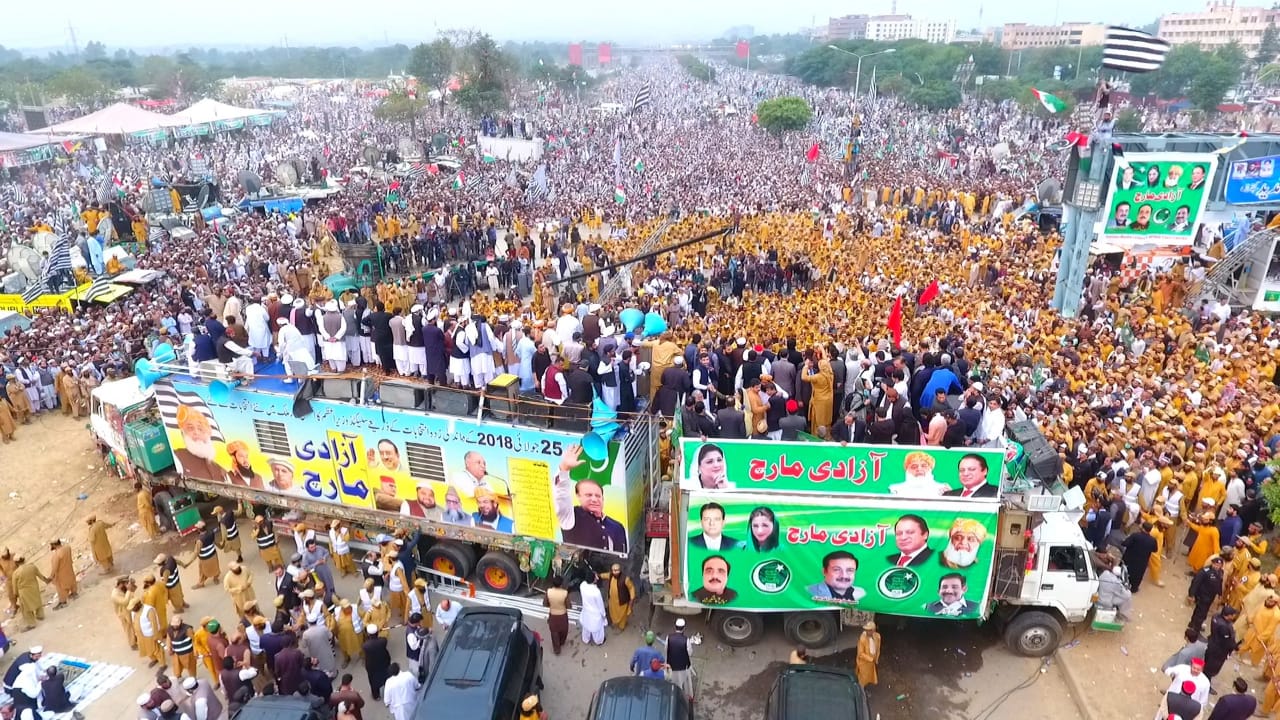
Police in Sargodha confirmed on Thursday, 26 November, that three senior figures from the Jamiat Ulema-e-Islam-Fazl had been taken into custody, as the party tried to hold a conference in the city that the district administration had banned.
Maulana Abdul Ghafoor Haideri, a member of the National Assembly and the party’s secretary-general, Maulana Amjad Khan, its Punjab amir, and Malik Awais, central president of its student wing Jamiat Talaba-e-Islam, were detained at a house in Sargodha late on Wednesday, Sargodha Regional Police Officer Sohail Sukhera told Dawn. Mr Sukhera said the three had been served notices for violating Section 144, the provision used to restrict assembly, and added that several other party leaders had also been taken into custody.
The police officer disputed the word arrest. The leaders, he said, had not been arrested but “their movement had been restricted in the division” — a distinction that goes to the heart of the dispute between the government and a party that has accused it since October of using administrative powers to squeeze the opposition.
JUI-F rejected that account. Party spokesman Aslam Ghouri said the three had been arrested without warrants, demanded their immediate release and warned that the Punjab government would be held responsible for the consequences. In a statement quoted by Dawn, he asked why political gatherings were being banned when the province’s chief minister, Maryam Nawaz, was herself holding rallies.
By Thursday afternoon, police had not said how many JUI-F leaders or workers were being held across the division. Nor had the party said whether Maulana Fazlur Rehman, its chief, had managed to leave Lahore for Sargodha.
A seven-day ban and a sealed city
The legal cover for the restrictions is a Section 144 order issued by Sargodha Deputy Commissioner Hussain Ahmad Raza Chaudhary on 23 November. It runs for seven days and bans public gatherings, sit-ins, rallies, processions and demonstrations across the district, as well as the display of weapons and pillion riding. The order cited intelligence reports that gatherings could be exploited to disturb public order, Pakistan Today reported.
The ban covers 26 November, the date JUI-F had chosen for a conference on constitutional supremacy and public rights. The party said it would proceed despite the restrictions, and on 24 November accused the Punjab government of blocking its chief’s movement in Lahore, Business Recorder reported.
A separate Section 144 order in Lahore, running from 24 to 26 November, banned gatherings of five or more people in public places and on roads, highways and motorways. That order cited a “serious and imminent threat” to public peace from militant and terrorist organisations and hostile intelligence agencies, Dawn reported.
On the ground in Sargodha, JUI-F’s Punjab spokesman Aslam Ghori said all roads leading to the city had been blocked and the motorway closed, accusing the administration of citing fog on a clear day. He said thousands of party workers were trying to reach the city despite the restrictions, The Express Tribune reported. The party urged its supporters to remain peaceful and avoid provocation.
The court plea that preceded the crackdown
The detentions follow a week in which Fazlur Rehman’s movements were restricted in Lahore and the Lahore High Court was drawn into the dispute.
On 24 November, the JUI-F chief said he had been placed under an hours-long “state siege” at his residence in Lahore, which prevented him from addressing a seminar organised by the Lahore High Court Bar Association. Police began removing barriers around the house that evening and told him he was free to leave, Dawn reported.
A JUI-F lawyer, Advocate Abrar Hussain, filed a plea in the Lahore High Court alleging that about 3,000 police personnel had been deployed outside the residence and that no written order authorising the restriction had been produced. The court warned that anyone found responsible for illegally detaining Fazlur Rehman would face the consequences, The Express Tribune reported. KhabarWire reported the plea and the competing accounts on 24 November.
The Sargodha detentions are a separate action, but they draw on the same administrative machinery. In Khushab district, police detained several local JUI-F leaders under the Maintenance of Public Order Ordinance late on Wednesday and registered a first information report against 11 named party workers, according to Dawn, which holds a copy of the FIR.
The report accuses the named men of gathering outside Madrasa Taleem-ul-Islam in Khushab, blocking a street and delivering inflammatory speeches in violation of a Section 144 order imposed on 23 November. The case was registered under sections of the Pakistan Penal Code dealing with disobedience of a public order, public nuisance, wrongful restraint, rioting and unlawful assembly, read with a section of the MPO Ordinance dealing with the dissemination of rumours. The FIR names individuals; it does not establish their guilt, and no court has yet tested the allegations.
A rift that has been building since October
The wider rift dates to the federal government’s handling of Khyber Pakhtunkhwa. After talks with the PTI-led provincial government collapsed, the Centre imposed emergency and governor’s rule in the province on 11 October, a step KhabarWire reported at the time. Fazlur Rehman opposed the move, argued that political differences should be settled through negotiations and accused the government of reneging on commitments made while he was trying to mediate, Geo News reported.
The dispute widened into a public argument with Interior Minister Mohsin Naqvi and Defence Minister Khawaja Asif. In November, police and Federal Constabulary personnel were withdrawn from security duties at JUI-F residences in Islamabad and Dera Ismail Khan, Geo News reported.
At the same time, the opposition has been trying to close ranks. On 4 November, opposition parties formed committees for an All Parties Conference at Fazlur Rehman’s residence, a coordination effort KhabarWire covered here.
The government has presented the Section 144 orders as public-order measures, citing police and intelligence reports. JUI-F says they are a coordinated attempt to stop an opposition party from assembling in the run-up to a wider constitutional debate.
What happens next
The practical question is whether the Sargodha conference takes place at all. JUI-F had said it would go ahead regardless of the restrictions, and its spokesmen insisted on Thursday that the event would be held. But the district administration has banned the gathering, the roads into the city have been closed and three of the party’s most senior organisers are in custody.
The political question is larger. If Fazlur Rehman is stopped from reaching Sargodha, or if the conference is broken up, the party has said it will treat the restrictions as an assault on its constitutional rights, Business Recorder reported. If the gathering goes ahead despite the ban, the administration will face a test of whether it is prepared to enforce its order against a national party.
The legal question is whether the courts will intervene. The Lahore High Court is already seized of the earlier plea over Fazlur Rehman’s confinement, and JUI-F has said it will approach the Rawalpindi bench over the disappearance of its leaders. No court has yet ruled on the Sargodha order itself.
For now, the verified facts are narrow. Three senior JUI-F figures were taken into custody and served notices under Section 144; police say they were not arrested. A seven-day ban on public gatherings covers the conference date. The party says roads were sealed and its workers were stopped. What remains unknown is how many people are being held, whether the conference went ahead, and whether the confrontation stays inside the courts or moves onto the streets.