Reporting snapshot · 8 October 2026 (Asia/Karachi). The judgment was issued on Wednesday 7 October and reported the same day and the next morning. This account rests on published reporting by Dawn, Pakistan Today and The Express Tribune; KhabarWire has not obtained or read the certified copy of the 15-page judgment, and the report of a Council of Islamic Ideology opinion comes from a single outlet.
What the Supreme Court ruled
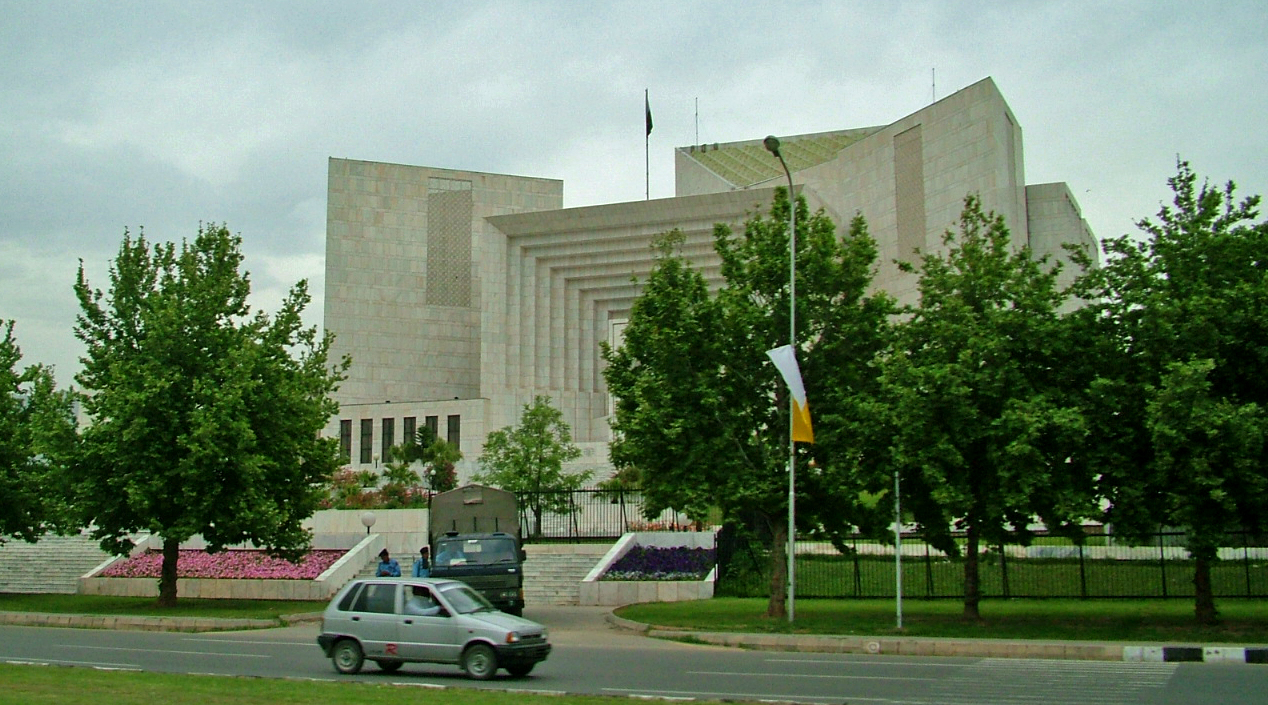
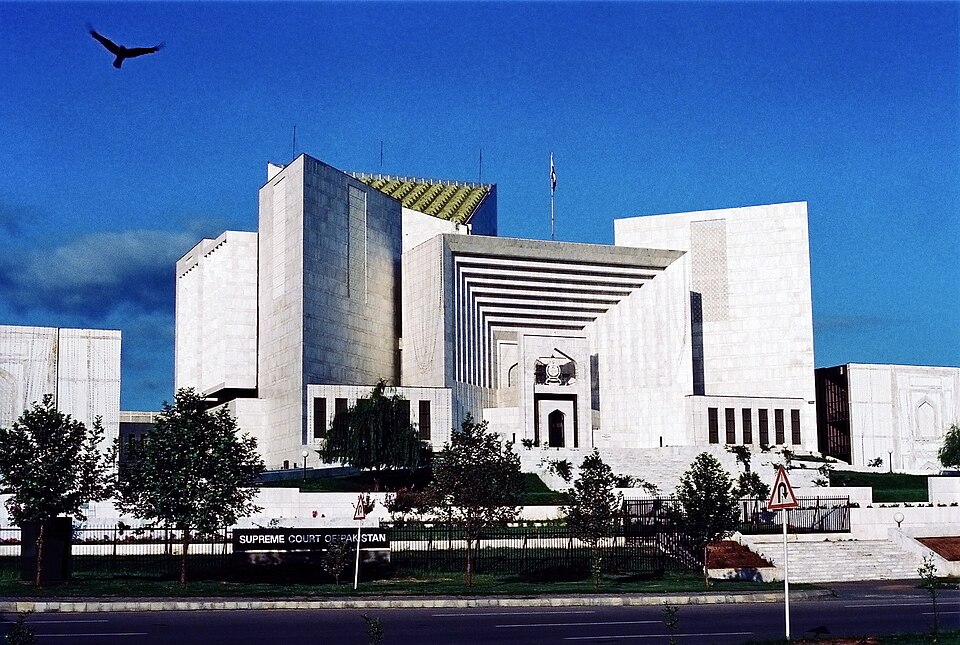
The Supreme Court ruled on Wednesday that a marriage may be dissolved on the ground of shiqaq — a serious and continuing breakdown of the marital relationship — under the residuary provision of the Dissolution of Muslim Marriages Act, 1939, even where cruelty has not been proved, Dawn reported. At the same time, the court held that family courts cannot convert a woman’s cruelty-based plea for dissolution into a decree of khula without her clear and voluntary consent, a step that can strip her of her dower.
Dawn and Pakistan Today reported that the 15-page judgment was issued by a five-member bench headed by Justice Shahid Waheed and comprising Justices Naeem Akhter Afghan, Muhammad Hashim Khan Kakar, Ishtiaq Ibrahim and Miangul Hassan Aurangzeb.
“A marriage may be dissolved by a court, but neither spouse should be judicially deprived of a lawful right, nor judicially burdened with a stigma, without the foundation of law and evidence,” the judgment said, according to Dawn.
The two cases behind the ruling
The bench decided two connected petitions filed by Zainab Bibi and Imran Naz Begum against separate orders of the Peshawar High Court, Pakistan Today reported.
Both cases began as family suits in which the wives sought dissolution of marriage on the ground of cruelty, alongside claims for maintenance, dower and dowry articles. The family courts found the cruelty allegations unproven, but dissolved the marriages through khula and directed the women to return their dower. The appellate court and the high court largely upheld those decrees, according to The Express Tribune.
The women then argued before the Supreme Court that they had neither sought nor consented to khula, because their cases had been founded on cruelty. The Supreme Court partly allowed the appeals: it held that the khula decrees could not stand to the extent they rested on an involuntary conversion, but it did not set aside the dissolutions altogether.
Khula, shiqaq and the question of dower
The judgment turned on a distinction that the bench said the lower courts had blurred. Khula proceeds from a wife’s voluntary election to seek release from the marriage, and ordinarily carries financial consequences, including the return or surrender of benefits received. A statutory dissolution under the 1939 Act, by contrast, rests on an established matrimonial ground; section 5 of the Act preserves a woman’s right to dower when a marriage is dissolved under it.
Shiqaq, the court held, is a separate basis for dissolution under section 2(ix) of the Act — the residuary clause covering “any other ground which is recognised as valid for the dissolution of marriages under Muslim law”. Unlike khula, it does not require a wife to surrender her dower as the price of her release, the bench said.
The Supreme Court, therefore, set aside the directions requiring the two women to return, surrender or waive their dower merely because the marriages had been treated as khula. Their entitlement to dower will instead be determined under the 1939 Act, Dawn reported.
What does — and does not — count as shiqaq
The bench was explicit that shiqaq is not established by ordinary marital unhappiness. “Mere incompatibility, occasional disagreement, anger, short separation or the existence of matrimonial litigation cannot, by themselves, satisfy the test,” the judgment said, according to Dawn.
What is required, the court said, is a genuine, serious and continuing rupture of such a nature that the essential purposes of marriage can no longer realistically be fulfilled, coupled with the failure of meaningful reconciliation efforts. It linked the concept to verse 35 of Surah An-Nisa, the Quranic verse dealing with reconciliation between spouses. The Express Tribune reported that the bench also sought the opinion of the Council of Islamic Ideology, which said a serious breach between spouses, where fault cannot fairly be attributed to one side alone and reconciliation has failed, could constitute shiqaq recognised under Muslim law.
The court stressed that the law “should neither rush towards separation nor prolong a matrimonial relationship which has ceased to serve its lawful purposes”, and that a husband should not be judicially branded cruel without the evidentiary foundation required by law.
Why it matters
The ruling addresses a recurring problem in Pakistan’s family courts: a woman petitions for dissolution on a statutory ground such as cruelty, fails to prove it, and then finds her case disposed of as khula — with a direction to give up her dower. The Supreme Court has now said that conversion cannot happen without her explicit election, and has offered shiqaq as a lawful alternative where the evidence shows an irreparable breakdown rather than a proven wrong.
The judgment does not create a divorce-on-demand standard. It requires courts to distinguish an unhappy marriage from one in a state of shiqaq, and it leaves the dissolution of both marriages intact on the new ground. It follows earlier decisions in the same line, including a January 2026 Supreme Court ruling that lower courts must not convert a wife’s divorce demand into khula on their own motion, and a September 2026 Lahore High Court ruling on dower in khula cases.
The decision also sits alongside other recent judicial interventions on gender and family law. In June the Supreme Court ruled that acid attacks should be treated as more serious than homicide and pressed for reforms, as KhabarWire reported. In April the Punjab Assembly set the minimum marriage age at 18 for both sexes, a change KhabarWire covered.
What is still uncertain
Several points remain open. KhabarWire has not read the certified judgment, so the full reasoning, any dissenting or concurring notes, and the precise relief granted to each petitioner rest on press accounts. The two women’s names are rendered slightly differently across outlets, and the financial outcome of their dower claims will be decided in the proceedings below. It is not yet clear how quickly family courts will apply the shiqaq test, or how lower courts will weigh it against the more established cruelty and khula routes.
Sources & reporting notes
This is a synthesis of published material, not eyewitness reporting. Sources were reviewed on 8 October 2026 (Asia/Karachi). The judgment is a primary record, but KhabarWire did not obtain the certified copy; the account here relies on three independent established outlets — Dawn, Pakistan Today and The Express Tribune — that reported the written judgment on 7 and 8 October 2026. The Council of Islamic Ideology detail is drawn from The Express Tribune alone. The court did not attend the hearing and was not in contact with any party.
- Dawn — Marriage can be dissolved on a woman's initiative on grounds of shiqaq even if cruelty is not proven: SCPublished 7 October 2026 · Independent report: the five-member bench, the 15-page judgment, the khula–shiqaq distinction, the section 2(ix) basis and the protection of dower.
- Pakistan Today — SC recognises shiqaq as ground for dissolution of marriagePublished 7 October 2026 · Independent report: the two petitions by Zainab Bibi and Imran Naz Begum, the family-court and Peshawar High Court history, and the test the Supreme Court set for shiqaq.
- The Express Tribune — SC bars forced conversion of dissolution pleas into khulaPublished 8 October 2026 · Independent report: the bar on converting a cruelty claim into khula without consent, the Council of Islamic Ideology opinion, and the finding that shiqaq is distinct from cruelty.
- Dawn — Courts should not convert divorce cases into 'khula': SC (January 2026)Published 25 January 2026 · Context: an earlier Supreme Court ruling in the same line, cited here only for background and not as a source for the 7 October judgment.

_-_Flickr.jpg)