Reporting snapshot · 18 November 2026 (Asia/Karachi). The two companies announced the agreement on Tuesday, 17 November, but neither the framework document nor a statement from the Petroleum Division or Inter State Gas Systems has been published, so the project list, the financing structure and any timetable remain unconfirmed.
Saudi Arabia’s Delta Energy Saudi has signed an agreement with Pakistan’s Inter State Gas Systems (ISGS) to explore an energy infrastructure programme in the country with a proposed investment of about $30 billion, the companies said in a statement on Tuesday, 17 November. The Express Tribune carried Reuters’ report and Profit by Pakistan Today published the same account, which described the deal as covering proposed cross-border gas pipelines, liquefied natural gas facilities and export terminals. Daily Times reported the agreement separately and noted that the proposed investment remains subject to further evaluation and approval.
The headline number is large and the caveat is explicit. By the companies’ own account the agreement is a framework for evaluating projects, and it does not constitute a final investment decision or a commitment to finance or build them. No cost-sharing structure, no timetable and no list of individual projects has been published. What has been announced is a decision to study whether a gas network running into Pakistan from the west, turning towards Gwadar and possibly crossing the whole country to the Indian border, can be built at all.
What the $30 billion would cover
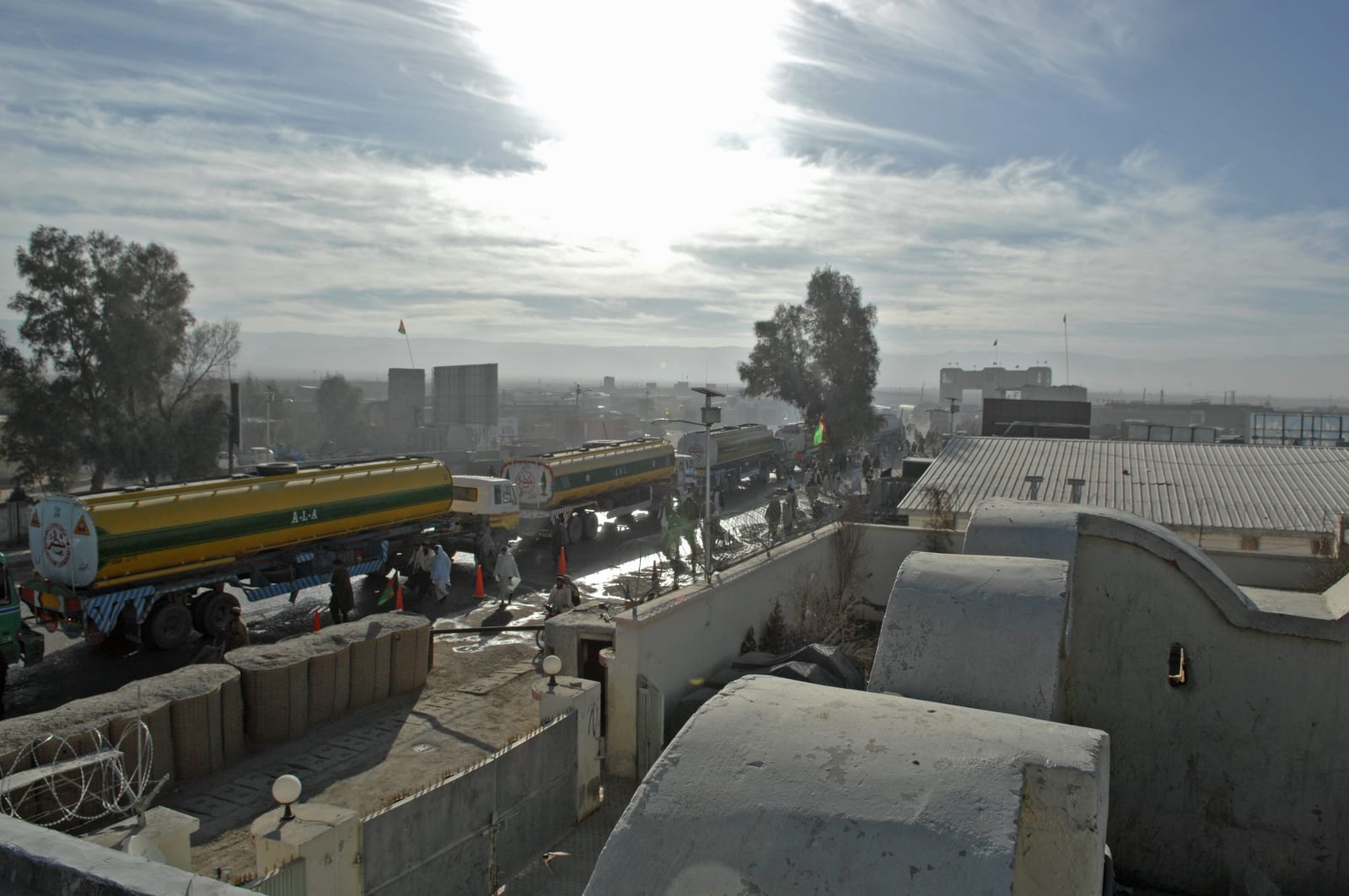
Four elements appear in the reporting. The first is a natural gas pipeline entering Pakistan through its western border and extending towards Gwadar. The second is a possible extension of that line to the eastern border. The third is a set of liquefied natural gas facilities, gas processing and storage plants, and export terminals. The fourth is a pipeline from Chaman, on Pakistan’s border with Afghanistan, running across the country to the Indian border near Fazilka, which Delta Energy described as a “core strategic commitment” of the programme, Reuters reported.
Read together they describe three ambitions layered on one another: an import corridor bringing gas overland from the north-west, a processing and export complex on the Arabian Sea coast, and a transit line carrying gas from one end of Pakistan to the other. Each depends on the others. A pipeline to Gwadar is worth little without processing and export capacity; a line to Fazilka is worth little without gas to fill it; and neither works without a source.
The Chaman-Fazilka line is the hard part
The eastern line is the element with the least obvious path to a decision. Delta Energy said that developing it would require formal engagement and agreements with authorities in both Pakistan and India, Reuters reported. That is the condition the announcement itself sets: a pipeline running from Chaman to Fazilka leaves Pakistan across an international border, and the two governments have not agreed such a line before. Reuters noted that plans for other pipelines intended to bring gas into Pakistan have been delayed for years, which is the setting in which a new proposal arrives.
Afghan gas, and what this is not
Delta Energy identified Afghanistan’s Kashk gas concession and other Afghan natural gas reserves as potential sources of supply, Reuters reported, and said the programme was separate from the Turkmenistan-Afghanistan-Pakistan-India project and would not depend on Turkmenistan supplies. The first statement frees the proposal from one supplier; the second does not free it from the ground. Gas from Afghan fields would enter Pakistan through the same north-western corridor, in the stretch of Balochistan where the campaign that produced the quadcopter strike on a patrol at Kolpur has been running since the start of November.
Whether this programme and TAPI compete or complement has not been settled publicly. Both draw on Afghan gas and on the same stretch of border, and the announcement says only that this one does not depend on Turkmenistan.
What has actually been committed
Nothing financial, and no construction. Reuters reported, and Daily Times repeated, that the agreement provides a framework for evaluating the projects and does not constitute a final investment decision or a commitment to finance or build them. There is no published document, no feasibility schedule and no figure against which the $30 billion can be tested. On the evidence available, a study has been commissioned and the parties have said they intend to carry it out.
The choice of counterparty is itself worth noting. Inter State Gas Systems is the body the Petroleum Division uses to execute and monitor gas contracts, and it was the signing line for the upgradation agreements that four Pakistani refiners signed in September. An evaluation-stage agreement with the agency that would carry the contracting role is what a project looks like before it becomes one.
Why it matters if the studies go anywhere
Two things would change. The first is import structure. Pakistan has been managing a winter gas shortfall on a thin margin of liquefied natural gas cargoes, two of them delivered in October against an estimated 24 needed. A second, overland supply route from the north-west would be a different kind of answer to that arithmetic, carrying gas on a fixed route rather than in cargoes bought against spot prices.
The second is export capacity. A network reaching Gwadar with processing, storage and export terminals is the infrastructure an export-oriented energy sector needs on the Arabian Sea coast, and the same arrangement that would import gas could one day carry it back out.
Three things to watch
First, the framework document. Until ISGS or the Petroleum Division publishes it, the number of projects, the cost split and whether any contact with New Delhi has begun are all unknown, and the $30 billion headline cannot be weighed against anything.
Second, the sequence. If the western-border and Gwadar components are studied first, because they are the parts that do not need New Delhi, then what emerges would be an import and export complex on the Arabian Sea and a long pipeline to Chaman, and the cross-country line might follow later or never.
Third, the security and consent questions. A study that produces a feasibility report still has to survive a financing decision, a security assessment along the route, a right-of-way process through the provinces on the line and, for the Chaman-Fazilka line, the consent of a government in Delhi that has given no indication of giving it. KhabarWire’s Pakistan Fuel & Energy file collects the supply decisions that sit behind those questions.