Reporting snapshot · 5 November 2026 (Asia/Karachi). The rollover was confirmed only in remarks by the finance minister after a Senate committee meeting on Wednesday, 4 November: Riyadh has published no new maturity date and the State Bank has issued no notice. The December IMF decision and the US liquidity facility request both remain unsettled.
What changed on 4 November
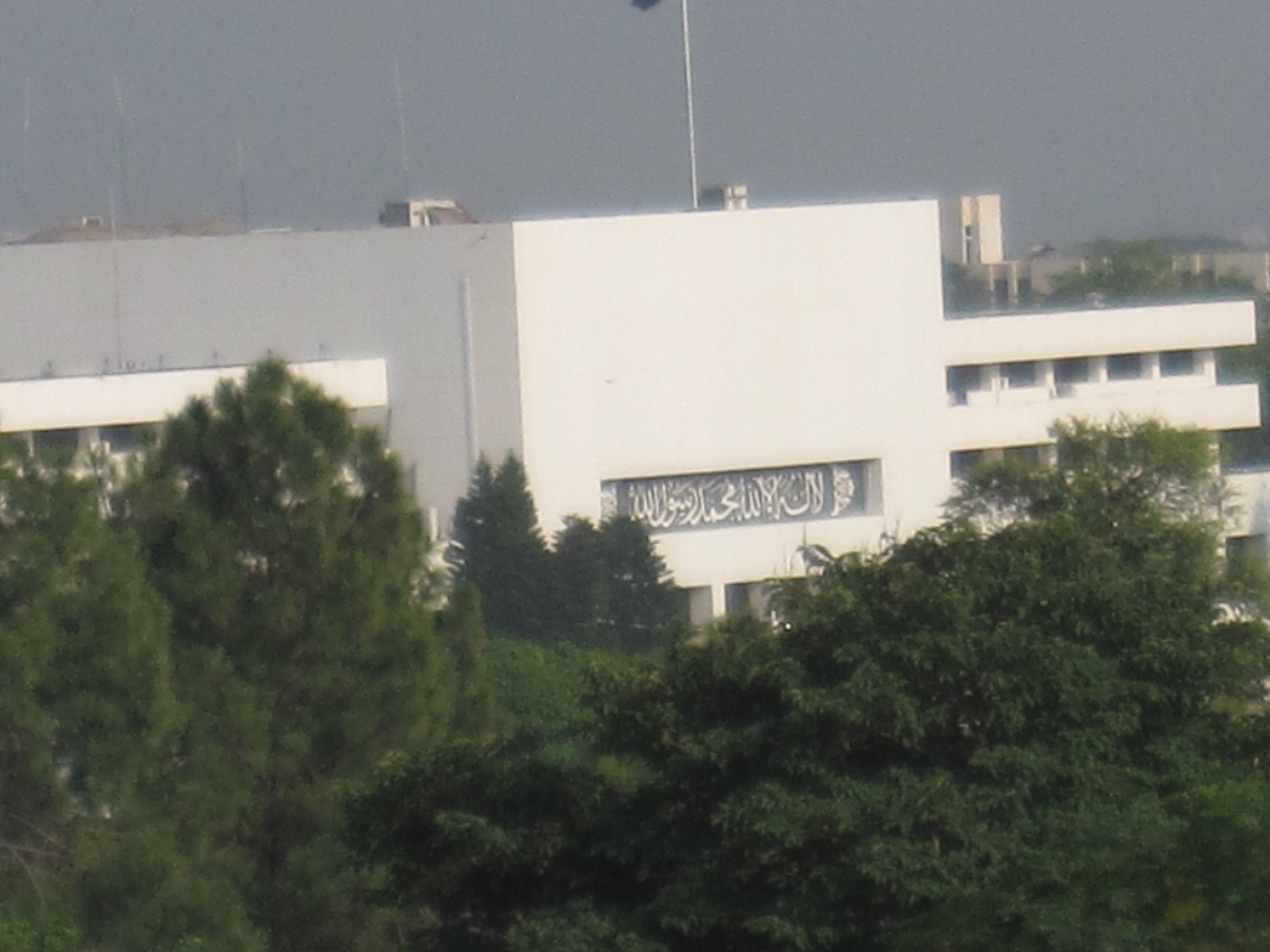
Saudi Arabia has extended the repayment of the $3 billion short-term loan it placed with Pakistan’s central bank, a facility that fell due in October, Finance Minister Muhammad Aurangzeb said after the Senate Standing Committee on Finance and Revenue met at Parliament House in Islamabad on Wednesday, 4 November. “It has been rolled over. You don’t need to worry. It has been extended for a reasonable period,” he told reporters, The Express Tribune reported. Pakistan Today reported the same confirmation, without a new date attached to it.
The rollover lands in the middle of the government’s account of its own financing. The committee was told that Pakistan faces $21.5 billion of external financing requirements in the current fiscal year, and that it can comfortably meet about $5 billion of debt servicing over the next six months while holding foreign exchange reserves of $21.5 billion, according to the Senate’s own record of the meeting. Our October reporting on the central bank’s reserve rebuild described the position this extension now props up, and the IMF programme tracker follows the December decision the same briefing pointed towards.
The loan and the wider Saudi line
The facility is the “additional” $3 billion deposit Riyadh agreed in April 2026, when the two governments signed an agreement extending an existing $5 billion placement at the State Bank alongside a new $3 billion facility, the first $2 billion of which reached the central bank and the final $1 billion tranche a few days later. What is new is the first rollover of that additional money, nearly seven months after it was agreed.
It is the smaller of the two Saudi facilities that matter this year. Riyadh has provided Pakistan with $8 billion in short-term debt, and the repayment of $5 billion of that has already been extended to December 2028, The Express Tribune noted. Aurangzeb tied the shorter extension to the wider relationship rather than to the calendar: “given Pakistan-Saudi Arabia strategic relationship you don’t need to worry about for how long it is. But it’s not an issue,” he said.
The numbers the committee was given
The substance of the session was the Annual Borrowing Plan, which the minister presented to the committee. According to the Senate release, the plan projects public debt of Rs86.7 trillion, additional borrowing of Rs6.86 trillion and gross financing requirements of Rs28.65 trillion, and records that public debt has fallen from 75.1 per cent of GDP in FY2023 to 68.6 per cent in FY2026.
The finance secretary, Imdadullah Bosal, briefed the panel on the repayment schedule. Pakistan’s external financing requirement for the year is $21.5 billion, including $17.5 billion of principal repayments, and $10.5 billion of that is expected to be rolled over by bilateral and commercial creditors, leaving net payments of principal and interest of $11 billion, The Express Tribune reported. $5 billion had already been repaid in the first four months of the fiscal year.
The debt trajectory has also changed in direction rather than only in scale. Bosal told the committee that the debt burden had dropped from 75 per cent of GDP in 2023, with annual increases of 28 per cent, to 68 per cent, with annual increases of 7.7 per cent, which he attributed partly to primary budget surpluses in three consecutive years; committee members argued that a stable exchange rate had done as much work as the surpluses. Pakistan Today reported the wider arc: external debt rose by roughly $6 billion to $7 billion a year through the previous decade, from $45 billion in FY2015-16 to more than $100 billion today, but the annual increase has slowed to about $1 billion over the past four years, and the government has retired, bought back or exchanged some Rs5.9 trillion of debt, including Rs3.6 trillion owed to the State Bank.
What happens if the US facility does not arrive
Much of the briefing was about a facility Pakistan does not have. Islamabad asked the United States in July for a $10 billion liquidity support facility, hoping for approval by the end of September, and it has not arrived. “If ($10 billion) liquidity support facility comes, fantastic, If it doesn’t come, we will, Insha’Allah, continue to work,” Aurangzeb said. Pakistan Today reported that Pakistan made the request and would carry on pursuing its financing plans even if the facility never materialised.
The plan without it is already running. Pakistan raised $3 billion in international markets in the first week of September with an order book of $6 billion, in what KhabarWire reported at the time, and Aurangzeb said the government would keep issuing Eurobonds, Panda bonds and dollar-settled rupee-linked bonds, with the new Eurobond structured at five and a half years so that maturity falls into the next fiscal year instead of piling up in one. He separated sovereign support from commercial finance: the US Export-Import Bank and the Development Finance Corporation can back American exporters and investors in Pakistan, but a liquidity facility would support the government itself.
Two targets in the briefing point to December. The minister said the IMF board was tentatively scheduled to approve two loan tranches worth $1.2 billion, The Express Tribune reported, while Pakistan Today reported that he confirmed the board would review Pakistan’s $7 billion programme in December without naming a date. The same session set out the government’s rating ambition: a B-plus sovereign rating by the end of this fiscal year or early next, with a longer-term aim of entering the double-B category, a goal reported in October.
What is still uncertain
The new maturity date is the gap that matters most. The minister said the tenure had been extended for a reasonable period and gave no date; sources told The Express Tribune that the Kingdom had granted another short-term extension. Riyadh has not said whether the new term matches the medium-term arrangement already given to the $5 billion tranche, and no notice from the Saudi Fund for Development or the State Bank has been published. The tenor of the rollover is the single fact a reader cannot yet verify.
Two other numbers are provisional. The $21.5 billion external financing requirement and the $10.5 billion of expected rollovers are projections presented to the committee, not settled outcomes, and they assume no bunching of maturities in any single year — a goal the minister said the new borrowing structure was designed to achieve. The December IMF approval is likewise tentative, and no date has been fixed for the board.
The committee was not only discussing the money. It also pressed the State Bank to review the rules under which parliamentarians obtain foreign currency for personal travel, including politically exposed person clearance requirements and a requirement to appear in person before exchange companies, and it expressed displeasure at a reply dated 30 October that the Senate release records as having come from a deputy director rather than a senior authority. For a government whose stated strategy is to lengthen maturities, the rollover defers a repayment without changing the pattern of short-term external borrowing that the borrowing plan is meant to reduce.