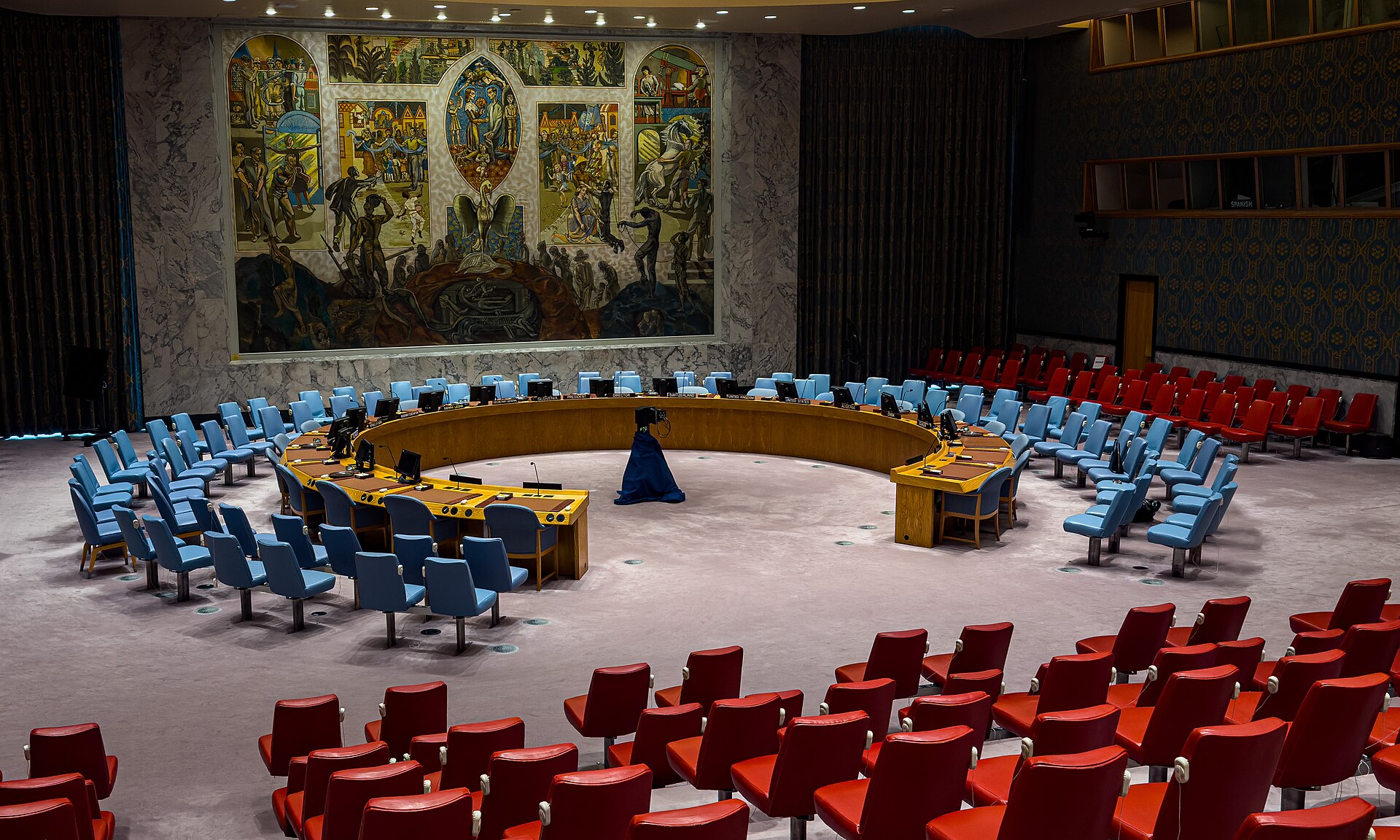
Reporting snapshot · 27 October 2026 (Asia/Karachi). The General Assembly session was held on Monday, 26 October, and produced no decision and no new timetable; the positions on the veto remain where they were. The main limitation is that Pakistan's mission has not published the text of its statement, so the detail available is the United Nations' meeting record and two Pakistani accounts of what was said.
What Pakistan said
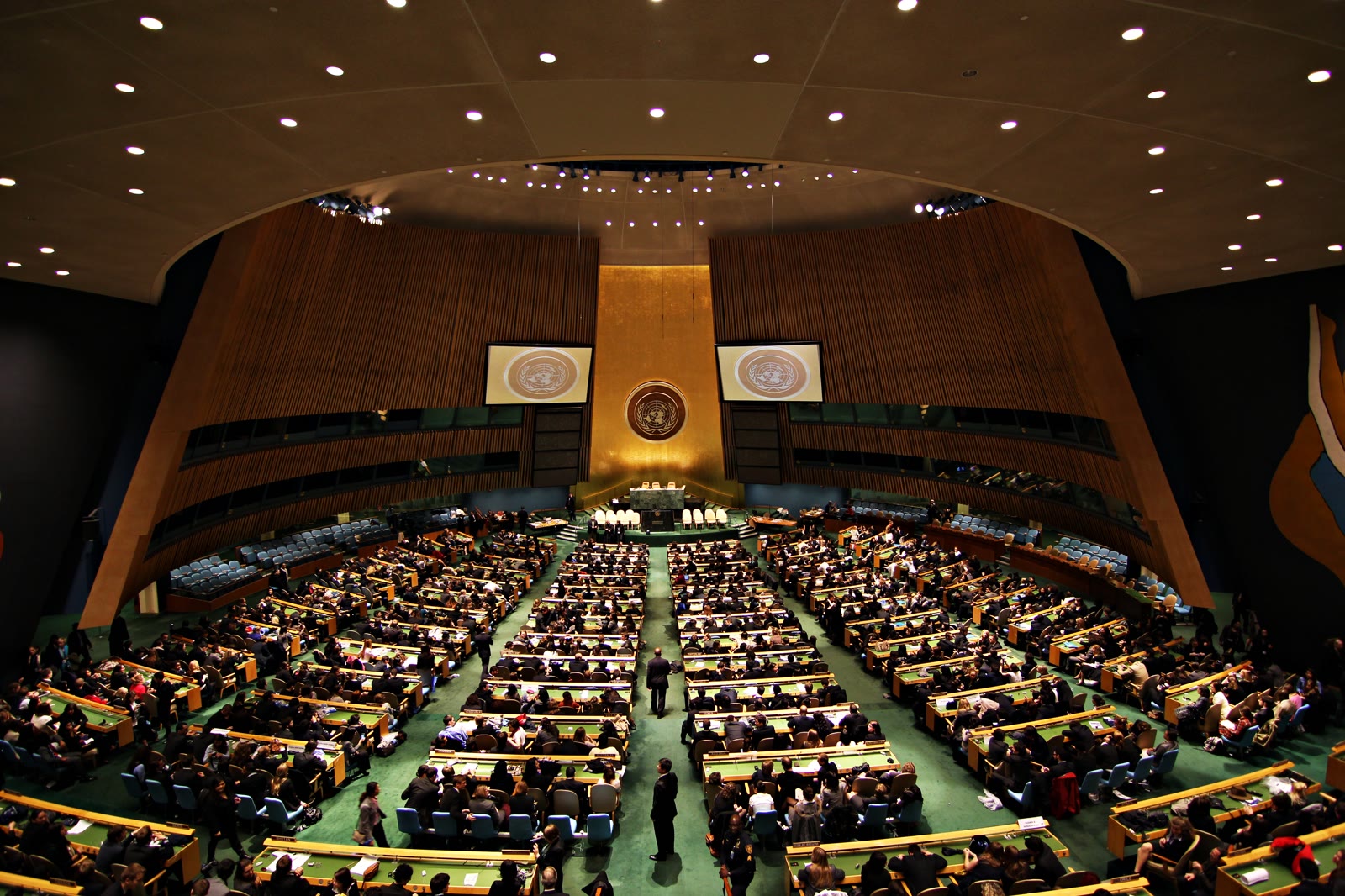
Pakistan’s representative at the United Nations told the General Assembly on Monday, 26 October, that the Security Council veto should be abolished or, at a minimum, severely restricted, and that it must not be expanded.
The speaker was Gul Qaiser Sarwani, counsellor and political coordinator at the Pakistan Mission to the UN, according to Dawn and Geo News. The United Nations’ own meeting record renders the central line of his intervention as “Let’s be clear: The problems cannot be the solution”, while Geo News reported the same sentence as “Let us be clear: The problems cannot be the solution”.
What is new this week is the setting. The session was convened by a veto cast over the Strait of Hormuz, and Pakistan used it to attach a mechanism — a larger elected bloc and higher voting thresholds — to a demand to scrap the veto. KhabarWire reported Pakistan’s rejection of new permanent seats at the same General Assembly session on 24 September; that statement was about who sits on the Council, while Monday’s intervention was about who holds the veto and how it is used.
The UN’s account of the session records that Sarwani opposed adding permanent seats and said more vetoes would deepen existing inequalities and risk further paralysis. He proposed expanding the elected membership of the Council and adjusting voting thresholds to counterbalance the power of the permanent members. According to Dawn, he added that any restraint on the veto has to remain consistent with the Charter, and that the veto must be addressed together with the other four clusters of the Intergovernmental Negotiations on Security Council reform rather than piecemeal. He closed by calling for “Reform for all. Privilege for None!”
Why the debate was held
The session was not an ordinary debate on the agenda. It was convened under General Assembly resolution 76/262, adopted in April 2022, which requires the Assembly to meet within ten working days of a veto being cast in the Security Council. Assembly President Khalilur Rahman of Bangladesh opened the meeting, noting that 21 such sessions had been convened under the veto initiative, saying the mechanism had become “an established expression of transparency, accountability and collective responsibility within our organization” and hoping the Council would find the consensus to act “decisively in the service of peace”.
The veto that triggered the debate was cast over the Strait of Hormuz. Russia’s delegate told the Assembly that Moscow and Beijing had jointly vetoed a draft resolution concerning navigation in the strait, and defended the block, arguing that it preserved space for diplomacy between Iran and the United States. Bahrain, speaking for the Gulf Cooperation Council, said the failure to adopt the draft on the security of maritime corridors and navigational freedom, particularly in the Strait of Hormuz, underscored the need for constructive dialogue, and described Iranian attacks on Gulf states as unlawful and unjustified.
Why it matters for Pakistan
The instrument Pakistan wants scrapped was used at this session to block a maritime-corridors text — the same corridor that Islamabad has spent months trying to reopen through its mediation channel, tracked in KhabarWire’s Pakistan–Iran–US mediation hub. The strait is the subject Qatar and France pressed in October, and Iran’s own conditions for a reopening were tied to the Islamabad memorandum in the first place. A Council that cannot carry a resolution on maritime corridors is a Council that cannot back the diplomacy Pakistan is conducting.
There is also a tension Pakistan has to live with at the table. Islamabad is one of the fifteen Council members this year: in the votes of 17 September on the Iran sanctions panel, when the draft failed because of the negative votes of Russia and China, Pakistan was one of the two members that abstained, according to the UN’s meeting record. Pakistan is therefore asking the Council to give up a tool it currently holds.
And the veto is the live question behind the membership fight. Pakistan’s own mission states that it opposes “the G-4 (Brazil, Germany, Japan and India) quest for individual permanent membership and unequal status”, and lists the question of the veto as one of five areas that reform has to cover together. A veto extended to new permanent members — which is what the G-4 campaign would produce — is the outcome Islamabad is trying to foreclose.
What Pakistan wants done to the veto
The proposals on the table are narrower than abolition in one sense and more specific in another. Pakistan’s mission says it supports comprehensive reform “encompassing all five key issues: Categories of membership, the question of veto, size & working methods; regional representation; and relationship between the Security Council and the General Assembly”, and that it rejects putting reform to a vote or adopting it piecemeal. The mission also sets out the arithmetic plainly: “No reform proposal has so far garnered the requisite 2/3rd support in the General Assembly”, and the assent of each permanent member, “needed for ultimate ratification of Charter amendment”, is “not assured”. Those points are set out on the mission’s Security Council reform page.
Sarwani’s specific contribution on Monday was to attach the veto to two mechanical fixes — more elected seats, and voting thresholds that make it harder for a permanent member to block — rather than to a legal amendment that would require the permanent five to agree to give up their own power.
What is still uncertain
- Nothing was decided. The session produced no text, no vote and no new timetable; the Assembly president’s own hope was that the mechanism “will be needed less often”.
- The arguments are not one-sided. South Africa’s representative told the Assembly that pending abolition, the veto should be extended to any new permanent members of an enlarged Council — the opposite of Pakistan’s position, and a sign that the bloc is not moving as a bloc.
- The published account is a record, not a transcript. The mission has not posted the full statement, so the wording of the intervention is known through the UN’s meeting coverage and Pakistani reporting.
- The Hormuz dispute is untouched. The Russian delegate’s defence of the veto as a way of keeping diplomacy open is an argument about the strait that no General Assembly debate can settle.
- Reform remains a negotiation. With no reform model close to the two-thirds support of the General Assembly or to the agreement of the permanent five, Pakistan’s proposal for a larger elected bloc and higher thresholds is a position to be argued, not a change in law that will take effect.