Reporting snapshot · 24 September 2026. The Uniting for Consensus group, including Pakistan, issued a joint statement on Thursday, 24 September, during the high-level week of the 81st session of the UN General Assembly, reiterating its opposition to new permanent seats on the UN Security Council and calling instead for an expansion of elected membership with longer-term rotational seats. This article is a dated snapshot of that statement; the intergovernmental negotiations on Security Council reform continue, and positions of member states may develop during the session.
What happened
Pakistan and 11 other countries in the Uniting for Consensus (UfC) group reaffirmed on Thursday, 24 September 2026, their opposition to creating new permanent seats on the UN Security Council, calling instead for an expansion of elected membership, including longer-term rotational seats. The group issued a joint statement during the high-level week of the 81st session of the UN General Assembly (UNGA) in New York.
The group — Argentina, Canada, Colombia, Costa Rica, Italy, Malta, Mexico, Pakistan, the Republic of Korea, San Marino, Spain and Türkiye — said its “shared goal is to work for a more representative, democratic, transparent, accountable, and effective Council, capable of responding to today’s global challenges”, according to the text published by the Italian Ministry of Foreign Affairs.
“UfC reiterates its opposition to the creation of new permanent seats,” the statement said. It argued that expanding the elected category “would contribute to the maintenance of international peace and security, while preserving the principle of sovereign equality”, and described such expansion as “the most equitable and democratic way to address Africa’s historical underrepresentation, as well as that of other underrepresented regions, including Asia-Pacific and Latin America and the Caribbean.”
Why Pakistan is a leading voice in the group
Pakistan has been a core member of the Uniting for Consensus group for two decades, and its position at the UN is explicitly set out by its mission: Islamabad opposes “addition of permanent members without any exception”, rejects what it calls the “divisive ambition” of the G-4 countries (Brazil, Germany, India and Japan) to become permanent members, and supports instead an expansion only of the non-permanent, elected category, including longer-term, re-electable seats.
That stance is of direct consequence for Pakistan’s rivalry with India. New Delhi is one of the four G-4 aspirants pushing for permanent membership, and Islamabad has long argued that a permanent seat for India would institutionalise an unequal, veto-holding status it considers incompatible with the principle of sovereign equality and with the unresolved disputes between the two neighbours.
The UfC position is not a rejection of reform itself. The group describes itself as pro-reform, and its model — reflected in the Italy-Colombia paper Pakistan cites — envisages improving the Council’s working methods and its relationship with the General Assembly, while keeping any expansion within the elected category.
What the group proposed
Beyond reiterating opposition to new permanent seats, the joint statement of 24 September called for the reform process to address what it described as the “five interlinked clusters” of Security Council reform — categories of membership, the veto, the size and working methods of the Council, regional representation, and the relationship between the Council and the General Assembly — “in a comprehensive manner and seeking the widest possible political acceptance”.
The group reaffirmed the Intergovernmental Negotiations (IGN) process, established under General Assembly decision 62/557, as “the sole legitimate, inclusive Member States-driven platform to hold discussions on Security Council Reform”. It said the path forward “must be based on dialogue, flexibility and compromise”.
On the veto, the statement was emphatic. The group said it supports the abolition of the veto, and, without prejudging the IGN’s broader consideration of the question, called for immediate joint steps “to move towards its limitation in specific circumstances, such as, but not limited to, mass atrocities and war crimes”, citing the Franco-Mexican Initiative and the ACT Code of Conduct as existing efforts in that direction.
The statement also acknowledged the growing attention to cross-regional groups, noting that the General Assembly recently agreed to continue discussions on representation of Small Island Developing States, Arab states and others such as the Organisation of Islamic Cooperation.
The wider context of UNSC reform
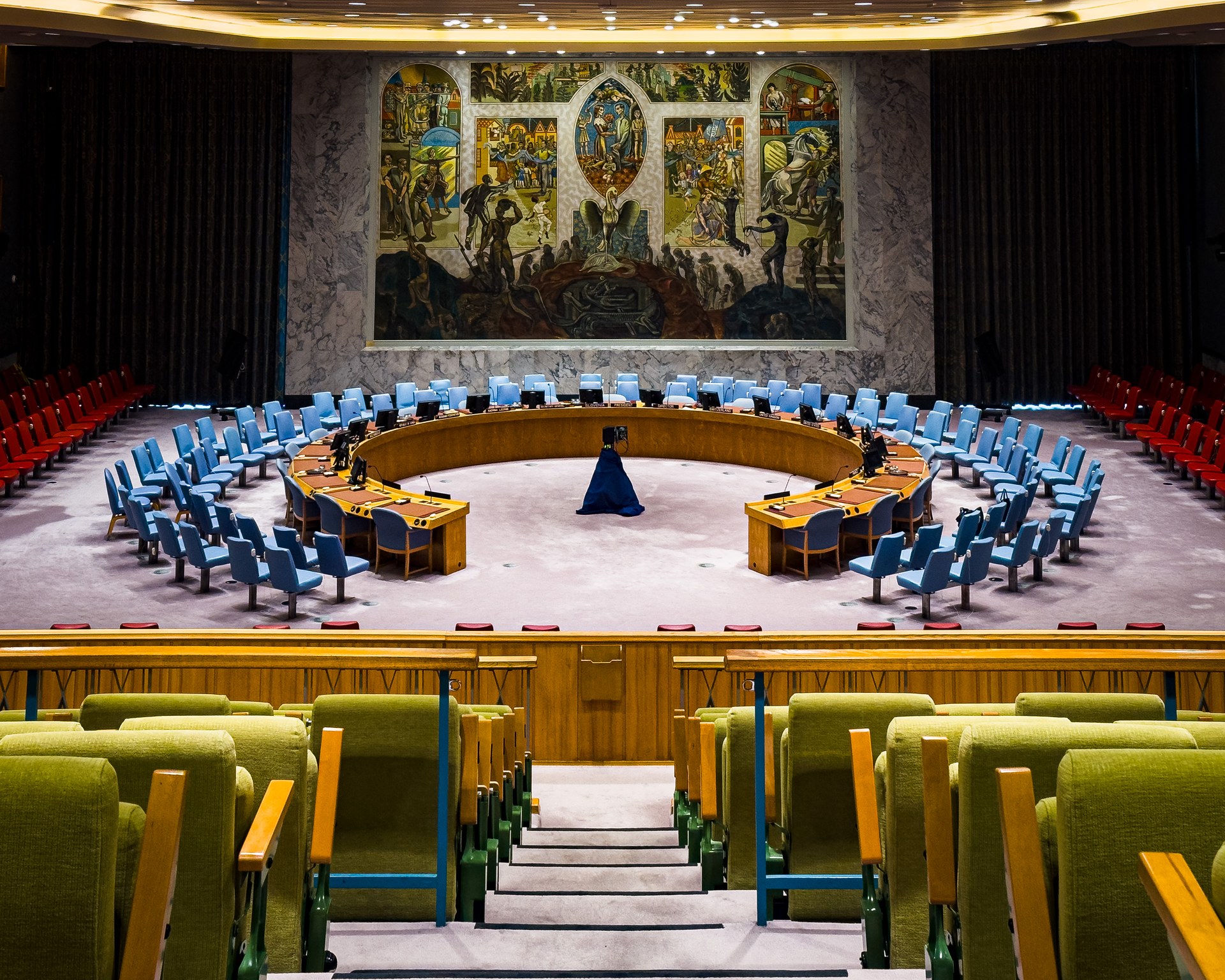
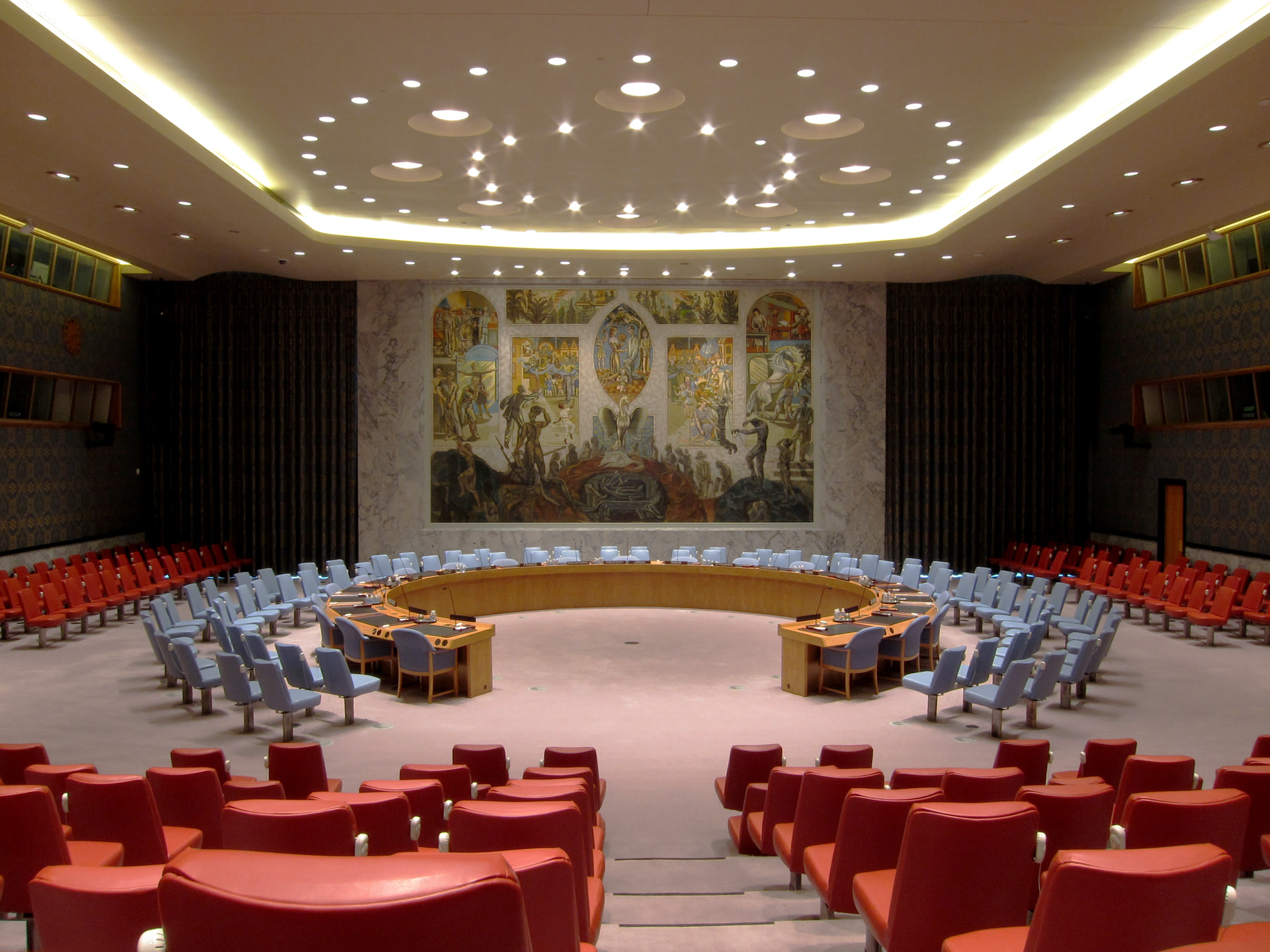
The Security Council has 15 members — five permanent (China, France, Russia, the United Kingdom and the United States) with veto power, and ten elected for two-year terms. Reform of the Council has been debated for nearly three decades without a binding outcome, because any Charter amendment requires a two-thirds vote in the General Assembly and ratification by the five permanent members.
The most prominent rival proposal is that of the G-4 — Brazil, Germany, India and Japan — which seeks new permanent seats. The African Union has separately demanded permanent representation for Africa, an aspiration the UfC statement said it recognises as legitimate. Earlier in 2026, Pakistan’s envoy reiterated the country’s categorical rejection of both the expansion of veto powers and the addition of new permanent members, according to Pakistani press reports.
The statement of 24 September lands amid an unusually heavy high-level week, with the US-Iran conflict and the security of the Strait of Hormuz dominating much of the General Assembly debate, as KhabarWire has reported in its coverage of the prime minister’s arrival at the session and of Pakistan’s UN Security Council diplomacy.
What is still uncertain
The joint statement is a reiteration of a long-held position rather than a new negotiating proposal, and it does not by itself move the reform process forward. No reform model has so far attracted the two-thirds support in the General Assembly required to amend the UN Charter, and the permanent five’s assent, needed for ratification, is not assured.
Whether the UfC’s message gains traction during the 81st session depends on the new co-chairs of the Intergovernmental Negotiations, the African Union’s own demands, and the willingness of the G-4 and other blocs to compromise. The group said it stands ready to engage constructively with the General Assembly president, the incoming IGN co-chairs and all member states during the session. As with all such reporting, this is a dated snapshot of a fast-moving diplomatic process, not a live tracker.
Sources & reporting notes
This is a synthesis of published material, not eyewitness reporting. Sources were reviewed on 24 September 2026. The account of the joint statement rests on the full text published by the Italian Ministry of Foreign Affairs and on the reporting of the Anadolu Agency wire and The Express Tribune; Pakistan's own position is drawn from the official page of its permanent mission to the UN.
- Italian Ministry of Foreign Affairs — "Uniting for Consensus" Joint Statement on UN Security Council Reform24 September 2026 · Primary source: full text of the joint statement by the 12-member group, including the opposition to new permanent seats, the proposal for elected longer-term rotational seats, the IGN reaffirmation, and the veto position.
- Anadolu Agency — 12-country group opposes new permanent seats in UN Security Council reform24 September 2026 · Independent wire report on the joint statement, the list of members, the elected-membership proposal, and the veto limitation call.
- The Express Tribune — Pakistan among 12 countries opposing new permanent UN Security Council seats25 September 2026 · Independent report framing the statement around Pakistan, with the group's composition, the IGN support and the veto position.
- Pakistan Mission to the United Nations — Pakistan's Position towards UN ReformUndated official position page, reviewed 24 September 2026 · Primary record of Pakistan's long-standing opposition to permanent-membership expansion, its rejection of the G-4 quest, and its support for the UfC model of elected, longer-term seats.