Reporting snapshot · 28 October 2026 (Asia/Karachi). The Security Council briefing took place in New York on Tuesday, and the transcript of the 10253rd meeting had not been posted when this was written, so the account of the other delegations' interventions comes from the UN's meetings coverage, which the organisation says is not an official record. Pakistan's account is the text published by its Permanent Mission to the United Nations.
What Pakistan told the Council
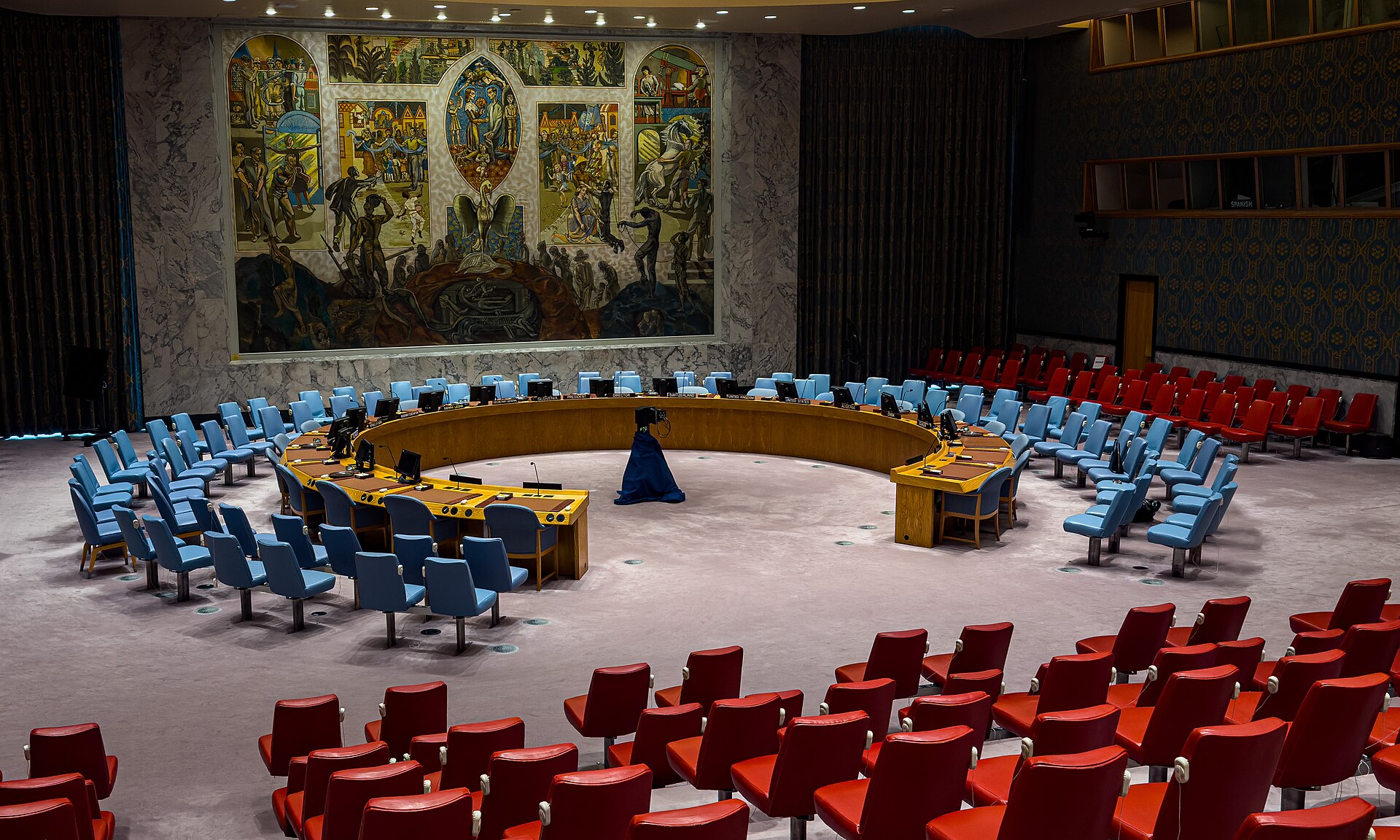
Ambassador Usman Jadoon, Pakistan’s acting permanent representative to the United Nations, told the Security Council on Tuesday, 27 October, that “Pakistan remains concerned that the situation regarding the Iran nuclear file has sharply deteriorated, negatively impacting the consideration of the issue, including in the Security Council.” The text of his intervention was published by Pakistan’s Permanent Mission to the United Nations, and Dawn reported the session from Washington.
Jadoon opened by thanking IAEA Director General Rafael Grossi for his briefing, then set out two problems: a ground situation “marked by deep tensions and continued hostilities”, and “profound mistrust and difference of opinion” that “has led to a breakdown of consensus within the Council on this matter.” He argued that “a diplomatic settlement of the issue has become more critical than ever”, and asked members to “revive the spirit of cooperative multilateralism and mutual understanding to break the deadlock.”
His clearest instruction was procedural. “We have consistently maintained that any issues of non-compliance must be addressed through competent technical bodies like the IAEA, without politicization”, Jadoon said, and “the IAEA must be enabled to carry out its work without any hindrance and within its technical mandate.” Pakistan also “urges all sides to exercise restraint, refrain from irresponsible and destabilizing rhetoric, actions, and postures that could escalate tensions and increase the risk of conflict”, and reaffirmed support for a “negotiated settlement of the Iranian nuclear issue” in a manner that “upholds the non-proliferation regime”.
Jadoon cited Pakistan’s own record, pointing to the Islamabad Memorandum of Understanding that Pakistan signed in June. “The Islamabad MoU signed in June is a successful manifestation of this approach”, he said, describing it as evidence that “progress on the diplomatic track is possible”, and he thanked “the support of our partners including Qatar, Saudi Arabia, Türkiye, Egypt, China and others.”
What the IAEA reported
Grossi’s briefing was the session’s factual core, and UN News reported that the agency still cannot confirm that none of Iran’s safeguarded nuclear material has been diverted, more than a year after Israeli airstrikes in June 2025 and joint Israeli and US attacks in early 2026 cut inspectors off. “This can and must be rectified”, Grossi said, adding that “we know from our past work with Iran that constructive engagement is possible.”
The agency has seen no sign of work to repair or rebuild the struck facilities, Grossi told the Council, though satellite monitoring is no substitute for access on the ground. One exception is the Bushehr nuclear power plant, where inspectors are currently working and where Iran has cooperated in delivering safeguards equipment for spent fuel.
Normal inspections have not resumed, and Iran has not provided the information and access needed to verify previously declared material, at facilities that were struck and at those that were not. “Of particular concern is Iran’s declared stock of 440kg of highly enriched uranium”, Grossi said, and the agency is seeking access to the Isfahan Fuel Enrichment Plant, which Iran declared just before the June 2025 strikes. His conclusion was that “only diplomacy, underpinned by IAEA verification, can prevent nuclear proliferation in the long term.”
Why the Council is split
Pakistan’s diagnosis of a “breakdown of consensus” matched the session. Iran’s representative told the Council that its consideration of the nuclear issue in his country was brought to a “definitive end” on 18 October 2025 with the expiry of resolution 2231 (2015), according to the UN’s coverage of the 10253rd meeting. The United States representative said “all who value the NPT should be deeply concerned by this” and that “the United States and our partners will never let you obtain a nuclear weapon to terrorize the world”, and she said Washington would advance “an independent multilateral mechanism” to monitor and report on global implementation of the 1737 regime.
That mechanism follows the collapse of the Iran sanctions monitoring panel, when Pakistan abstained in a vetoed Security Council vote on 17 September. The United Kingdom’s representative, Ambassador Sarah MacIntosh, said Iran “has amassed a stockpile of over 400kg of uranium enriched to 60 per cent”, the only state without nuclear weapons to enrich to that level “for which there is no credible civilian justification”. The United Kingdom’s published statement added that the high-enriched uranium stockpile “has remained unaccounted for for more than a year”, that the IAEA “is fully prepared to resume safeguards activities in Iran, at short notice”, and that “Iran must allow the return of IAEA inspectors to all nuclear sites” as a first step. It also noted that the IAEA Board of Governors reported Iran to the Security Council last month, the first such referral in two decades.
China and Russia argued the opposite way. China’s representative said the United States’ withdrawal from the joint plan of action, its resumed sanctions and its “maximum pressure” policy violated an agreement Washington had crafted, and called the strikes on Iran’s safeguarded facilities “the direct cause” for the IAEA’s inability to carry out safeguards. Russia’s delegate said there were “no procedural grounds” for the Council to discuss the Iranian nuclear programme and that “there can be no alternative to a political and diplomatic settlement”. Iran’s ambassador, speaking at the same session, pointed instead to Israel’s 200 nuclear warheads and its exemption from safeguards, Dawn reported.
What it means for Pakistan
What changed on Tuesday is not the substance of Pakistan’s position but the forum in which it was made, and the evidence behind it. Islamabad has argued for months that the way out of the Iran nuclear dispute is a negotiated settlement and that the technical work belongs to the IAEA, the argument that ran through the Makkah pact officials’ session with Iran in Tehran on 26 October. The briefing gave that argument a number to work with: 440kg of declared highly enriched uranium that inspectors still cannot verify, at a moment when the agency says it is ready to return “at short notice”.
The choice Pakistan has pressed is between an accounting exercise and a political one. Grossi’s own framing, that the problem “can and must be rectified” and that constructive engagement is possible, sits closer to the Pakistani line than the confrontation that accompanied the session.
The Pakistan, Iran and US mediation track now has a Council chamber as an additional venue, and Pakistan’s line there is careful: a negotiated settlement, verification left to the IAEA, and the Council’s own divisions named as the obstacle. Jadoon closed by saying that “earnest and painstaking work is required” and that Pakistan’s leadership “continues these efforts with sincerity, determination and conviction.”
What is still uncertain
No decision was taken on 27 October, and the Council has shown no sign of moving towards one. Jadoon’s “breakdown of consensus” describes a deadlock rather than a problem with a remedy attached, and Washington’s push for a new monitoring mechanism outside the IAEA would, if it advanced, cut directly against the “without politicization” and “without any hindrance” language Pakistan used.
The referral of Iran to the Security Council by the IAEA Board of Governors last month was the first in two decades, and it opened a procedural front that already existed before this week’s session. What the Board recommended the Council do with it is not settled, and the transcript of the 10253rd meeting had not been published when this was written.
The 440kg figure is Iran’s own declared stock, and the United Kingdom put the enriched stockpile at “over 400kg” in a separate statement; the two numbers are not directly comparable, and neither measures what is actually inside Iran. Without ground access, the agency works from declarations, satellite imagery and its own past records.
Every delegation that spoke converged on one practical step, the return of IAEA inspectors to all nuclear sites, and that depends on Tehran. Grossi said the agency is ready to resume “at short notice”, and the United Kingdom framed it as the precondition for everything else. Pakistan’s statement asked the Council to back the diplomatic track, but not what would happen if Iran refused the inspectors again.