Reporting snapshot · 28 November 2026 (Asia/Karachi). Beijing has published no answer to the request, no product list or implementation timetable has been agreed, and the planning ministry's trade figures do not match the central bank's, so the size of the gap the government is trying to close remains unsettled. The three meetings themselves are confirmed.
On Saturday, 28 November, Planning Minister Ahsan Iqbal met China’s Vice Minister of Commerce Yan Dong in Beijing and set out the size of the prize: Pakistani exports to China run at about $3 billion a year, he said, against a Chinese import bill of roughly $3 trillion, a share of about 0.1 per cent, Radio Pakistan, the state broadcaster, reported after the meeting, which covered export growth and the special economic zones under the second phase of the China-Pakistan Economic Corridor.
The request that sits behind those numbers was made twice in the 48 hours before it. On Thursday, 26 November, Iqbal asked Zhou Haibing, vice chairman of China’s National Development and Reform Commission, for a non-reciprocal arrangement giving all Pakistani goods zero-tariff access to the Chinese market, separate from the bilateral free trade agreement and modelled on the treatment Beijing has extended to African countries, the planning ministry said after the meeting, which the Associated Press of Pakistan recorded in a photograph of the two officials. On Friday, 27 November, he put the same proposal to Liu Haixing, who leads the international department of the Chinese Communist Party’s central committee, and asked for it to be taken forward, according to the planning ministry’s release as reported by Radio Pakistan and the Associated Press of Pakistan carried in Dawn. The stated aim is to take annual exports to China from around $3 billion to between $20 billion and $25 billion.
The idea itself is not new. It was discussed on 3 November and previously raised by Prime Minister Shehbaz Sharif with President Xi Jinping, the Associated Press of Pakistan reported; what changed this week is that it moved from a ministerial intention to a formal request with a proposed negotiating structure.
The gap the request is meant to close
The planning ministry’s own figures put Pakistan’s imports from China at $22.34 billion in the 2025-26 financial year against exports of $2.71 billion, a gap of $19.6 billion, and those imports were 32 per cent of the country’s total import bill, The Express Tribune reported. The same account notes that the State Bank of Pakistan has published a lower import figure, $19.5 billion, which would leave the ministry’s deficit about $2.8 billion above the central bank’s. Half of Pakistan’s total trade deficit with the world sits with China, a partner with which Pakistan has a reciprocal free trade agreement, and exports to Beijing have stayed close to $2.7 billion for the year.
One measurement change matters for reading that gap. Pakistan has closed its border with Afghanistan on security grounds, which has cut transit trade and removed the practice of booking goods that pass through Afghanistan as Pakistani imports from China, The Express Tribune reported.
What zero-tariff access would have to mean
The proposal is not a change to the free trade agreement Pakistan already has with China. Islamabad is asking for an additional, non-reciprocal arrangement of the kind Beijing has extended to African markets, which it granted on a 100 per cent duty-free basis after the 95 per cent preferential access given to the Association of Southeast Asian Nations, the paper said. Iqbal proposed that the two sides hold technical talks to fix the product coverage, the rules of origin and a timetable, the planning ministry said.
People close to the file doubt that tariffs are the binding constraint, telling The Express Tribune that even duty-free access might not narrow the deficit, because Pakistan does not produce enough of what Chinese buyers want and grows more reliant on Chinese goods. The Ministry of Commerce did not respond to the paper’s questions, and no Chinese answer to the request has been published.
The corridor list that came with the shopping list
Most of the Beijing conversations were about the second phase of the corridor itself, and about projects that have stalled. Iqbal asked for early completion of the financing agreement for the 102-kilometre Thor Nullah-Raikot section of the Karakoram Highway, part of a Rs576 billion realignment, and for Chinese participation in upgrading the main ML-1 railway line beyond Karachi-Rohri, where Pakistan is exploring Asian Development Bank financing after China withdrew over the country’s ability to take another $8 billion loan without firm repayment plans, The Express Tribune reported.
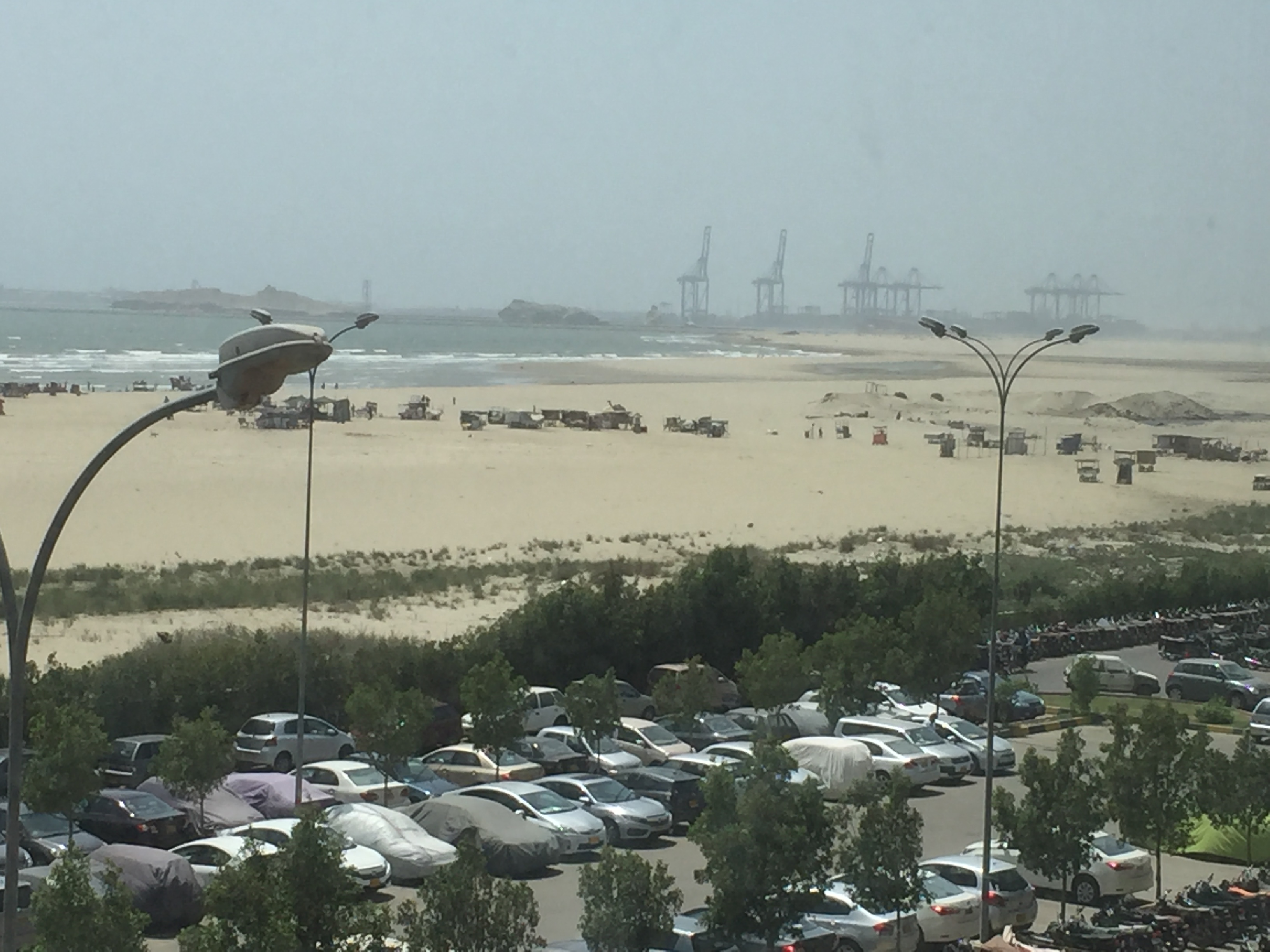
At Gwadar, Iqbal sought support for restoring regular shipping services, including engagement with Cosco, and proposed a joint study on strategic petroleum storage at the port. The talks also covered the Gwadar Free Zone, the second phase of the Eastbay Expressway and a corridor linking Chagai’s mining areas to Gwadar for mineral processing and export, which fits the push to process ore in Pakistan rather than ship it raw. Pakistan asked for progress on the Kohala and Azad Pattan hydropower projects and proposed joint work on switching selected power plants from imported coal to local Thar coal, Radio Pakistan reported.
Pakistan also proposed adding three private-sector ventures to the corridor’s industrial agenda: an aluminium complex at Port Qasim, a fertiliser plant in Thar, and a refinery and fuel storage complex at Dhabeji, where Sindh has been building out a special economic zone in a drive that drew 34 memoranda of understanding at a Shanghai investors’ conference. Chinese approval was sought for the Siah Diq copper project.
The market-access request came with a proposal for people rather than goods. Iqbal asked Chinese support for a Pakistan-China Knowledge Corridor that would give around 10,000 Pakistani scholars doctoral study and specialised research places over ten years, through scholarships, partnerships with leading Chinese universities and co-financing, with priority fields in artificial intelligence, engineering, advanced manufacturing, modern agriculture, biotechnology and mineral sciences, the planning ministry said. He tied the second phase of the corridor to Pakistan’s URAAN development programme and to China’s 15th five-year plan, and set the first phase in numbers: about $25 billion of investment, more than 8,000 megawatts of added generating capacity, 888 kilometres of highways and motorways and an estimated 236,000 direct and indirect jobs, Radio Pakistan reported. He also reaffirmed Pakistan’s commitment to the security of Chinese personnel and projects in the country, the state broadcaster said.
Where Beijing pushed back
On special economic zones, the Chinese side did not simply say yes. The NDRC found Pakistan’s proposal for two or three model zones unsatisfactory, describing the concept notes as preliminary, and advised defining priority industrial chains, publishing detailed baseline cost structures covering land, labour, utilities, transport and security, bringing in experienced market-oriented developers and offering competitive incentives, The Express Tribune reported.
The gap between what Pakistan wants and what it can still do is narrow. Pakistan has committed to the IMF that it will not set up new special economic zones and that the existing ones will be phased out by 2035, the paper reported, and it told the NDRC it wanted focal persons and timelines for implementing the May 2026 memorandum of understanding between the PML-N and the Chinese party, the Associated Press of Pakistan reported. In the same statement, Zhou Haibing described the corridor as a pillar of China-Pakistan economic cooperation and said Beijing was ready to work on the second phase and to align it more closely with Islamabad’s development priorities.
What has to happen before a tariff-free consignment
Three things stand between the proposal and a Pakistani exporter’s invoice. Beijing has not said whether it will entertain a non-reciprocal arrangement, and the zero-tariff precedents Pakistan points to are ones China built for African states with different supply chains. The deficit the government wants to close is itself unsettled, because the ministry and the central bank publish different numbers for the same year. And the corridor’s flagship industrial instrument, the special economic zone, has just been sent back by the one body that would have to approve it, while the IMF’s conditions on new zones narrow what Pakistan can offer. Pakistan’s wider trade position, which the October trade data showed still widening, gives the request its urgency: exports to China would have to rise roughly eightfold to reach the $20 billion to $25 billion target.