Reporting snapshot · 13 November 2026 (Asia/Karachi). The commitments below were made at the forum and in follow-up meetings on 13 November. One memorandum of understanding was signed, on 12 November, and no binding investment agreement or project schedule has been published; the pledge to stop exporting raw minerals carries no date. The main limitation is that the government has set a direction without publishing the fiscal terms, financing plan or timetable that would make it work.
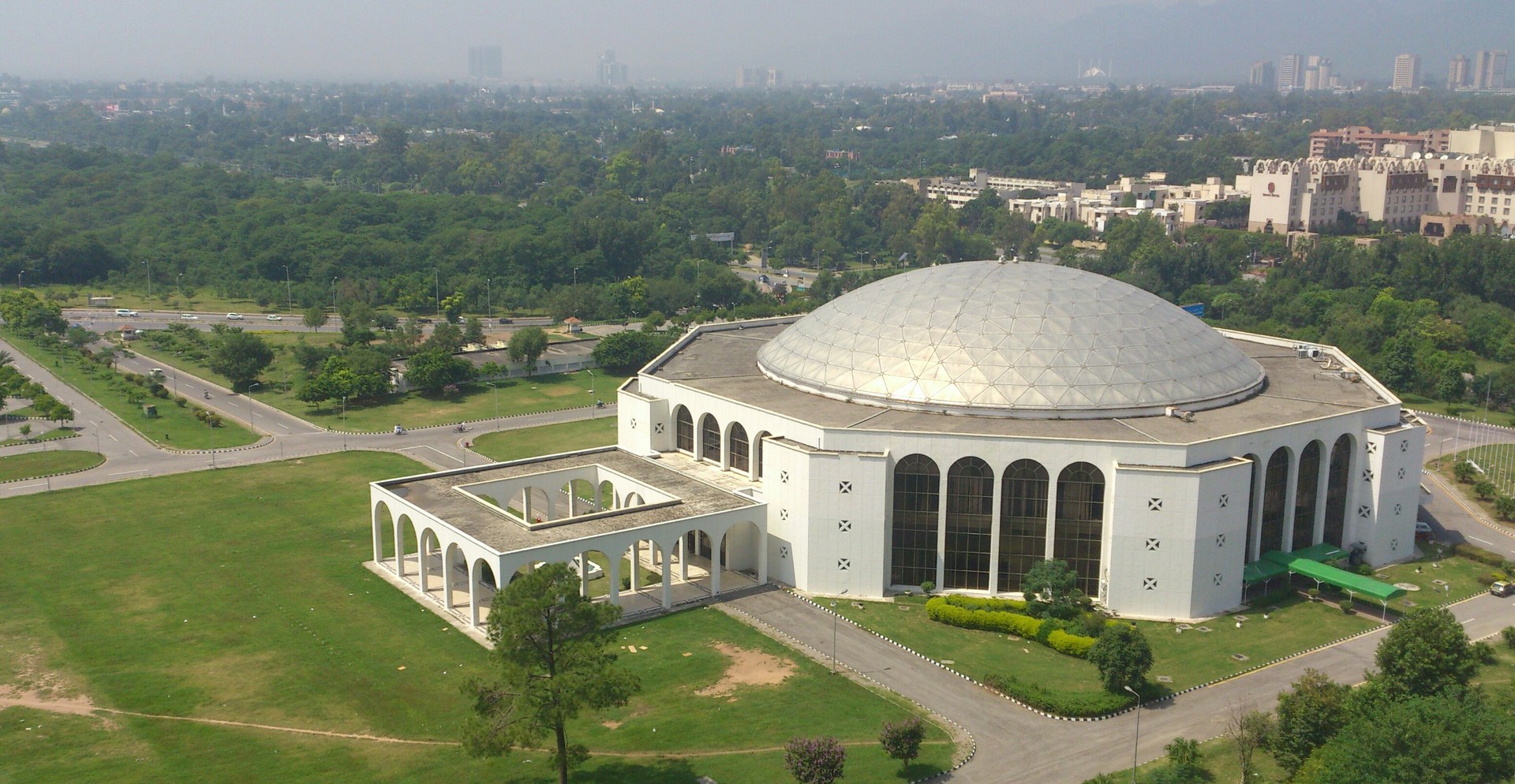
Pakistan’s Minerals Investment Forum closed on Friday with the government committing itself to a change of method: stop selling the country’s minerals in raw form, and process them at home instead. Prime Minister Shehbaz Sharif told the second and final day of PMIF26, held at the Jinnah Convention Centre in Islamabad, that the message to investors was to “mine in Pakistan, process in Pakistan, manufacture in Pakistan and then export to the rest of the world,” Radio Pakistan reported. Dawn carried the same sentence. KhabarWire reported in October on what PMIF26 was meant to deliver, and on the open question of whether a forum would convert interest into signed projects. The answer, on the evidence published this week, is one memorandum of understanding and a set of commitments. That gap is the story of this sector’s next year.
The pledge to end raw exports
The prime minister’s language was unusually direct for a policy announcement, and he framed it as a renewal rather than a new start. He recalled the commitment he made at the previous edition of the forum to end the practice of shipping Pakistan’s minerals out of the country in raw form, and said this time that “that day is not far away when this will come to a grinding halt,” Dawn reported. Instead of extracting and exporting raw minerals, he said, he wanted refineries, smelters and cable and conductor factories along the Tethyan belt.
The federal government also promised to make it easier to act on that ambition. Sharif said procedures were being simplified, red tape eliminated and inordinate delays cut, and that through digitisation of records and the National Minerals Data Centre investors would be able to know what lay beneath the ground before committing “a single dime or yuan” to a project. Petroleum Minister Ali Pervaiz Malik put the geological work at the centre of it, saying the government was investing in the Geological Survey of Pakistan because investors cannot size project risks without reliable scientific information. More than 40 mineral exploration licences had recently been granted in the Chagai and Khuzdar districts of Balochistan alone, Geo News reported, citing the Associated Press of Pakistan.
Sharif tied the pledge to a macroeconomic argument, citing a Goldman Sachs assessment that Pakistan could become the world’s sixth-largest economy by 2075 and saying he would take it “a small amendment” further: earlier than 2050. He called Pakistan’s young population its “real wealth”, and said every mining investment must translate into local jobs, schools, clinics and clean drinking water for the communities where it is undertaken.
The one agreement signed, and the security bargain attached to it
Only one agreement was concluded during the two days, and it is worth being precise about what it was. Ivanhoe Atlantic, the Canadian mining company whose chairman is Robert Friedland, signed a memorandum of understanding with Mari Energies on 12 November — the company’s first move into South Asia — and Friedland said Ivanhoe was in the early stages of setting up a local office in Pakistan, The Express Tribune reported. The agreement was with a Pakistani listed company, not with the state, and no financial terms were published. Friedland said a further memorandum with federal entities was expected on Friday.
The security bargain around the sector was made explicit by the two provinces that hold most of the mineral wealth. Chief of Defence Forces Field Marshal Asim Munir said all possible measures were being taken to protect the entire mining ecosystem: the mines, the miners, the investments, the industries, the projects and the people attached to them, Radio Pakistan reported. Chief Minister Maryam Nawaz offered Punjab investors a Mineral Processing Zone at Quaidabad with monthly lease rent of Rs15,000 over a 15-year lease, and an export promotion zone with import duties waived and interest-free loans up to Rs100 million. Balochistan Chief Minister Sarfraz Bugti said the Frontier Constabulary was raising a new security division to give mining investors a safe corridor.
That promise meets a hard fact. Barrick Mining, which holds 50 per cent of Reko Diq, has paused work on the project because of security concerns, and the pause is expected to run until June next year, The Express Tribune reported. The same report noted the tension inside the government’s own messaging: Bugti said Reko Diq would be operational by 2029, a deadline that looks difficult against a pause, while the prime minister told the forum that copper and gold production there was expected to commence in 2028. The risk is not new: in May, armed fighters attacked a convoy of 20 trucks carrying minerals from Saindak near Noshki, and local sources reported at least six security personnel killed, a pattern KhabarWire documented at the time.
Barrick’s chairman, John Thornton, was in Islamabad for the second day’s keynote. According to Radio Pakistan, his delegation discussed the policy, regulatory and infrastructure frameworks the sector needs, and expressed keen interest in establishing mineral processing industries in Karachi and Gwadar. Pakistan has told investors it wants processing at home, and the operator of the country’s flagship copper-gold project has said it wants to build some of it itself.
A new discovery, and a timeline nobody has published
The forum also produced a geological result. Mari Energies said in a statement submitted to the Pakistan Stock Exchange on Friday that its wholly owned subsidiary had identified copper-gold mineralisation at the East Siah Diq target, about 25 kilometres north-west of Nokkundi in the Koh-i-Sultan area, roughly 50 kilometres east of Reko Diq, The Express Tribune reported. Roughly 25,000 metres of exploration drilling had been completed in two phases, with every hole reaching 500 metres, and copper mineralisation sits beneath about 100 metres of sediment across an area of some 1.4 square kilometres. The company called East Siah Diq a new porphyry copper discovery, with chalcopyrite the main associated mineral and pyrite and bornite also present, plus molybdenum in selected holes. Laboratory analysis of the first phase is complete; the second is expected to finish in the first quarter of 2027.
The company was careful about what this does not yet mean. Its statement said the exploration results do not constitute a formally established mineral resource or reserve, and that further drilling, geological studies, metallurgical testing and resource assessments would be needed before the size, quality and economic significance of the discovery could be determined.
What the forum did not produce is a schedule. There is no date on the pledge to end raw exports and no published timetable for the refineries and smelters the government wants, no financing plan, and no list of the fiscal terms: Malik said only that the government wants uniform terms available to every company without special arrangements, and that they should be attractive and fair to investors, the provinces and the federal government.
The most concrete number attached to the gathering was also the least verifiable. KhabarWire reported before it opened that the government has been citing a $8 trillion mineral-reserve estimate from the Institute of Cost and Management Accountants of Pakistan, an order-of-magnitude figure that has not been audited. The forum’s own framing put the prize at over $6 trillion in untapped reserves, and Petroleum Secretary Hamed Yaqoob Sheikh told it Pakistan has 92 known minerals, 52 of them commercially exploited. The smaller number is the one already in circulation, and neither carries a methodology. What changed is the shape of the ask: Pakistan is no longer selling licences and ore. It is selling a value chain, and asking buyers to build it.KhabarWire is tracking this storyline in its Pakistan Minerals and Mining hub.