Reporting snapshot · 21 November 2026 (Asia/Karachi). The ECC has not published its minutes or the sugar summary, so the quota's allocation among mills and the shipment timetable are not public. The IMF board has still to act on the tranche, and the government has not said how or when it will meet the deregulation condition.
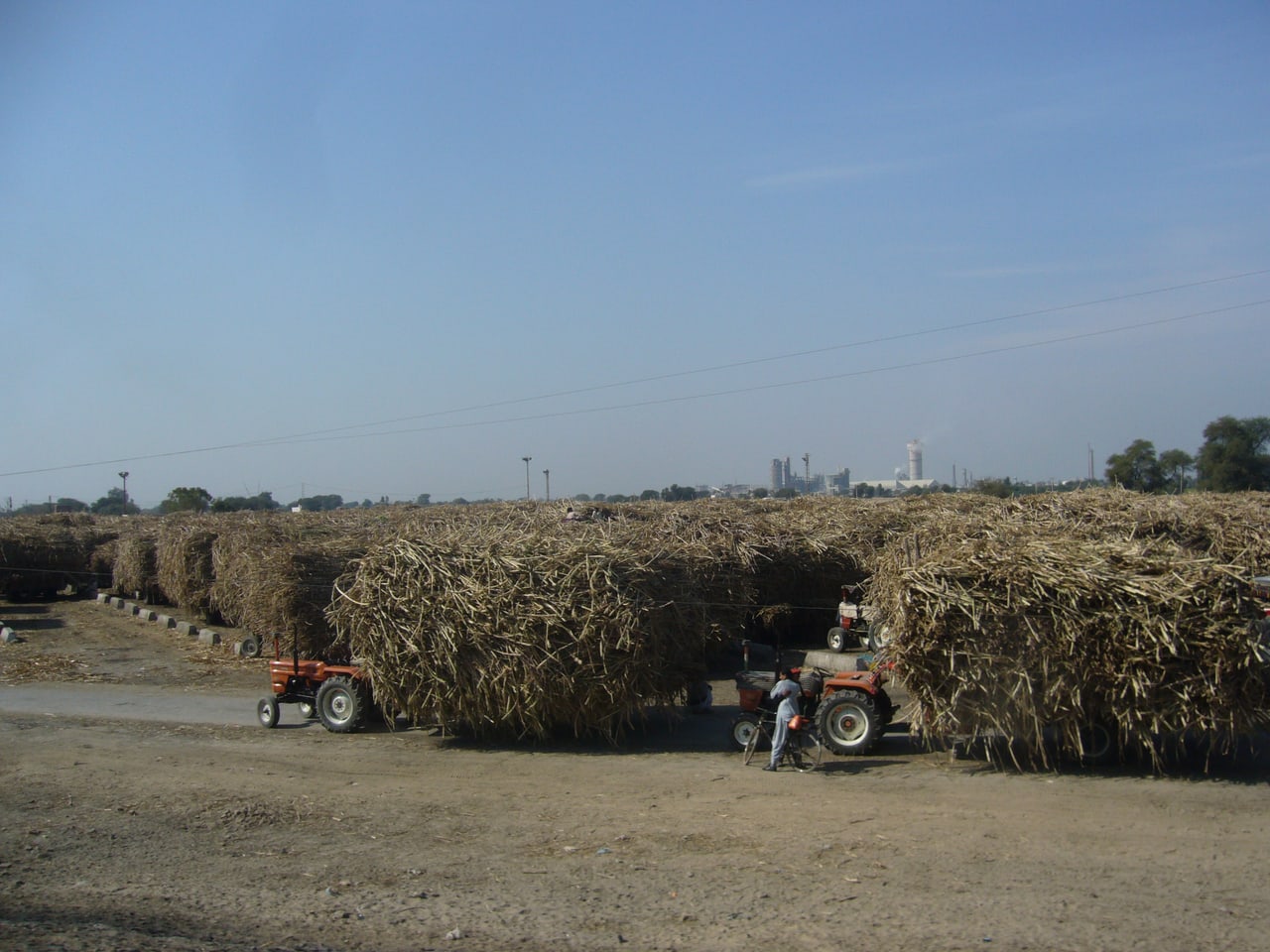
Pakistan’s Economic Coordination Committee approved the export of another 416,000 tonnes of sugar on Friday, 20 November, the third such permission in four months, taking the quantity cleared for shipment this season to 724,000 tonnes. National Food Security Minister Rana Tanveer Hussain confirmed the decision to The Express Tribune, which reported it on Saturday, 21 November, and said the crushing season was about to begin with no shortage of the commodity.
The approval landed days before a meeting of the International Monetary Fund’s executive board, which is due to consider Pakistan’s request for the fifth $1 billion tranche of its $7 billion programme, a further $200 million under a climate facility and the Article IV report, The Express Tribune reported. It also came although Pakistan has not met an IMF condition to deregulate the sugar sector, a gap the finance secretary attributed to the refusal of one province.
Sugar is one of Pakistan’s most politically sensitive commodities and one of its most heavily managed. The decision therefore carries more weight than the tonnage alone: it sets the terms on which mills can sell abroad while the state still fixes cane prices, restricts trade and decides who may export, all questions at the centre of the IMF’s demands.
Three quotas in four months
The 416,000 tonnes approved on Friday follow two earlier permissions. The ECC allowed 108,000 tonnes of imported sugar to be exported in August and another 200,000 tonnes of locally produced sugar in mid-September, The Express Tribune reported. Friday’s decision adds 400,000 tonnes recommended by the Cabinet Committee on Export of Sugar and a further 16,000 tonnes for Sindh.
An industry figure told The Express Tribune that an in-principle decision to export 600,000 tonnes had been taken months earlier and was implemented in phases to avoid publicity; that figure does not reconcile with the 724,000 tonnes cleared across the three permissions. The same account said the export arrangements were settled at the level of Deputy Prime Minister Ishaq Dar before the summary reached the ECC as an additional agenda item.
The arithmetic leaves this season’s approved exports at 724,000 tonnes, a substantial share of a crop that the government’s own draft policy puts at about 6.13 million tonnes a year on average. Pakistan is the world’s seventh-largest producer of refined sugar, with 79 mills concentrated in southern Punjab, northern and central Sindh and southern Khyber Pakhtunkhwa.
The deregulation condition Islamabad has not met
The IMF has required Pakistan to deregulate the sugar sector fully and to end the government’s role in exporting and importing the commodity. That condition remains unmet. Secretary Finance Imdadullah Bosal told the ECC that one province had refused, according to The Express Tribune.
The gap is not technical. The government’s draft National Policy for De-regulation of the Sugar Sector describes a system constrained by zoning rules, administered prices and discretionary trade restrictions. Those policies, the draft says, have distorted incentives, contributed to volatile production and prices, and left mills operating at roughly 60 per cent of installed capacity.
The cost of that arrangement runs through the budget and the household. The draft puts production last year at 5.8 million tonnes, valued at about Rs1.1 trillion, against domestic consumption of about 6.3 million tonnes. Retail sugar prices have risen by an average of about 16 per cent a year over the past five years, with peaks approaching 28 per cent. Average consumption is about 14.76kg per person a year, or roughly Rs2,302 a household, about 3.91 per cent of an average annual budget.
Trade has been equally managed. Over the past decade Pakistan exported 3.92 million tonnes of sugar and imported about 565,000 tonnes, earning about $1.6 billion from exports, according to the draft policy. Sugar remains on the first schedule of the Export Policy Order, which means it cannot be exported without federal permission. Imports face effective protection of about 55 per cent once customs duty, additional duties, sales tax and a provincial cess are counted.
The IMF’s Governance and Corruption Diagnostic Assessment, released in November last year, used the sector as a case study. It described an intertwined relationship between economic elites and state regulators that, in its account, combined to capture public benefits at deep cost to the country.
A summary kept off the agenda
The procedure around Friday’s decision has attracted as much attention as the quota. The sugar summary was not circulated to the relevant ministries and was not part of the ECC’s regular agenda, The Express Tribune reported. The ECC chairman has the authority to table additional items, but the practice denies other ministries the chance to examine the proposal or record objections.
The ECC chairman, Finance Minister Muhammad Aurangzeb, stressed the need to deregulate the sector at the same meeting, according to The Express Tribune, before the committee permitted another export from a sector it continues to regulate. Profit, the business publication of Pakistan Today, reported that the committee considered the cabinet committee’s sugar recommendations with an emphasis on protecting farmers through adequate price support, and reiterated the importance of deregulation.
The same meeting eased conditions on the government’s long-term export financing scheme for small and medium enterprises. It waived an upfront requirement that 80 per cent of sales be exports and relaxed environmental compliance conditions, while requiring beneficiaries to reach exports equal to at least 50 per cent of projected sales within four years. Profit reported that the ECC also approved a Rs1 billion technical grant for Pak-Arab Pipeline Company, Rs100 million for the Minorities Welfare Fund and several grants for interior ministry units and the social media regulator.
What the export window means for prices
For millers, the quota is a chance to sell at international prices while domestic cane costs are administratively set. For growers, the government says the export programme is meant to support cane prices at the start of crushing. For consumers, the risk is the opposite: sugar leaves the country while domestic production is estimated below consumption, leaving imports or higher retail prices to fill the gap.
That tension explains why the government has spaced the permissions out. Exporting in phases limits the immediate upward pressure on local prices and avoids a single announcement that would invite scrutiny of the total.
The draft policy’s figures suggest the sector’s problems are structural rather than seasonal. Production averages about 6.13 million tonnes but consumption is about 6.3 million tonnes, so a modest shortfall can coexist with exportable surpluses in particular years and regions. Mills running at 60 per cent of capacity have an incentive to lobby for export windows, while the state’s control over cane prices and trade keeps the returns from those windows dependent on official decisions.
What happens next
The immediate test is the IMF board. Approval of the fifth tranche would keep the programme on track, but the sugar decision gives board members a concrete example of a condition that remains unmet on the eve of the review. The Article IV report, which assesses the wider economy, will also give the IMF’s staff a formal channel to restate the deregulation demand.
The second test is domestic. The government has not disclosed how the 416,000 tonnes will be allocated, when shipments will begin, or what it will do if local prices rise during the crushing season. Nor has it said which province blocked deregulation or what would persuade it to relent.
The third is whether the pattern repeats. Three permissions in four months, each presented as a separate decision, have taken the season’s total to 724,000 tonnes without a published policy framework. Until the government publishes the sugar summary, the allocation or a deregulation timetable, the practical answer to what changed is narrow: another 416,000 tonnes may leave Pakistan, and the condition attached to the IMF programme has still not been met. KhabarWire’s IMF & Pakistan hub follows the programme’s review and financing decisions, and the country’s record goods exports provide the trade context against which this quota sits.