Reporting snapshot · 16 October 2026 (Asia/Karachi). The Sindh government says it signed 34 memorandums of understanding at an investment conference it hosted in Shanghai on 15 October. Ten were government-to-government agreements and 24 were between companies, according to the provincial government's 16 October read-out. The memorandums are framework documents rather than binding investment contracts: no aggregate value, list of counterparties or delivery timetable has been published, so how much capital the conference will ultimately mobilise is not yet known.
What happened
The Sindh government says it signed 34 memorandums of understanding (MoUs) at an investment conference it hosted in Shanghai on 15 October, as it sought to draw Chinese companies into energy, manufacturing, agriculture and technology projects in the province. Dawn reported, citing a statement issued by Sindh Senior Minister Sharjeel Inam Memon, that 10 of the agreements were concluded at the government-to-government (G2G) level and 24 between companies at the business-to-business (B2B) level. The read-out named energy, coal and universities among the sectors covered.
The event — described by the province as its second investment conference in Shanghai and the first in 12 years — was addressed by Chief Minister Syed Murad Ali Shah, who presented Sindh as Pakistan’s gateway to the world and invited Chinese business leaders to expand their presence in the province, The Express Tribune reported. Shah told the gathering that “more than two dozen” agreements would be signed that day; the provincial government’s account the following day put the final total at 34.
Memon said the memorandums were intended to promote Pakistan-China business cooperation and that the benefits of the conference “will reach the public soon”, according to Dawn. He said Chinese investors had shown interest in the Dhabeji Special Economic Zone and in setting up industrial units there.
What Sindh is offering
The centrepiece of Sindh’s pitch was its special economic zone regime. Shah said investors in SEZs could benefit from a 10-year income-tax exemption and duty-free imports of capital goods, subject to applicable law, and that each agreement signed at the conference would be assigned a focal person in the Sindh Investment Department and reviewed at the highest level of the provincial government. “For us, the signing is the beginning of the work, not the end,” he said.
The flagship project on offer is the Dhabeji Special Economic Zone, a China-Pakistan Economic Corridor (CPEC) priority project of roughly 1,530 acres in Thatta district. Proposed industrial clusters there include automotive manufacturing, pharmaceuticals, electronics, textiles, steel and warehousing, according to The Express Tribune. Sindh also flagged the 435-acre Education City Special Technology Zone and its two seaports.
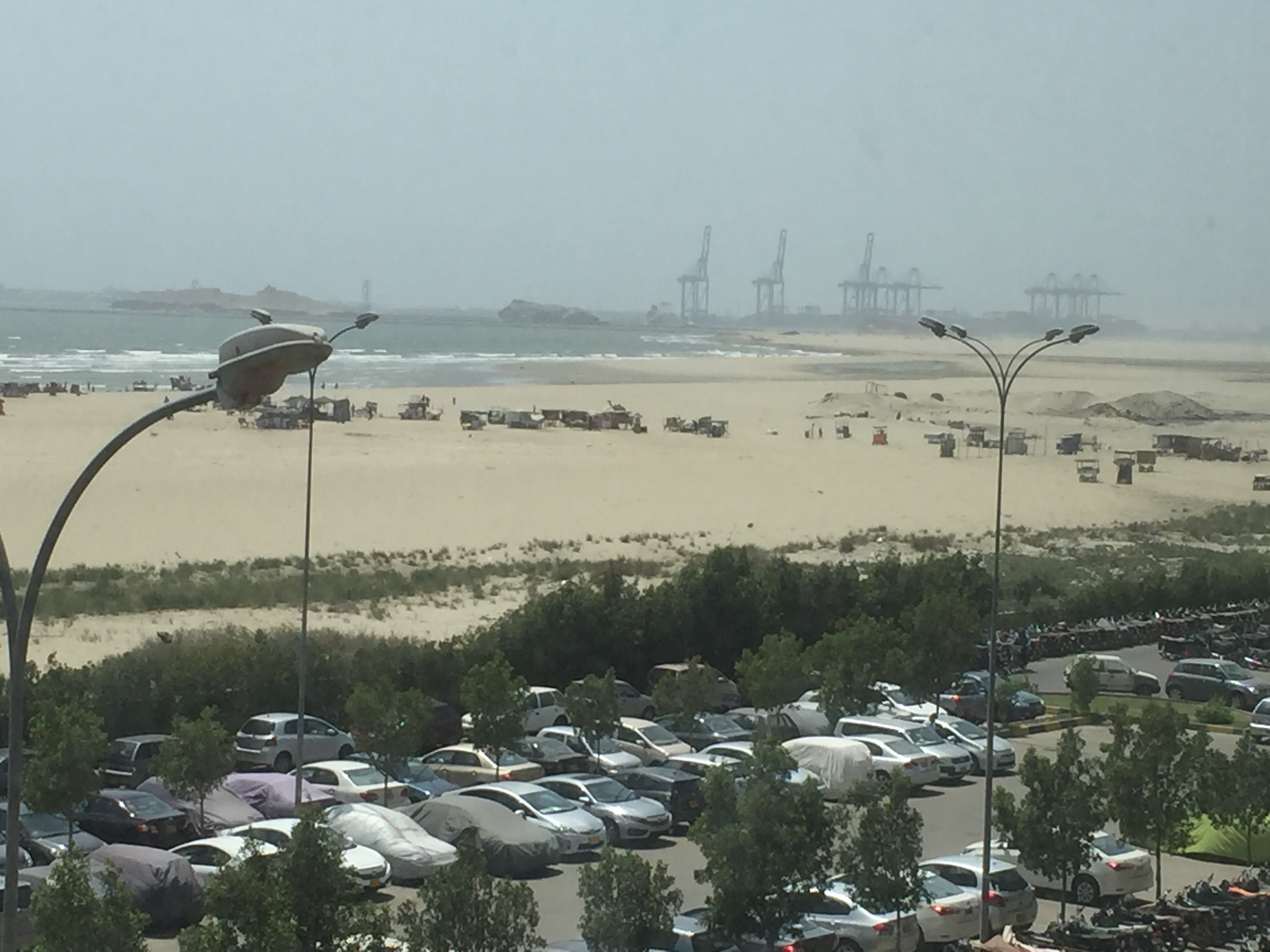
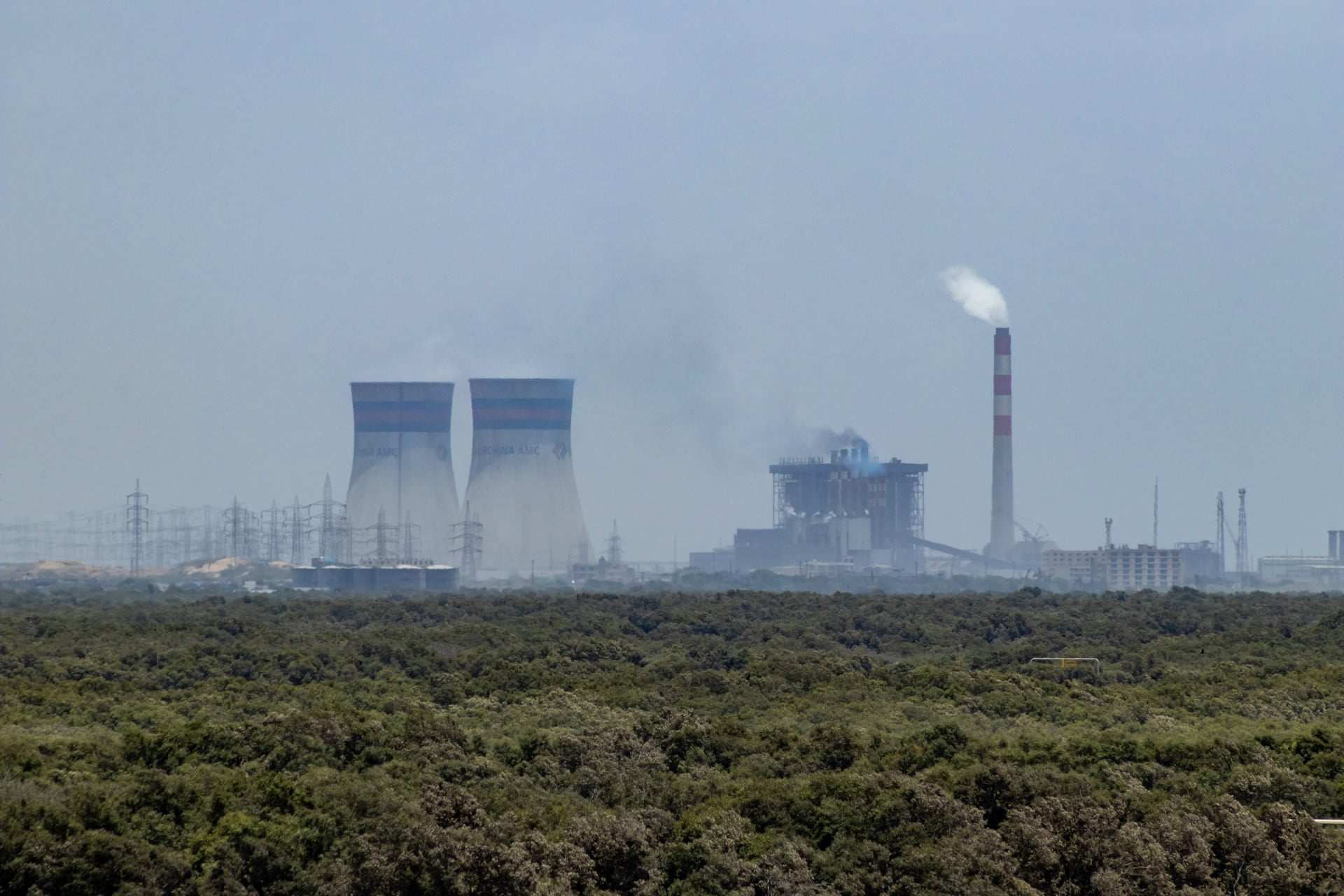
Shah cited Karachi Port, which he said handled about 53.95 million tonnes of cargo and 2.651 million twenty-foot equivalent units (TEUs) of containers in 2024-25, and Port Qasim, with an annual handling capacity of about 89 million tonnes, as evidence that the province is a natural logistics hub. He pointed to Thar’s estimated 175 billion tonnes of lignite reserves and a wind corridor with potential of about 50,000 megawatts, Pakistan Today reported.
Sectors the province is targeting include energy and minerals, coal-to-chemicals and the wider Thar value chain, electric-vehicle and automobile manufacturing, artificial intelligence, cloud computing, smart cities, food processing, and logistics and warehousing.
Existing Chinese investment
Shah built his case on Chinese projects already operating in Sindh. He cited Shanghai Electric’s Thar Block-I project, a 1,320-megawatt power plant in commercial operation since 2023; China Machinery Engineering Corporation’s work at Thar Block-II; and China Three Gorges Corporation’s wind farm at Jhimpir. He also pointed to Service Long March Tyres, a Pakistan-China joint venture in Nooriabad that he said now exports to the United States and Brazil, and to Chinese carmakers including BYD, Changan, JAC and Dongfeng.
Shah said BYD had sold more than 10,000 vehicles within months of entering Pakistan and was setting up a manufacturing facility in the country, and that other Chinese brands were operating with local partners. The investments sit inside the wider CPEC programme, which Pakistan and China have been recasting as “CPEC Phase 2” around industrial cooperation and special economic zones; bilateral trade reached $16.44 billion in January-July 2026, KhabarWire reported.
Security for Chinese nationals was a recurring theme. Shah said Sindh had established a dedicated unit within its police force to protect Chinese nationals and projects and was strengthening its capacity, thanking Beijing for helping train the provincial police. Chinese workers and projects in Pakistan have been targeted in militant attacks in recent years, making security assurances a standard component of investment pitches.
Why it matters
The conference is one of the clearest recent signals that Pakistan’s provinces are competing directly for Chinese capital as CPEC shifts from state-backed infrastructure towards commercially driven industry. For Sindh, whose economy is anchored by Karachi’s ports, financial institutions and manufacturing base, the memorandums give the provincial government a pipeline of prospective projects to point to. In the wider national picture, the event offered a counterweight to weak foreign direct investment and a difficult fiscal backdrop.
It also reinforced the rhythm of Pakistan-China engagement. The Shanghai conference came in the same week that the two countries began their first joint army exercise, Karakoram 2026, and a day after a separate Chinese group signed an electric-bus manufacturing agreement in Islamabad, KhabarWire reported.
What is still uncertain
The central caveat is that these are memorandums of understanding — framework agreements, not binding investment contracts. No aggregate value for the 34 agreements was disclosed, and the provincial government has not published the full list of counterparties or the amounts involved. That makes it impossible at this stage to judge how much capital the conference will actually mobilise.
The final count also varies between reports. Shah told the conference that “more than two dozen” agreements would be signed; the provincial government’s 16 October statement put the total at 34, split into 10 G2G and 24 B2B. Some Pakistani outlets reported the number of agreements signed with Chinese companies alone. The differences appear to reflect different groupings of the same event, but KhabarWire has not been able to reconcile them independently.
Whether the deals move beyond memorandums will depend on follow-through: converting them into formal agreements, arranging financing, allocating land at Dhabeji and completing the security arrangements that Chinese investors treat as a precondition. The provincial government has promised a focal person for each agreement, but has not published a timeline or a delivery mechanism. Because Dhabeji is being developed under federal CPEC structures, progress also depends partly on coordination with Islamabad rather than on the province alone.
Sources & reporting notes
This is a synthesis of published reporting, not eyewitness reporting. Sources were reviewed on 16 October 2026 (Asia/Karachi). The Sindh Investment and Trade Conference took place in Shanghai on 15 October 2026, and the provincial government's read-out was reported on 16 October.
- Dawn — "Progress made to strengthen Pak-China ties: Sharjeel"Published 16 October 2026 · The provincial government's read-out: 34 MoUs in total, split into 10 government-to-government and 24 business-to-business agreements, and Chinese investor interest in the Dhabeji Special Economic Zone.
- The Express Tribune — "Sindh seals 34 MoUs at Shanghai moot"Published 16 October 2026 · The 10-year income-tax exemption and duty-free capital-goods incentive for SEZ investors, the Dhabeji SEZ details and the Karachi Port and Port Qasim cargo figures.
- The Express Tribune — "Sindh CM assures Chinese investors of security, announces over two dozen MoUs"Published 15 October 2026 · Chief Minister Murad Ali Shah's keynote: the security unit for Chinese nationals and projects, the incentive framework, and the Thar lignite and wind figures.
- Pakistan Today — "Sindh seals over two dozen deals with Chinese firms across key sectors"Published 15 October 2026 · Independent report from a second recognised Pakistani outlet confirming the sectors covered, the incentive package, the focal-person commitment and the existing Chinese investments.