Reporting snapshot · 20 November 2026 (Asia/Karachi). The Prime Minister's Office announced the signing but the text of the memorandum and the anti-drug action plan has not been made public, so the scope, funding and timetable remain unclear. Qatar's interior minister also met Pakistan's army chief; the army's media wing gave only a general account of those talks.

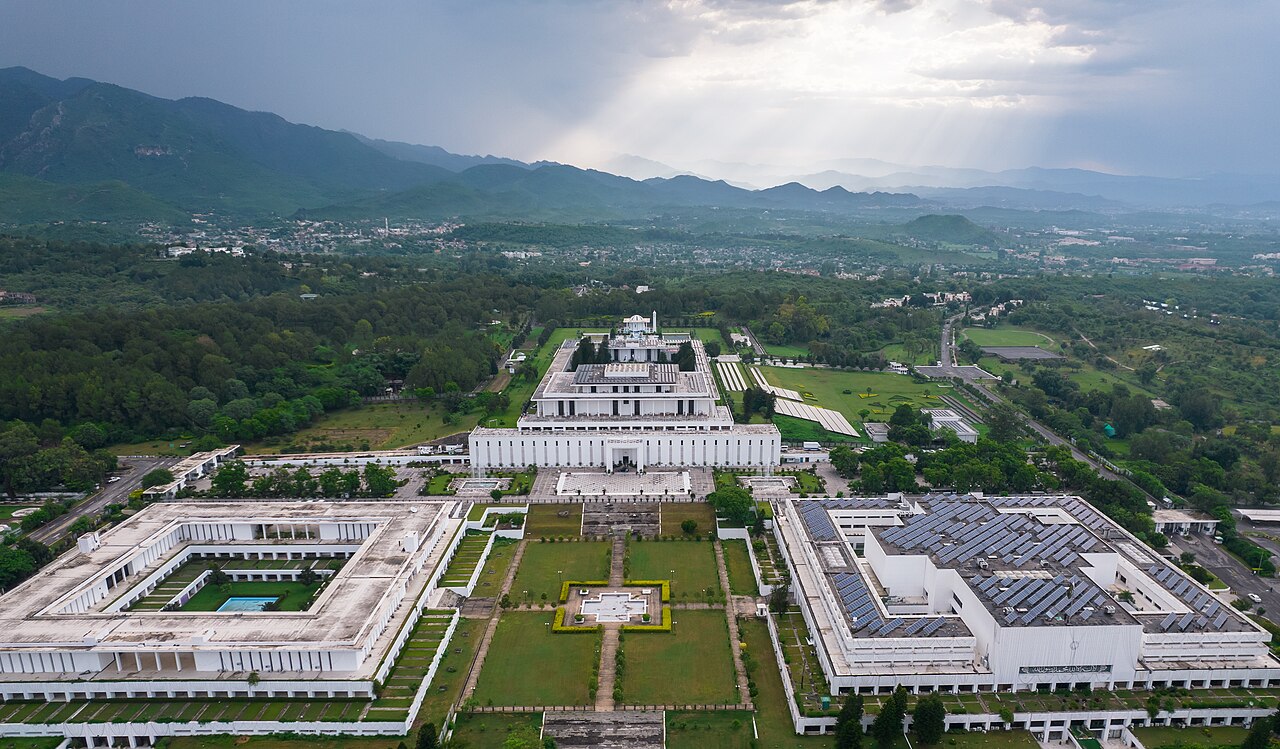
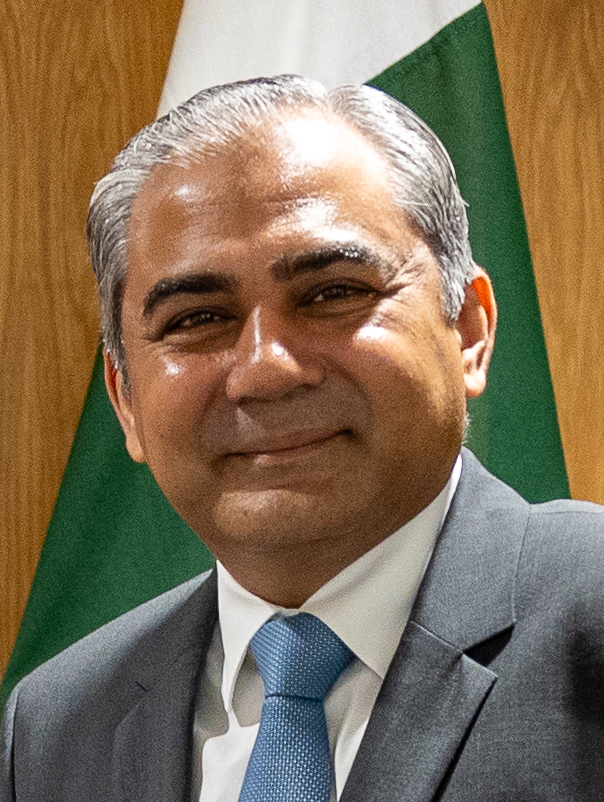
Pakistan and Qatar signed a memorandum of understanding on security cooperation between Qatar’s Internal Security Force, known as Lekhwiya, and Pakistan’s Federal Constabulary on Thursday, 19 November 2026, together with an action plan to curb drug trafficking. Prime Minister Shehbaz Sharif witnessed the signing in Islamabad, his office said, as Qatar’s interior minister, Sheikh Khalifa bin Hamad bin Khalifa Al Thani, held talks with Interior Minister Mohsin Naqvi. The Express Tribune reported the Prime Minister’s Office announcement, and Pakistan Today carried the same account alongside a separate Interior Ministry statement.
The Prime Minister’s Office said Sheikh Khalifa and Naqvi signed for their respective sides. The Qatari minister is also commander of Lekhwiya, the internal security force that reports to Qatar’s interior ministry, and the visit was his first to Pakistan, according to the office. The ceremony was the most visible part of a day of meetings that also took him to Rawalpindi for talks with Chief of Defence Forces and Chief of Army Staff Field Marshal Syed Asim Munir, the military’s media wing said.
The public readout was long on areas of cooperation and short on obligations. According to the Interior Ministry statement, the two sides agreed to expand an exchange programme for police officers, improve coordination between Qatar’s National Cyber Security Agency and Pakistan’s National Cyber Crime Investigation Agency, and have Qatar build a modern firing range at Pakistan’s National Police Academy. Qatar also agreed to provide scanners to Pakistan’s Anti-Narcotics Force. Naqvi said joint operations and information-sharing between the two countries had already produced results, putting the number of drug cases busted over the past four years at 300.
“We want to ensure that our territory is never used for drug smuggling,” Naqvi was quoted as saying in the Interior Ministry statement. He described cybercrime as an international problem and said Pakistan was taking steps to combat it. The statements give the agreement a practical shape: training, equipment and case cooperation rather than a new military commitment.
A policing agreement, not a defence treaty
The documents signed on 19 November sit in a different category from the defence agreements that have dominated Pakistan’s recent Gulf diplomacy. The Makkah Joint Defence Agreement, signed by Pakistan, Saudi Arabia and Türkiye in August, treats an armed attack on one signatory as an attack on all three, as KhabarWire reported at the time. The Badr memorandum, signed by Pakistan, Qatar, Türkiye and Indonesia in October, is a defence-industry framework covering production, training and research, which KhabarWire described as closer to an industrial partnership than an alliance.
The new Qatar agreement is narrower. It is an interior-security arrangement between police and internal-security bodies, and the published statements mention no mutual-defence clause, no joint command and no promise of troops. That distinction matters for Pakistan because it adds cooperation on policing and narcotics without extending the country’s formal security guarantees. It also gives Qatar another channel for institutional ties with a South Asian partner that already sends about 300,000 workers to the Gulf state and relies on Qatari liquefied natural gas.
Qatar has been deepening those ties this year. KhabarWire reported in April that Doha was moving toward a strategic defence agreement with Islamabad, and the two countries have since signed the broader Badr framework with Türkiye and Indonesia. The interior-security agreement follows an October meeting in Doha between Naqvi and his Qatari counterpart, where the two sides agreed to strengthen cooperation on internal security, according to Pakistan Today.
The timing is also shaped by the wider regional war. Qatar has been involved in mediation efforts to end the US-Iran conflict, which has disrupted the Strait of Hormuz, a route that carried about a fifth of the world’s traded oil and LNG before the war. Pakistan has its own stake in that diplomacy: it brokered a brief truce in June and has been trying to keep energy supplies moving. The security agreement was announced separately from those talks, but it reinforces the pattern of Gulf states using defence and interior-security relationships to bind Pakistan closer.
Why drugs and cybercrime are on the agenda
Pakistan’s Anti-Narcotics Force is the lead agency for drug enforcement, and the scanners promised under the agreement are meant to strengthen its screening capacity. Pakistan’s National Cyber Crime Investigation Agency investigates cybercrime, and the agreement names it as the counterpart to Qatar’s National Cyber Security Agency. Both areas require foreign partners: source countries, transit states and destination markets for drugs, and foreign platforms or service providers for cyber investigations.
Qatar offers a useful partner on both fronts. It hosts about 300,000 Pakistani workers, according to the Prime Minister’s Office, and it has a national cyber-security agency that can share technical information. The agreement’s provisions on scanners and police training are modest, but they point to the kind of practical cooperation that can be expanded without a treaty. The anti-drug action plan could also give both governments a framework for joint operations, information-sharing and airport interdiction.
The 300-case figure is the most concrete claim in the public readout. It has not been broken down by year, drug type, location or outcome, and no independent dataset was published alongside it. That makes it difficult to assess whether the number represents major trafficking networks, small courier cases or a mixture of both. The same caution applies to the scanners and the firing range: the statements confirm the commitments but give no value, delivery date or procurement route.
For Pakistan, the domestic stakes are significant. Drug cases can involve organised networks, and cybercrime investigations can raise sensitive questions about data access, privacy and cross-border evidence. The public statements do not say how the two countries will handle those questions, whether Pakistani investigators will get access to Qatari systems, or what safeguards will apply to data shared between the National Cyber Security Agency and the National Cyber Crime Investigation Agency.
What the documents do not say
The most important gap is the text. The Prime Minister’s Office and the Interior Ministry described the agreements in statements, but neither made the text public. Without it, it is not possible to tell whether the documents are binding, how disputes would be resolved, whether they require parliamentary approval, or what each side has promised to fund. The firing range, the scanners and the police exchange programme are all announcements rather than completed projects.
The public record is also thin on the Qatari side. The Pakistani statements did not include a Qatari account of the signing, and the Qatari minister’s meeting with Field Marshal Munir was described by Pakistan’s military only in general terms: regional security, counter-terrorism and institutional cooperation. The statements did not say whether the talks covered intelligence-sharing or training.
There are questions about oversight as well. The interior ministry has not said whether the agreement will be laid before parliament or reviewed by a committee. It has also not said which agency will coordinate the police exchange programme, how officers will be selected, or whether the agreement creates a joint working group. The National Police Academy’s new firing range will need a site, a budget and a construction timetable, none of which has been announced.
For now, the agreement is best read as a framework for cooperation that both governments want to advertise. It fits Qatar’s effort to build a wider security network and Pakistan’s need for training, equipment and foreign partnerships. Whether it produces concrete results will depend on the documents that have not yet been published and on follow-up meetings that have not been announced.