Reporting snapshot · 14 November 2026 (Asia/Karachi). The Finance Division's figures are provisional and cover July to September, and the IMF's quarterly benchmarks are not published inside the statement, so the conditions met and missed are as reported by The Express Tribune. The December board date rests on the finance minister's own statement, and the State Bank's transfer is a once-a-year payment booked in the first quarter, so the surplus it produced is not a run rate.
Pakistan’s federal government closed the July–September quarter of the current fiscal year with a primary surplus of Rs2.97 trillion, and met three of the four fiscal conditions the International Monetary Fund has set for the period, The Express Tribune reported. The basis for that reading is the Finance Division’s provisional fiscal operations statement published on 13 November, Pakistan’s Fiscal Operations for July–September 2026-27, which puts consolidated revenue for the three months at Rs6.00 trillion against expenditure of Rs4.73 trillion, leaving an overall surplus of Rs1.27 trillion.
The primary surplus, the gap between revenue and spending before interest is paid, came to 2.1 per cent of GDP, above the Rs1.95 trillion the government had set itself for the quarter, The Express Tribune reported. Interest absorbed Rs1.70 trillion of the quarter’s spending, defence took Rs495 billion, and federal development spending came to just Rs81 billion.
One bank payment did most of the work
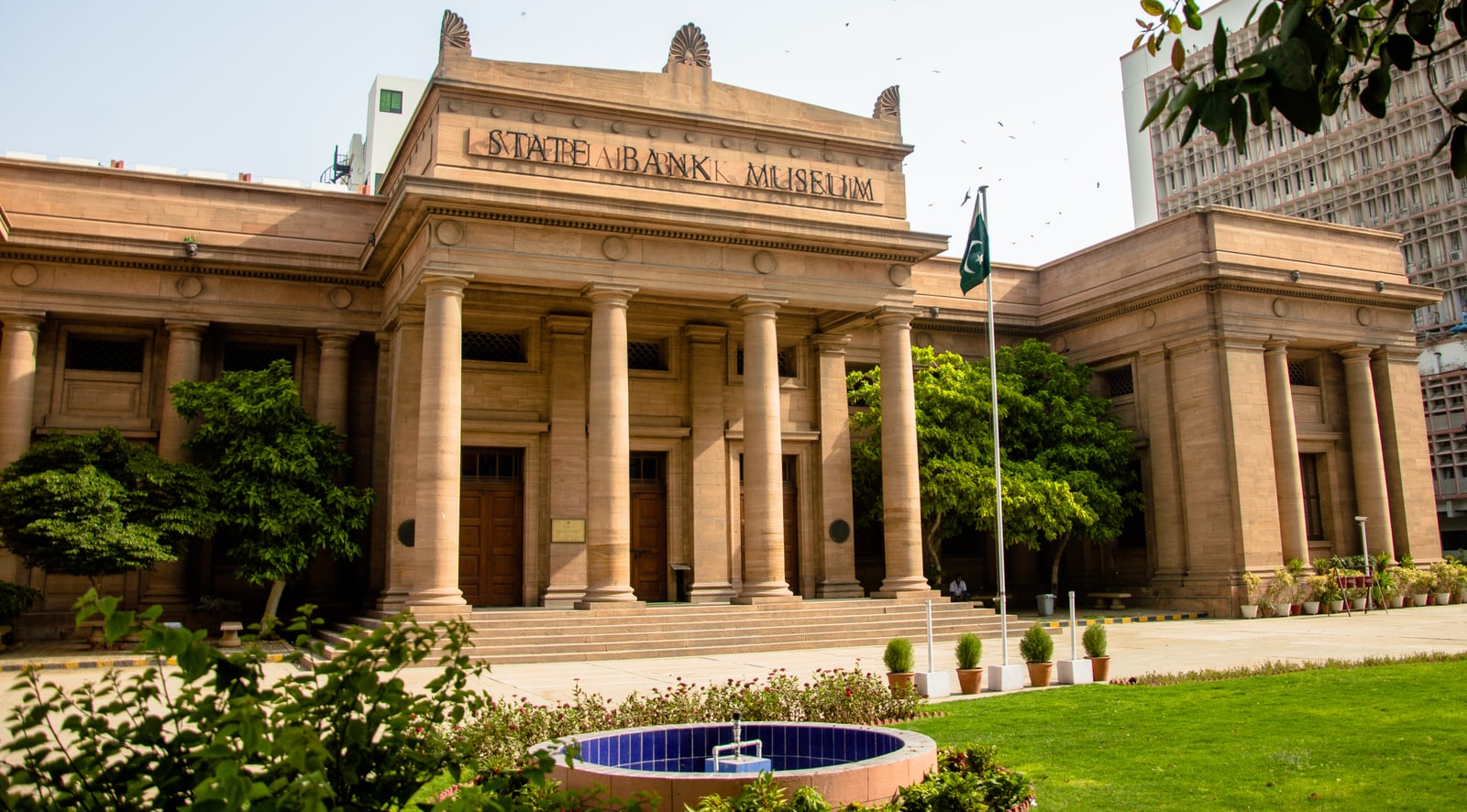
The improvement rests on a single transfer. The State Bank of Pakistan paid Rs1.932 trillion of surplus profit to the federal government as non-tax revenue, and senior Finance Division officials confirmed to The News International that the amount against a budgetary projection of Rs1.435 trillion for the whole of 2026-27 was nearly Rs500 billion more than planned. Profit by Pakistan Today put the overshoot at about 35 per cent of target, and worked out that the payment supplied roughly 82 per cent of the non-tax revenue the federal government collected in July and August.
The money is not new. Under amendments to the State Bank Act approved by parliament, the bank now hands over the surplus profit earned in the previous financial year at the start of the new one, so the whole of the 2025-26 profit lands in the July–September receipts. The News International reported that the bank transferred Rs2.619 trillion on the same basis in 2025-26, so this year’s payment is Rs687 billion smaller than the last, and the quarter’s surplus reflects the timing of that payment as much as any new revenue. The State Bank of Pakistan tracker follows the bank’s policy and transfer decisions.
Two other lines did most of the rest. The petroleum levy brought in Rs382 billion in the quarter, Rs11 billion more than a year earlier, The Express Tribune reported, and The News International put the July–August take at Rs220.2 billion against an annual target of Rs1.676 trillion — a levy the government has ruled out cutting immediately, as KhabarWire reported. Together, the bank transfer and the levy accounted for more than 91 per cent of federal non-tax receipts in those two months, Profit by Pakistan Today calculated.
The provinces are where the quarter fell short
The gap sits with the provincial governments. Under an understanding reached in June, the four provinces committed Rs1.035 trillion in cash grants to the centre for security spending and nationally important projects, and the federal government approved Rs275 billion for six priority water sector projects this month. By the end of September the centre had received Rs57.5 billion, about 6 per cent of the annual commitment, The Express Tribune reported.
The statement itself shows where that money came from: Punjab sent Rs32.5 billion, Khyber Pakhtunkhwa Rs12.7 billion, Sindh Rs8.5 billion and Balochistan Rs3.7 billion, paid to the federal government under Article 164 of the Constitution. The Express Tribune reported that the Khyber Pakhtunkhwa government has publicly linked its grant to a meeting with the imprisoned Pakistan Tehreek-e-Insaf leader, Imran Khan.
Tax collection is the second shortfall: the four provinces missed the IMF’s condition on tax collection while meeting the cash-surplus target, The Express Tribune reported. The statement shows both halves of that picture. Provincial tax revenue of Rs301 billion was 12 per cent higher than a year earlier, and the provinces as a group ran a cash surplus of Rs600 billion on Rs1.8 trillion of spending, Rs83 billion above the target The Express Tribune reported. Balochistan was the exception, spending Rs191 billion against Rs175 billion of revenue for a Rs16 billion deficit.
What the Fund decides next
The programme now turns on the IMF’s executive board. The board is tentatively scheduled to meet in December to approve loan tranches worth about $1.2 billion, Finance Minister Muhammad Aurangzeb said, The Express Tribune reported — the disbursements that follow the fourth review agreed at staff level in October. KhabarWire reported that staff-level agreement, and the IMF and Pakistan tracker follows the reviews and disbursements.
The risk in the numbers is that the quarter looks better than the trend underneath it. The bank transfer arrives once a year, and the captive power plant levy, targeted at Rs15.7 billion for the year, had produced nothing by the end of August, The News International reported. Against that, the interest bill of Rs1.70 trillion in three months is the one line that is certain to keep growing.
The statement is provisional, the IMF’s quarterly benchmarks are not published inside it, and neither the December board date nor the full-year outturn can be confirmed yet. What the data do settle is where the fiscal position stands: a surplus built on a single annual transfer, a tax authority that met its quarterly benchmark but then ran Rs95 billion behind over the first four months, and provinces that have sent 6 per cent of the cash they promised. The State Bank’s October policy rate increase and the interest bill that follows it will shape how much of this surplus survives the rest of the year.