Reporting snapshot · 30 October 2026 (Asia/Karachi). The decision approves work against two master plans that have not been published, so the shape of the projects can still change, and the prime minister's office statement had not been posted on the Prime Minister's Office or Press Information Department websites when this was written. The main limitation is that the statement sets standards and priorities rather than a dated works programme: no cost, completion date or capacity target is attached to either airport.
What the prime minister approved
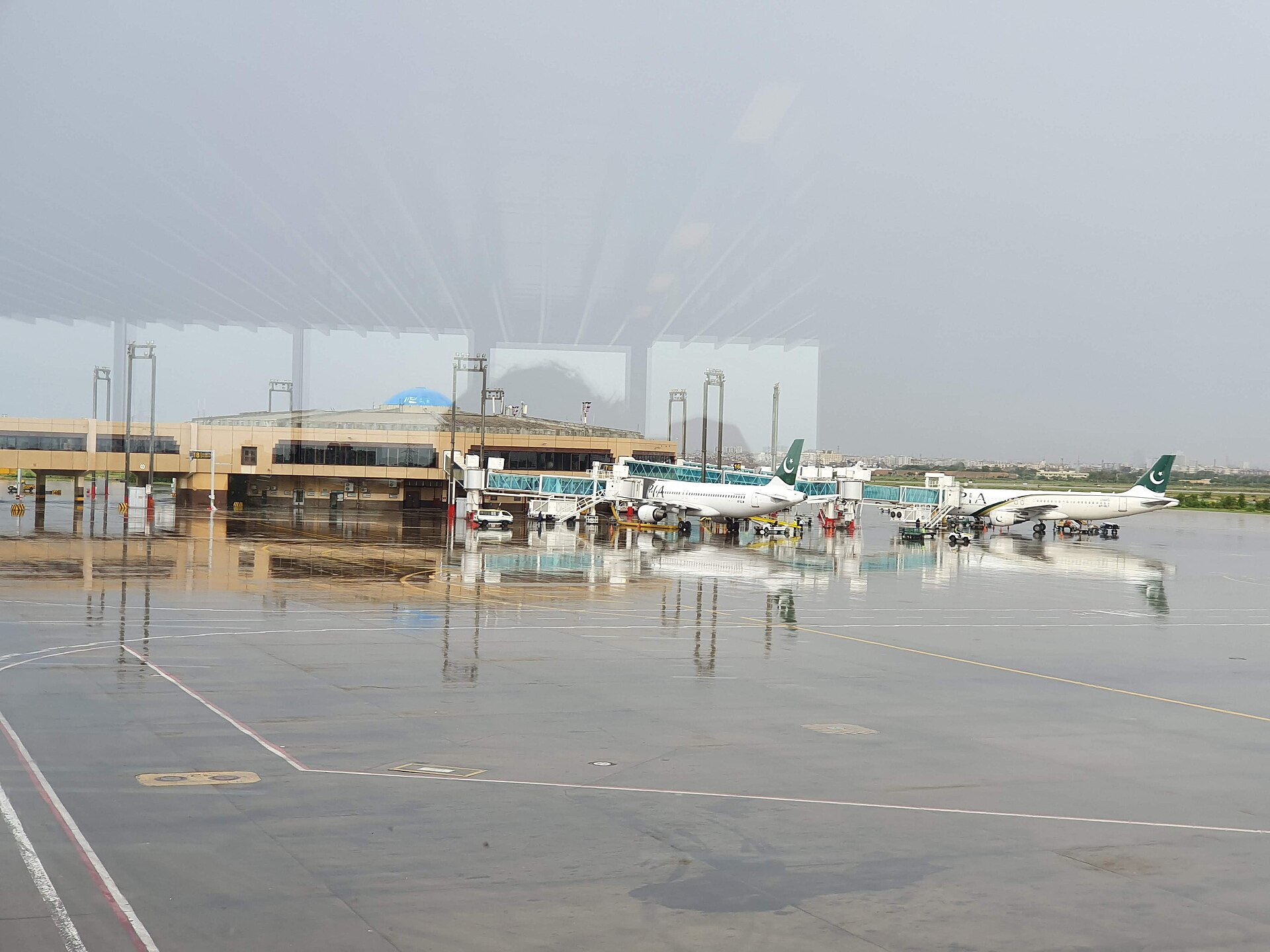
On Thursday, 29 October 2026, Prime Minister Shehbaz Sharif chaired a meeting in Islamabad on airport expansion and passenger facilitation, and approved the expansion of Allama Iqbal International Airport in Lahore and Jinnah International Airport in Karachi under their respective master plans. Dawn reported that the approval came with directions that the projects be completed within the prescribed timeframe, that no compromise be allowed on the quality of construction work, and that reforms at the airports be subjected to third-party validation. Geo News carried the same account, while The Express Tribune and Profit by Pakistan Today published accounts of the prime minister’s office statement.
The statement sets out what the meeting was told. The master plans for the two airports, including their proposed expansion works and construction schedules, were briefed to the premier, who directed that the projects be finished within the timeline those plans set and in accordance with international standards. Officials also briefed the meeting on a survey by an international firm assessing the quality of passenger facilities at the country’s major airports, and on development and upgradation work being carried out by the Civil Aviation Authority at airports nationwide.
Most of the meeting was about service rather than concrete. Passenger convenience was named the top priority at all airports, and the prime minister directed authorities to bring in internationally renowned institutions, to train airport staff regularly in service delivery, and to improve coordination among the agencies operating at airports. Catering contracts were to go to reputable firms, with the statement warning that there would be no compromise on the quality of food and beverages offered to passengers. Deputy Prime Minister and Foreign Minister Ishaq Dar and federal ministers Khawaja Asif, Musadik Malik, Ahad Khan Cheema and Attaullah Tarar attended, Dawn reported.
Two operational updates were given. Officials told the meeting that the runway expansion at Jinnah International Airport had been completed, and The Express Tribune reported that the Civil Aviation Authority had activated 14 airports over the past year to restore domestic flights. The statement also covered passenger processing: work on installing automated border management systems, or e-gates, at major airports is under way, and the Federal Investigation Agency has increased staff and counters, launched a meet-and-greet service at Islamabad airport and set up pre-departure desks at major airports.
The cargo village
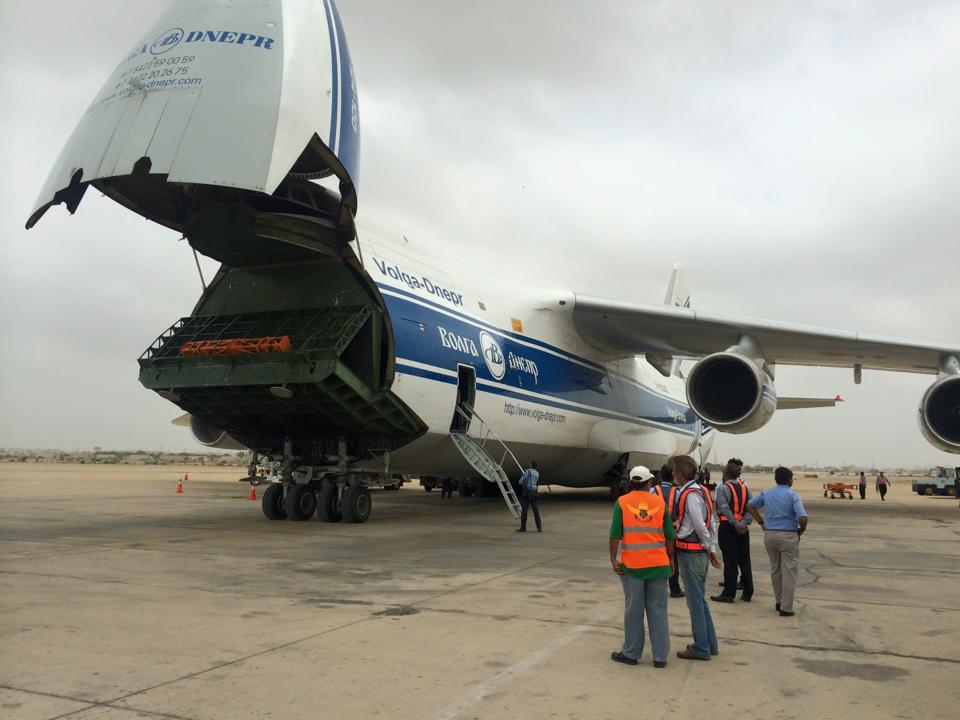
The forward-looking part of the statement is a single line about freight. The prime minister’s office said that “work is also ongoing on the air cargo village to make Karachi an air cargo hub”, Dawn reported, and that phrase carries the commercial ambition attached to the two airports’ expansion.
Nothing in the statement describes what the cargo village is. No site, cost, completion date or volume of freight is attached to it, and no export or cargo throughput figure is given against which to measure progress. What it does establish is a direction of travel for Jinnah International Airport, which the approval points towards carrying more of the country’s air freight as well as more of its passengers, with “air cargo hub” as the government’s own description of the aim.
Land-side logistics for the same freight are already a visible problem for Karachi’s trade routes. KhabarWire reported in October on containers piling up at Karachi port while a blockade in Islamabad held up the trucks meant to haul them north, pushing up demurrage and freight costs. Air cargo relieves that pressure only if the road and terminal capacity behind it is addressed at the same time.
An airport sector being restructured at the same time
The expansion lands in the middle of a wider reshaping of Pakistani aviation. In July, the government added Jinnah, Islamabad International and Allama Iqbal International airports to the first phase of a revised five-year privatisation programme covering 25 state-owned entities, Profit by Pakistan Today reported from documents it said it had seen. Pakistan International Airlines and First Women Bank Limited were dropped from that list, the report said, because their privatisation was treated as complete — a process KhabarWire covered in June when an Arif Habib-led consortium took control of the national carrier at its first financial closing.
Capital works have been moving ahead of that restructuring. A Rs10 billion project to modernise air traffic management and voice communication systems, and to upgrade air traffic control centres, at Karachi and Lahore airports was launched in September, Profit by Pakistan Today reported. In February, a commercial landing was conducted on the upgraded runway 07L/25R at Jinnah International Airport, the same outlet reported, and the meeting on 29 October was told that the runway expansion there was complete.
Passenger facilitation has been a running theme since the middle of October. On 17 October, the prime minister ordered the immediate import of smart scanners for automated baggage screening at all international airports, and told customs officials that passengers must not be harassed through unnecessary questioning, Dawn reported. The 29 October meeting sits inside that sequence: the same priority for passenger convenience, the same instruction to train staff and to overhaul outdated procedures, now applied to the two airports whose master plans have just been approved.
One further item in the statement concerns aviation education rather than aviation infrastructure. The existing aviation institution in Hyderabad is to be improved into an international-standard aviation university, with work to start by February 2028, Dawn reported.
What is still uncertain
The master plans themselves are the largest gap. They were briefed to the meeting, but neither has been published, so the scope of the approved expansion, its phasing and its cost cannot be checked against the work now under way.
Money is not addressed either. The statement does not say whether the expansion will be financed by the federal budget, by the airports themselves or by a future private operator, and it does not say how the works interact with the privatisation of the same three airports planned for the first phase of the government programme. If third-party validation of the reforms is to carry weight, the scope of that validation also needs defining; no valuer, standard or timetable is named.
The cargo village is the second gap. It is described as under way, but the statement gives no detail that would let anyone measure progress towards an air cargo hub, and no cargo strategy for Jinnah has been published. The survey of passenger facilities that informed the meeting’s service directives is also unpublished.
Finally, the prime minister’s office statement had not been posted on the Prime Minister’s Office or Press Information Department websites at the time of writing, so the detail of the approval is known from the accounts of the meeting published on 29 October rather than from a posted release.