Reporting snapshot · 11 November 2026 (Asia/Karachi). The draft agreement has not been published, the government's account of the meeting is limited to a statement from the Deputy Prime Minister's Office, and neither side has put a figure on the relief or on the levy rate. The next round, expected on 11 or 12 November, is the first point at which the difference between the two accounts can be tested.
The government and Jamaat-e-Islami agreed the broad outlines of a draft agreement to extend fuel relief to consumers on 10 November, the strongest sign yet that the two sides are close to putting an agreement in writing after months of standoff over the petroleum levy. Deputy Prime Minister Ishaq Dar met a JI delegation led by the party’s deputy chief Liaquat Baloch for what the party counted as the tenth round of negotiations, and after the meeting Baloch said the two had settled the shape of a draft that the government would now fill in with details, The Express Tribune reported and Pakistan Today reported.
What has changed since the joint committee the two sides set up on 27 October is that the negotiations now have something to argue over. That committee was given two jobs: widen the federal fuel relief scheme, and prepare proposals for phasing out the levy, a remit KhabarWire reported when the committee was announced. Its output, in Baloch’s account of Tuesday’s meeting, is an agreed outline of a draft agreement, with another round expected on Wednesday or Thursday and the final decision reserved for a possible meeting between Prime Minister Shehbaz Sharif and JI chief Hafiz Naeemur Rehman.
Two accounts of the same meeting
The government’s account is narrower than the party’s. The Deputy Prime Minister’s Office said the meeting covered “constructive discussions on measures to provide relief to consumers, particularly low-income households”, and that there was “broad agreement on the need to address public concerns through continued consultation and cooperation”, Radio Pakistan, the state broadcaster, reported. The statement does not mention the petroleum levy, a draft agreement or a date by which anything would be signed, and neither side has published any text.
Baloch’s account is more specific. He said the two sides had agreed to expand the existing relief measures, that the government would consult the IMF on continuing the relief, and that JI had proposed adding vehicles with engines of up to 1,000cc and the agricultural sector to the scheme. He said the government had acknowledged that JI’s demand to abolish the levy was legitimate, and had told the delegation it had begun work on a revenue plan and would share a framework for gradually reducing the levy once the IMF consultations were done.
“Our demand is that the levy should be abolished immediately and the public should be given clear relief,” Baloch said at the press conference after the meeting, according to Pakistan Today. “The process has now reached the stage of final decisions.” He also said the party would pull out of the negotiations if it found the government unwilling to move forward, and criticised the government for cutting its own luxuries while loading the Federal Board of Revenue’s shortfalls onto consumers.
What a levy cut has to fit inside
The government’s public position on the levy has not moved as fast as the talks. In a written reply to the National Assembly on 29 October, the petroleum minister said the levy had raised Rs4.4 trillion between 2022-23 and 2025-26 and formed part of the government’s fiscal targets with the IMF, and Planning Minister Ahsan Iqbal said a phased reduction would wait for the next budget and that the levy would not be cut under pressure from Jamaat-e-Islami, as KhabarWire reported at the time.
Tuesday’s outline moves that timetable without naming a rate. The government has offered to bring a framework for a gradual reduction after consulting the IMF, and the party has been told to expect the final decision from a meeting between Shehbaz and Naeem. No rate, date or total has been agreed, and the government has not said the levy will come down. Whether the outline counts as progress depends on three things the draft has to settle: how much relief is being bought, whether it comes from the levy or from a wider subsidy, and how it is financed without breaking the revenue target that the levy was built to meet.
What relief would mean at the pump
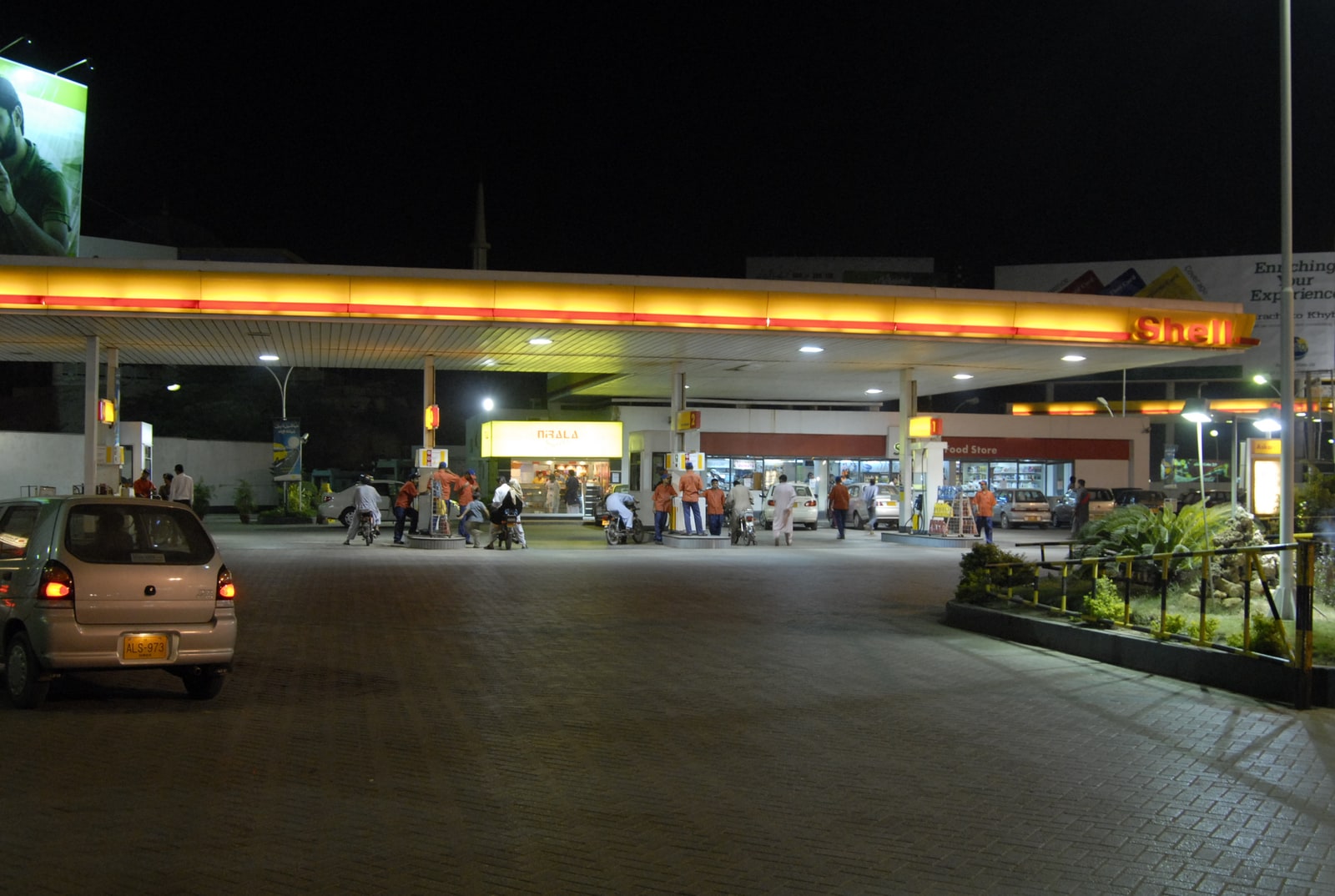
The price the negotiations are fighting over is visible every morning. From 11 November, petrol sells for Rs338 a litre, down Rs8 from Rs346, and high-speed diesel for Rs371, down Rs7 from Rs378, according to the Petroleum Division notification Pakistan Today reported, and the regulator lists the 11 November price publication among its daily notices. It follows a run of daily revisions earlier in the month, with petrol down Rs25.32 between 2 and 6 November, as KhabarWire reported on the fourth straight daily reduction, and the 7 November notification, which cut petrol by Rs6.59 a litre and set the rates for the period ending 10 November.
Those prices can be revised every day because the government replaced weekly pricing with a daily mechanism on 17 July, and because on 2 November it agreed to have refiners absorb an estimated Rs15 billion a month to hold petrol about Rs15 a litre below international levels. The relief scheme the party wants extended is narrower and more targeted: a Rs100 a litre subsidy for motorcycle and three-wheeler owners and for drivers of cars with engines up to 800cc, capped at 20 litres a month for two- and three-wheelers and 30 litres for cars, covering roughly 11.8 million people. JI’s proposal on Tuesday was to widen it to vehicles of up to 1,000cc and to the agricultural sector.
Baloch claimed the protest campaign had brought Rs146 a litre of relief on diesel and Rs120 a litre on petrol. The daily notifications set the pump price and do not separate the levy component from the rest, so that figure cannot be checked line by line against them; the measures the government itself has put in place are the targeted subsidy and the refinery absorption arrangement.
The long march clock
The sequencing matters more than the detail for now. Baloch said the two sides would meet again on Wednesday or Thursday, that the final decision on the agreement would be taken at a possible meeting between Shehbaz and Naeem, and that the party would decide after that meeting whether to go ahead with the long march to Islamabad. He repeated that the party would resume the march if the talks fail to produce abolition of the levy.
That threat has a deadline attached. Naeem had warned in October that the party would resume its march to Islamabad in mid-November if its demands were not met, and the earlier march that had travelled from Karachi by train towards Multan was suspended only after the prime minister asked the party to wait, Pakistan Today reported in its account of the campaign. The campaign behind those deadlines began with sit-ins at 510 locations in August and a shutdown strike, and the whole storyline is tracked in the Jamaat-e-Islami petroleum levy file.
What the next round has to produce is the text: how much of the relief comes from the levy itself, how much from the subsidy, and what the government is prepared to put in front of the IMF. Until one of the parties publishes that, the 10 November outline is an agreement to keep negotiating rather than an agreement about the numbers.