Reporting snapshot · 23 November 2026 (Asia/Karachi). Iran's declaration is official, but every count of the attacks comes from maritime monitors who tally only what they can verify, and no incident has been independently attributed to either side. The October tally was reported at the end of last month; the new elements are the November toll and what Tehran has now committed to. Trump's remarks are his own, and shipping in the strait can change within hours.
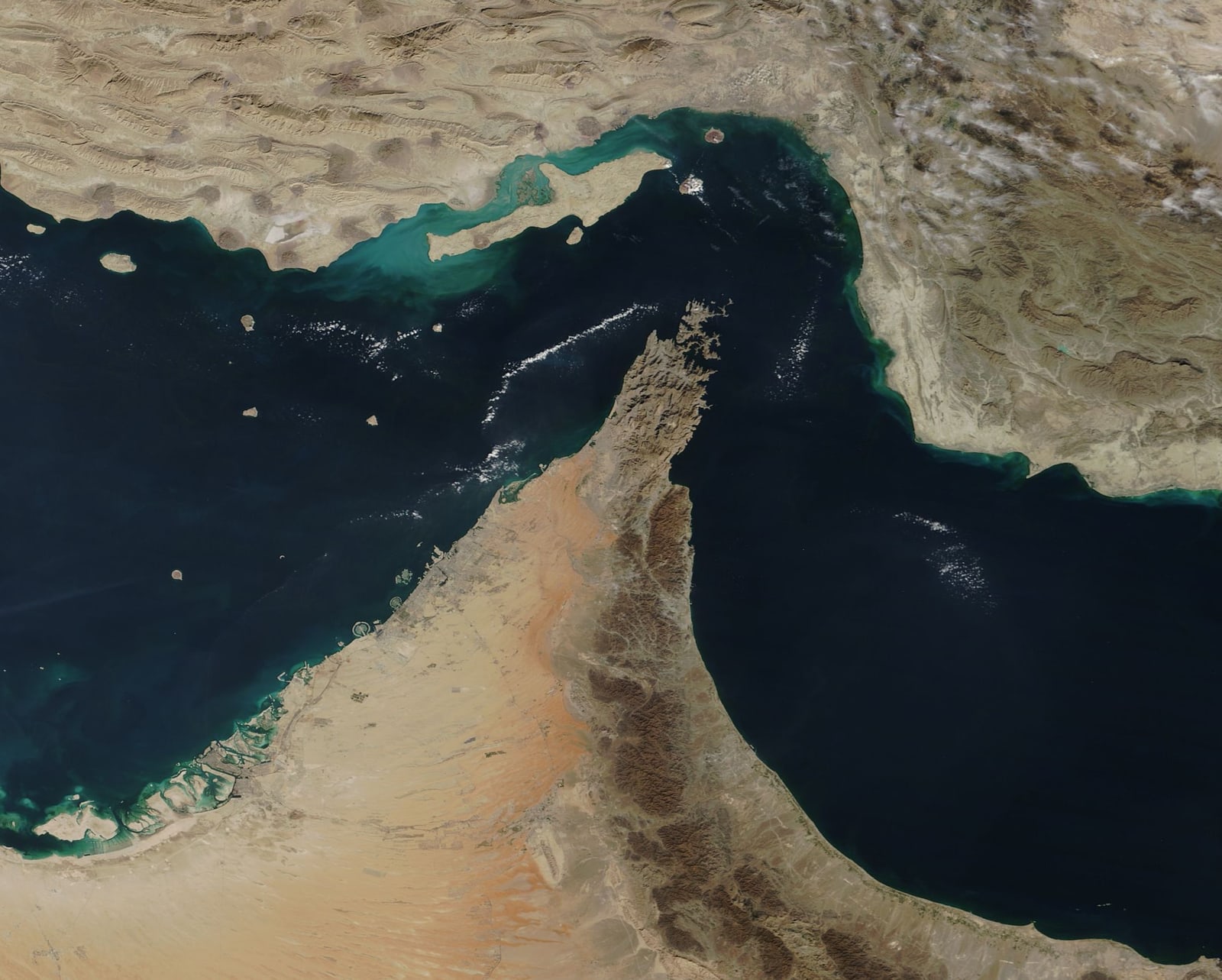
Tehran said on 23 November that it would use every tool at its disposal against the United States naval blockade of Iranian oil exports, after another week in which tankers were struck in the Strait of Hormuz and Iran’s Revolutionary Guard claimed missile and drone attacks on American positions in Bahrain. Esmaeil Baghaei, the spokesman of Iran’s foreign ministry, told the ministry’s weekly news conference that Washington would not be allowed to maintain the blockade. “We will definitely not tolerate it and we will use all our tools to confront this US aggression,” Baghaei said, describing the blockade as “a military aggression” and adding that “Iran has the right to use any available tool to defend itself in this regard”, The Express Tribune reported.
What has changed since KhabarWire reported on 16 November that Iran had mined two tankers in the strait is the stated method rather than the starting point. Over the weekend, British maritime authorities reported two tankers struck by unidentified projectiles near Oman, and Iran said a tanker had caught fire after hitting a naval mine, Al Jazeera reported. Bahrain said an Iranian attack hit a civilian industrial facility on Saturday, and the Revolutionary Guard said it had launched a missile-and-drone assault on United States military positions in the kingdom, home of the US Navy’s 5th Fleet. Al Jazeera’s assessment of the escalation counted at least 25 tankers hit in and around the strait over seven days.
What the maritime monitors now count
The scale is being measured from outside the region. The UK Maritime Trade Operations Centre said in the weekly overview it published on Friday that attacks on commercial shipping in and around the Strait of Hormuz passed 30 in October, the worst month since the war began in late February, and that at least 22 more attacks were recorded in November as of Sunday, across the strait, the Gulf and the Gulf of Oman. Before October the monthly average was roughly ten, The Express Tribune reported, which added that separate International Maritime Organisation figures also put October’s confirmed incidents at their highest this year.
The same account puts commercial traffic through the strait, which carried roughly one-fifth of global oil supplies before the war, at about 65% below pre-conflict levels. It also notes that the count is a floor rather than a ceiling: UKMTO says most targeted vessels do not report incidents and some have switched off their tracking devices, so it “is struggling to capture the full tally of attacks”.
What Trump said, and the January question
Washington answered the same day. Donald Trump wrote on Truth Social that two predictions he made before the 3 November midterms had come true: that the stock market would fall “substantially” if the Democrats won, and that Iran “will grow more aggressive in their attacks”. He claimed Iran had “launched more drones and missiles in the last week than at any time for over a year”, and that they had all been “knocked down, and done no damage”. Trump also alleged that Iran and the Democrats had deliberately kept oil prices elevated before the election and that prices had since “dropped by a record level”, and claimed Iran had “killed 81,000 protestors as of today”, a figure no independent body has verified. On Sunday he said he is inclined to resume military strikes after the New Year if talks fail, describing Iranian negotiators as “professional tap dancers”.
The oil market read the same ambiguity. Brent crude fell 47 cents to $92.10 a barrel by half past midday in Pakistan, having touched $93.12 earlier, while US West Texas Intermediate slipped to $82.98; Brent lost about 4% and WTI about 5% over the past week, Reuters reported. Vandana Hari of Vanda Insights said a “tense US-Iran stalemate increasingly looks like the base case through year-end, but Trump can still flip-flop over the prospect of renewed military action”. The International Energy Agency has attributed the recent fall in prices to recovering Gulf exports and to easing concern about fresh American strikes after the midterms.
Where the accounts still diverge
Tehran’s terms for reopening the waterway have not moved. Baghaei repeated that Iran controls passage through the strait and will reopen it only once Washington halts hostilities, lifts the blockade and waives sanctions, adding that “if the other side fulfils the related conditions, we will be able to execute our commitments in the shortest time possible”. Visible Iranian crude exports have fallen close to zero in recent months, and on Monday Baghaei called reports that an Iranian vessel was loading oil for export “speculations”, days after TankerTrackers said a tanker loading Iranian crude in the Gulf through a ship-to-ship transfer could become the first successful export since the blockade was reimposed in July. He also said Iran remains committed to the Nuclear Non-Proliferation Treaty, while noting that discussion of withdrawal is under way in media, expert and public circles and that no decision had been communicated to the foreign ministry.
What it means for Pakistan’s fuel and for the mediation track
For Islamabad the arithmetic has not changed, but the deadline has. The waterway that carried about a fifth of the world’s oil before the war is where the vessels carrying Qatar’s gas for Pakistan have been hit. KhabarWire reported on 1 November that the liquefied natural gas carrier Al Mayeda was struck by unidentified objects in Gulf waters near the strait, and that Islamabad had sought Iran’s safe passage for it before the attack. The government’s answer so far has been financing and new suppliers rather than force. On 22 November, in Muscat, Pakistan and Oman’s OQ Trading signed a petroleum supply agreement giving Pakistan State Oil a $200 million credit line to fund its purchases, Radio Pakistan reported, and KhabarWire tracked the terms. That buys cargoes; it does not reopen the strait.
The same track runs through the mediation effort. Tehran’s conditions repeat the terms of the Islamabad Memorandum of Understanding that KhabarWire follows in its Pakistan, Iran and the US mediation hub, and the fuel exposure runs through the Pakistan fuel and energy hub. With each side waiting on the other to move and the American president pointing at January, the question for Islamabad this month is not whether the blockade holds, but whether the window for a mediated reopening stays open.