Reporting snapshot · 20 November 2026 (Asia/Karachi). Saudi authorities attributed the strike to a Houthi missile; no independent assessment of the structural damage to the tower was available, and the financial district was still closed to visitors. The expectation of a campaign lasting up to six months comes from officials briefed on Saudi plans rather than from a published government decision.
Pakistan’s Foreign Office condemned on Friday, 20 November, a Houthi missile attack that damaged the Public Investment Fund Tower in Riyadh’s King Abdullah Financial District, calling the strike a grave violation of Saudi Arabia’s sovereignty. The statement came a day after Saudi authorities confirmed that a missile hit the 80-storey building that houses the headquarters of the kingdom’s sovereign wealth fund, and it puts Islamabad’s position on the record at a moment when Riyadh expects the war with the Houthis to run for months.
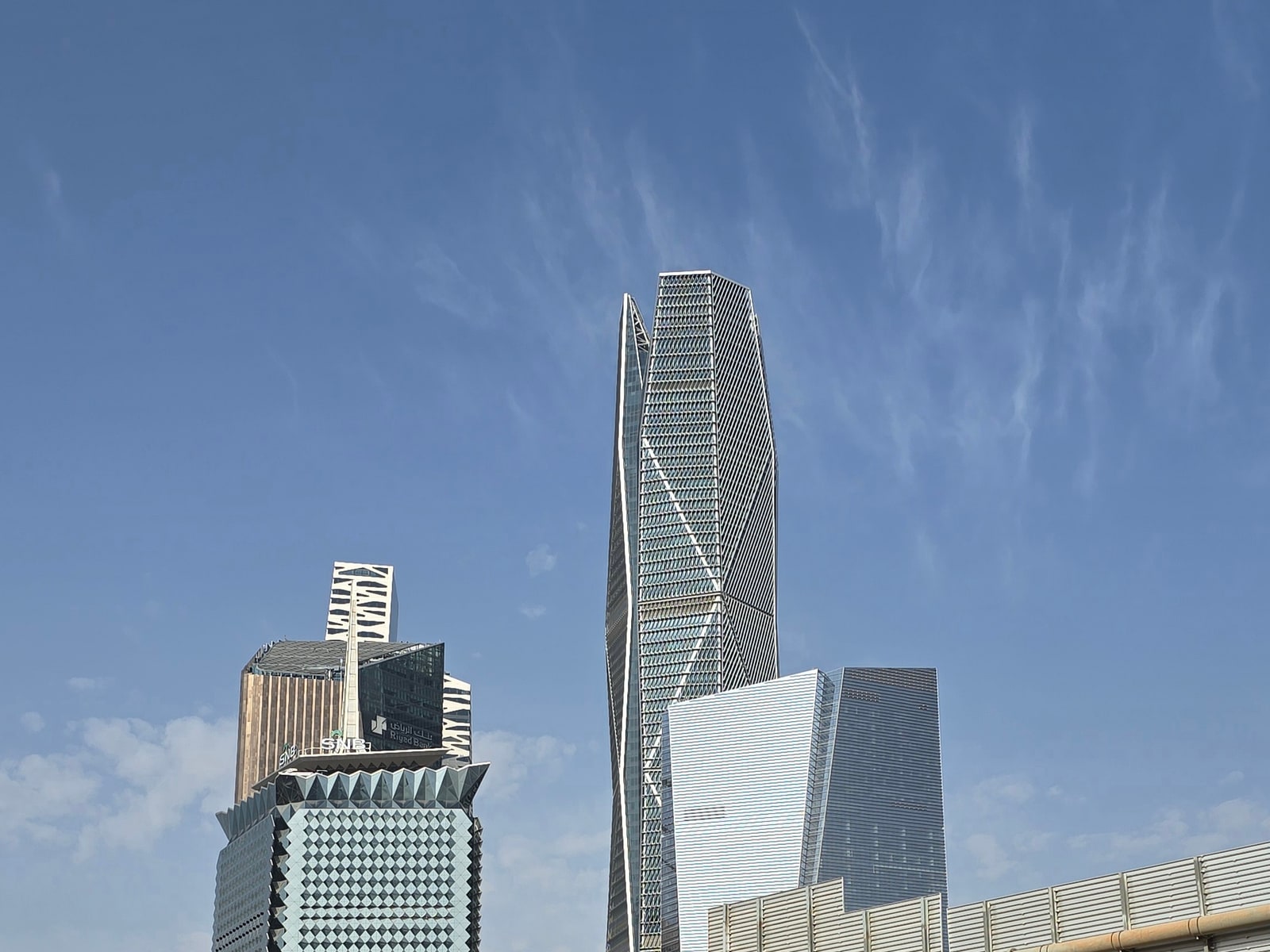
Nobody was reported hurt. Saudi Arabia’s Civil Defence said the attack caused material damage to the tower and to nearby buildings, and the financial district was closed to visitors, The Express Tribune reported. Al Jazeera’s live coverage of 19 November carried the Saudi authorities’ confirmation that the tower had been hit, Al Jazeera reported. The tower stands 385 metres tall with 80 storeys, and the damage ran across seven to eight floors, with windows blown out and sections of the metal facade bent, the same account said. A photograph released by the Saudi Press Agency showed the building.
The wealth fund’s own tower
The target is what separates this strike from the run of interceptions that has marked the campaign. The Public Investment Fund is Saudi Arabia’s sovereign wealth fund, and the tower named for it is the tallest building in the capital’s financial district. On 19 November it became the second landmark in that district to be damaged in under two weeks: on 8 November a missile struck an Aramco administrative building, which KhabarWire reported at the time.
The Saudi-led coalition said it had dealt with a missile threat launched towards Riyadh and that debris fell while damage was being assessed, the Express Tribune reported. Witnesses told AFP that nearby buildings, including residential properties, also suffered damage. Saudi Arabia’s foreign ministry condemned the attack and said the kingdom reserved the right to take “all necessary measures” to defend its sovereignty, its citizens and its national assets.
What Pakistan’s foreign ministry said
Pakistan’s response came from the Foreign Office, whose spokesperson Sajjad Haider Khan said Pakistan “unequivocally condemns the attack by the Houthi militia on a tower at the King Abdullah Financial District (KAFD) in Riyadh”, Radio Pakistan reported. The statement, issued as PR No. 342/2026, calls the attack “a grave violation of the sovereignty of the Kingdom of Saudi Arabia”, warns that the continued targeting of civilian infrastructure and economic facilities endangers innocent lives and poses a serious threat to regional peace and security, and says such attacks “must cease forthwith”. The Express Tribune carried the same text.
The statement added that Pakistan stands with the Saudi government and people, and supports the kingdom’s “legitimate right to defend its sovereignty and territorial integrity and to safeguard its citizens and residents”, saying Pakistan “has been and will continue to make all efforts for achieving lasting peace and stability in the region”.
The wording is deliberate. Pakistan is one of three signatories to the Makkah Joint Defence Agreement, signed with Saudi Arabia and Turkiye on 7 August 2026, under which an armed attack on one signatory is treated as an attack on all three and which Turkish officials described at the time as defensive in nature, KhabarWire reported at the signing. By condemning the strike as a violation of Saudi sovereignty rather than of a commercial building, Islamabad has framed it as an attack on the territory of a partner it is bound to defend.
Friday’s interceptions and the campaign ahead
The fighting did not pause. On Friday the Saudi-led coalition said it had intercepted and destroyed two drones launched towards Riyadh and its southern regions, with spokesman Turki al-Maliki announcing the interceptions, the Express Tribune reported. The coalition also asked civilians to evacuate areas of the strategic Red Sea port of Hodeidah, and Saudi air defences had earlier intercepted a ballistic missile launched at the southern region, the same account said.
Saudi Civil Defence reported drones intercepted in the south and issued warnings for Jazan, Abha and Khamis Mushait before announcing that the danger had passed. Houthi-run Al-Masirah television reported Saudi airstrikes on Sanaa on Friday, with no immediate Saudi comment, the Express Tribune reported. On Thursday the coalition had said it had intercepted five ballistic missiles launched towards the southern region and had destroyed a ballistic missile launch platform in Dhamar, south of the Yemeni capital.
Riyadh is preparing for a long fight. Reuters reported, citing officials briefed on Saudi plans, that Saudi officials now expect the campaign against the Houthis to continue for up to six months, and that the kingdom wants its allies to make further gains on the ground before entering negotiations with the group, The Express Tribune reported. The request that civilians leave parts of Hodeidah, the port that anchors the Red Sea flank of the war, points in the same direction. KhabarWire reported last week that Yemen’s government forces had already pulled back from the Bab al-Mandeb positions to defend Aden.
Markets have registered the change. Brent crude rose 79 cents, or 0.9 per cent, to $92.77 a barrel in early Friday trading, with the December West Texas Intermediate contract at $83.46, even as both benchmarks were set for a third weekly fall on expectations of a supply surplus, The Express Tribune reported. Two tankers were also hit by naval mines in the Strait of Hormuz, and analysts at UOB Group said the attacks, running at roughly one a day through November, keep a geopolitical risk premium on every barrel that moves.
What it means for Pakistan
For Islamabad the practical questions are narrower than the rhetoric. The Makkah pact rests on collective deterrence and was described at the signing as defensive in nature, so it does not put Pakistani forces into the Yemen campaign. What has changed is that a strike on the financial centre of a partner’s territory now carries an explicit Pakistani endorsement of Riyadh’s right to answer, while the war in Yemen is expected to run for months rather than weeks.
The second channel is energy. A campaign that keeps missiles and drones over Saudi Arabia, alongside tankers taking mines in the Strait of Hormuz, arrives in Pakistan as a fuel import bill at a moment when the government is negotiating a relief package with Jamaat-e-Islami over the petroleum levy, with Liaquat Baloch saying on 19 November that committee-level talks had concluded and a mechanism to reduce the levy would be finalised at a meeting between Prime Minister Shehbaz Sharif and the party’s emir, The Express Tribune reported.
Both channels point the same way: for Pakistan, the Houthi campaign has become a cost and a diplomatic risk that lasts as long as it takes Riyadh to finish it.