Reporting snapshot · 2 October 2026. This account rests on the Pakistan military's press conference in Rawalpindi on 1 October 2026, as reported by The Express Tribune, Geo News and Pakistan Today, and on the Indian Army's account of its Budgam operation as reported by The Hindu. Neither military's underlying claim has been independently verified. India had not responded publicly to the presentation at the time of writing, and Pakistan has not published the identity documents its former soldier is said to have produced. Treat both the allegation and the rebuttal as contested.
What happened
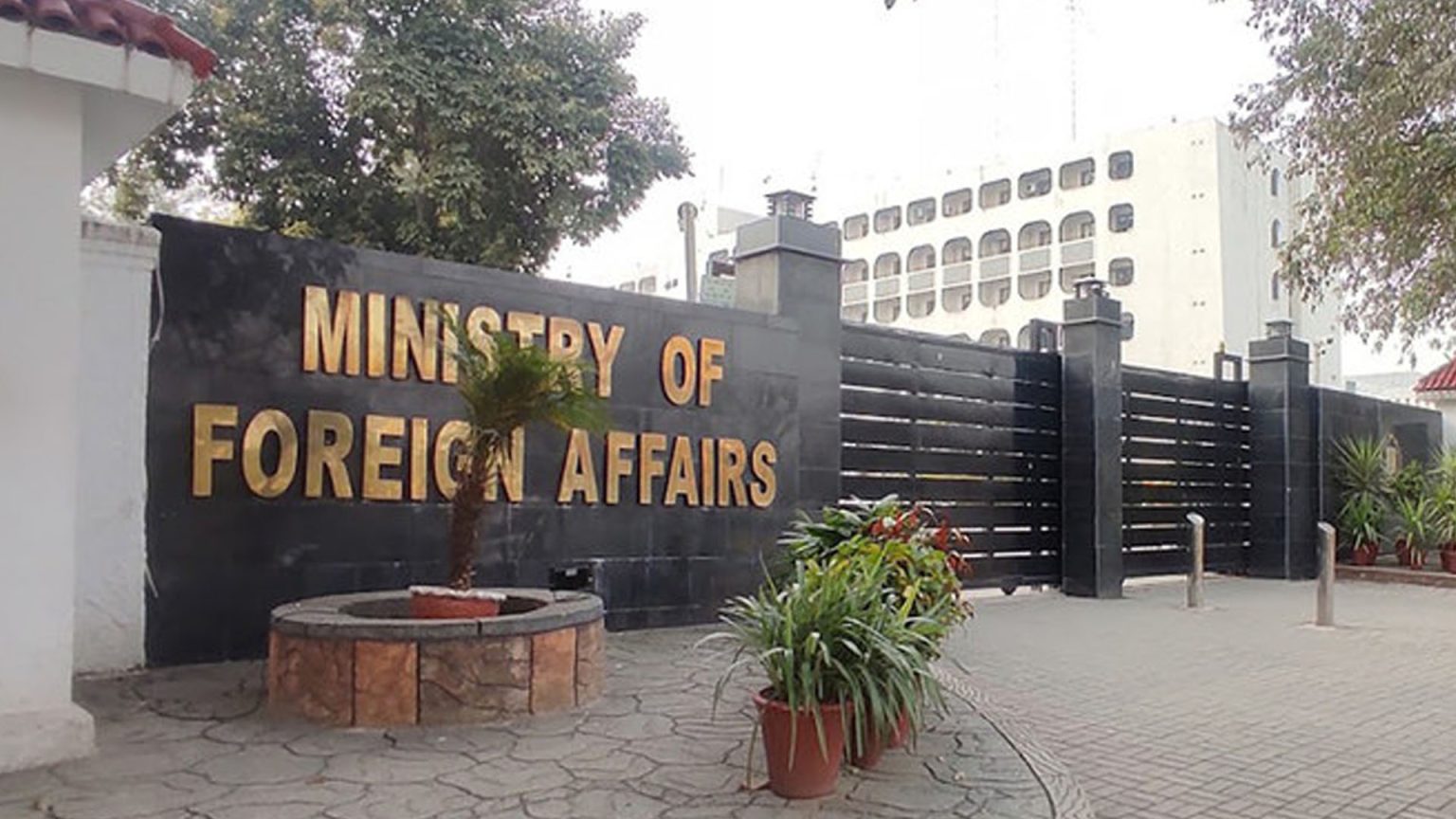
Pakistan’s military on Thursday, 1 October, presented a retired soldier alive to reporters in Rawalpindi and said India had wrongly identified him as a Lashkar-e-Taiba (LeT) commander killed in an operation in Indian-administered Kashmir.
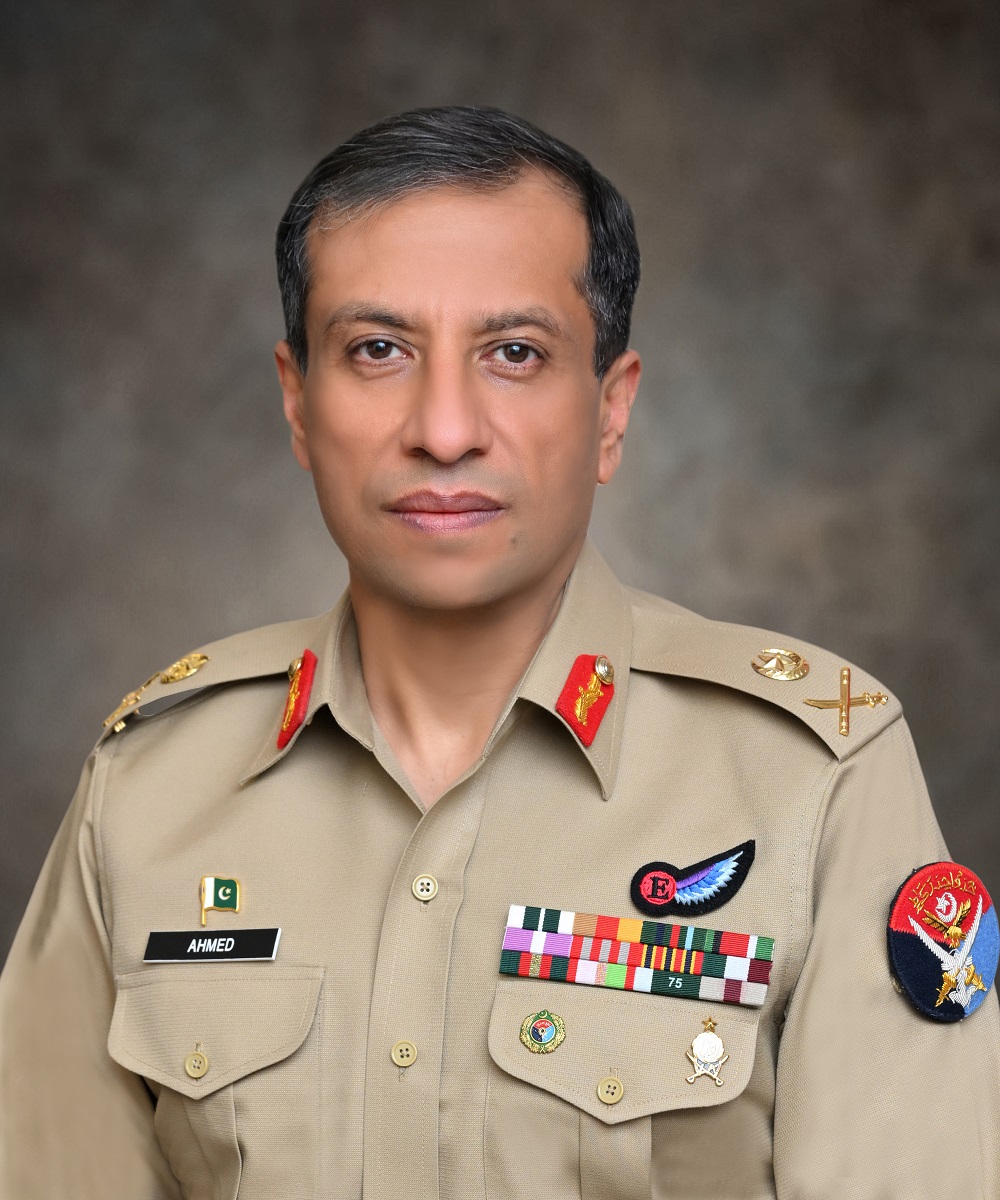
At the press conference, Inter-Services Public Relations (ISPR) Director-General Lieutenant General Ahmed Sharif Chaudhry produced Havildar Mohammad Asif, a former member of the Pakistan Army’s Special Services Group (SSG), and described the episode as a “false flag” staged by what he called India’s political and military leadership, The Express Tribune reported. The general walked reporters through a timeline and said the two countries had seen similar staged episodes before, naming Uri, Pahalgam and Pulwama.
Geo News reported that Asif is from Pindigheb tehsil in Attock district and told the briefing he had been at home when reports of his death appeared. He said he enlisted in the Army’s Artillery Corps in 2000, joined the SSG in 2005, served 18 years and retired in 2023, then worked for a private security firm before starting a small business. He said his former unit told him to block calls from unknown Indian numbers and that ISPR would contact him. Geo reported that he displayed identity documents at the briefing.
The competing accounts
The dispute traces to the night of 29 September, when the Indian Army’s Chinar Corps said a joint search operation by the Army, Jammu and Kashmir Police and the CRPF had begun in the Korag area of Yousmarg, in central Kashmir’s Budgam district, on specific intelligence. Early the next morning, the corps said the body of a “Pakistan-based LeT terrorist”, identified as Mohammad Asif alias Hashim Moosa, had been recovered along with “war-like stores”, The Hindu reported.
Indian outlets, citing the news agency ANI, then published a detailed profile of the man: born on 7 March 1980; enlisted in the Pakistan Army in 2000 under service number PA-3106947; retired as a Havildar; inducted into the SSG in 2005; posted to Balochistan from 2006; credited with 13 “personal kills” in about 10 operations; and assigned to former president Pervez Musharraf’s security detail between 2006 and 2009. The DG ISPR read out those claims at the briefing and challenged them, asking where the “Musa” India described was, Pakistan Today reported. India’s Home Ministry said the killing of “Musa alias Asif Fauji” was part of a sustained operation and described it as a blow to the LeT network.
The two accounts cannot both be right about the man killed at Budgam. Pakistan’s presentation establishes that a man named Mohammad Asif, who says he served in the SSG, is alive; it does not, by itself, establish that Indian forces killed no one, or that the identification was fabricated rather than mistaken.
Why it matters
The episode lands in an already charged India-Pakistan environment. India has linked the man it says it killed to the April 2025 Pahalgam attack, in which 26 people died and which set off one of the most serious escalations between the two nuclear-armed neighbours in decades, including India’s suspension of the Indus Waters Treaty and the exchanges of May 2025. A public dispute over whether a serving or retired Pakistani soldier was falsely labelled a militant feeds directly into that rivalry and into the competing domestic narratives on both sides.
The press conference was also a wider platform. Lieutenant General Chaudhry used it to accuse India of sponsoring militancy in Pakistan, and he reaffirmed Pakistan’s commitment to the Makkah Joint Defence Alliance with Saudi Arabia and Türkiye, whose operational details he said were confidential. He also defended Pakistan’s campaign against armed groups on its western border, days after Pakistan struck what it called militant hideouts in Afghanistan’s Kunar and Helmand provinces.
At home, the briefing was notable for what the military declined to discuss: the DG ISPR said the army had nothing to do with politics and would not answer questions about the Pakistan Tehreek-e-Insaf’s planned 4 October march, saying politics belonged to political parties. He warned that any Indian military action built on what he called a false flag would draw a “very, very severe” response, a reminder that the rhetoric of the two militaries can escalate quickly even when the underlying facts are disputed. KhabarWire has reported on an earlier Indian “false flag” accusation made by Defence Minister Khawaja Asif in April 2026.
What is still uncertain
The central uncertainty is factual and, on the public record, unresolvable. No independent party has examined the body India says it recovered or verified the identity profile circulated by Indian outlets. Pakistan has not published the service record or identity card it says its former soldier holds, and the ISPR has not said whether it will. India has not responded publicly to the presentation, so it is not known whether it stands by the identification, disputes that the man presented is the same person, or is reviewing the case.
A second question is what, if anything, changes as a result. Neither government has signalled a diplomatic consequence, and it is not known whether the episode will be raised through official channels or at the United Nations. It is also unclear whether the Indian operation at Budgam produced a genuine militant — and, if so, who — or whether the identity was simply attached to a body on the basis of intelligence that has since been contradicted.
The wider trajectory is equally open. The incident sits alongside unresolved disputes over the Indus Waters Treaty, cross-border strikes and the status of Kashmir, and it will be tested by whether either side treats it as a one-off information exchange or as grounds for further escalation. Because the key claims come from the two governments involved, readers should treat the accounts as competing assertions rather than settled facts.
Sources & reporting notes
This is a synthesis of published material, not eyewitness reporting. Sources were reviewed on 2 October 2026. The identity of the person killed in the Budgam operation and the authenticity of the documents displayed at the Rawalpindi press conference could not be independently verified.
- The Express Tribune — Indian claims of killing Pakistani SSG officer in operation debunked as he appears alongside DG ISPR2 October 2026 · The DG ISPR's account of the 1 October press conference, the timeline of the Indian posts beginning 29 September, the ANI profile of Mohammad Asif alias Hashim Moosa, and the general's warning of severe consequences.
- Geo News — Who is Muhammad Asif, ex-SSG commando India claimed killed in IIOJK?1 October 2026 · Asif's own account of his service (Artillery Corps in 2000, SSG from 2005, retirement in 2023), his residence in Attock district, the calls he received, and the identity documents he displayed.
- Pakistan Today — India's 'dead' Pakistani ex-soldier appears alive as DG ISPR exposes 'false flag' claim2 October 2026 · The five-point timeline presented by the DG ISPR, the Indian Army, Ministry of Home Affairs and Press Information Bureau statements he cited, and his remarks on Afghanistan, the Makkah pact and politics.
- The Hindu — LeT 'commander' Hashim Moosa killed in Budgam operation: Army30 September 2026 · The Indian Army's account of the 29 September Korag/Yousmarg operation and the recovery of the body of Mohammad Asif alias Hashim Moosa in the Palmaidan area of Budgam.