Reporting snapshot · 7 October 2026 (Asia/Karachi). United Nations Secretary-General António Guterres called on Chief of Defence Forces and Chief of Army Staff Field Marshal Syed Asim Munir at General Headquarters (GHQ) in Rawalpindi on Wednesday, 7 October, the Inter-Services Public Relations (ISPR) said in a statement. This account synthesises the ISPR readout carried by The Express Tribune and Geo News, and the agenda it sets for the rest of the outgoing UN chief's three-day visit to Pakistan. It is dated and built on those two reports; no readout has appeared from the United Nations itself.
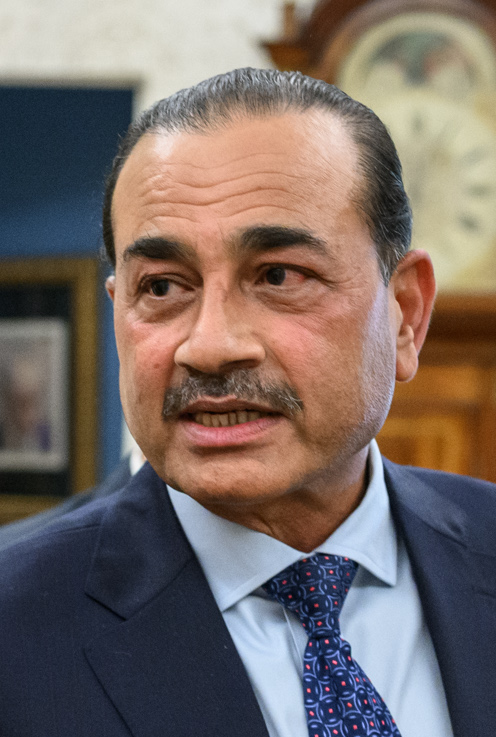
What ISPR says took place
Guterres met Munir at GHQ on 7 October, according to the ISPR statement carried by The Express Tribune and by Geo News. The two exchanged views on “matters of mutual interest, the prevailing regional security environment and the United Nations’ role in promoting international peace and security”, the military’s media wing said.
The ISPR readout added that the discussions also covered “regional stability, the Jammu and Kashmir dispute, India’s abeyance of the Indus Waters Treaty (IWT) and terrorism emanating from Afghanistan” — the same four-item agenda the Foreign Office previewed for the visit on 5 October and that Deputy Prime Minister and Foreign Minister Ishaq Dar covered with the UN chief in Tuesday’s joint press conference in Islamabad.
What Munir and Guterres said
According to the same statement, Field Marshal Munir “reaffirmed Pakistan’s commitment to international peace” and highlighted Pakistan’s contributions to UN peacekeeping missions. He also “lauded the United Nations’ role under the leadership of Guterres, in advancing peace, stability and humanitarian cooperation.”
Guterres, the statement continued, “paid tribute to the sacrifices and contributions of Pakistan and its Armed Forces in the war against terror and in UN peacekeeping missions”, and acknowledged “Pakistan’s continued commitment to international peace and security, specifically appreciating Pakistan’s efforts towards the peaceful resolution of regional conflicts.” The framing tracks the line Guterres had used in Tuesday’s press appearance with Dar, where he said Pakistani diplomacy had helped deliver the “Islamabad Memorandum of Understanding” between the United States and Iran and the subsequent ceasefire, and commended Pakistan’s two-year stint on the UN Security Council.
Why the GHQ leg matters
The General Headquarters stop is the security and defence counterpart to Dar’s foreign-policy engagement on Tuesday. Pakistan has spent the past year positioning Field Marshal Munir as the diplomatic face of its regional crisis management: he led the August 2026 visit to Tehran for US-Iran mediation talks, accompanied the 5 October Riyadh committee meeting that activated the Makkah Alliance’s collective-defence commitments, and met the US-Afghan War Commission delegation at GHQ on 28 September. Hosting the outgoing UN secretary-general at the same headquarters one day after his press appearance with Dar is the formal counterpart to that civil-military choreography.
Two UN files also gain visibility by being raised inside GHQ. Pakistan is the single largest contributor of troops to UN peacekeeping among troop-contributing countries, with successive rotations in the Central African Republic, the Democratic Republic of the Congo, South Sudan and Mali. The agenda item on Kashmir links the meeting to the work of the United Nations Military Observer Group in India and Pakistan (UNMOGIP), which is headquartered in Rawalpindi and which the 5 October itinerary preview said Guterres would visit. By raising the Kashmir dispute at GHQ rather than only at the Foreign Office, Pakistan signals that it wants the file read inside the UN’s security and observer structure, not only inside its political and humanitarian limbs.
The inclusion of the Indus Waters Treaty tracks Pakistan’s recent diplomatic escalation against what it calls India’s “abeyance” of the water-sharing arrangement. Deputy Prime Minister Dar raised the same issue at Tuesday’s press conference and, earlier the same week, told a Vienna water symposium that any Indian attempt to cut Pakistan’s share would have “serious implications” — the underlying KhabarWire article on the Vienna remarks, published on the same day as the GHQ meeting. The meeting also gives Pakistan a fresh chance to brief the UN’s most senior official on its Afghanistan file, where it pressed the UN Security Council in September to designate the banned TTP as a foreign-terror threat, and to align positions on cross-border militancy ahead of any renewed effort to revive the stalled Islamabad Memorandum.
What is still uncertain
Several things remain open. ISPR has not published any readout from the United Nations side; the UN Spokesperson’s office in New York has not, as of this writing, issued its own account of the meeting, and Guterres has not spoken publicly from GHQ. The two sides have not said whether the meeting produced any joint statement, agreed language or follow-up action beyond the diplomatic courtesy and the shared talking points.
It is also unclear how substantive the IWT discussion was. Dar’s Tuesday remarks, and Pakistan’s parallel diplomatic push at the UN Human Rights Council in Geneva, have framed the IWT suspension as a coercive act. Whether Guterres offered any new language, mediation offer or statement on that file — or whether the topic was simply listed as part of the agenda — is not addressed in the ISPR text.
The Afghanistan file is similarly underspecified. Pakistan has accused the Afghan Taliban government of sheltering TTP operatives, most recently after a 30 September bombing in Kohat that killed 16 worshippers, and has used the UN to push for a tougher international line on the TTP. The 7 October meeting does not record whether Guterres agreed to any new language on cross-border terrorism, the TTP’s financial networks, or the future of UN political mechanisms in Afghanistan.
Finally, the meeting’s timing — the second day of a three-day visit — leaves the visit’s most concrete deliverables for the 8 October wrap-up. Whether the final communiqué, if any, will repeat, strengthen or quietly drop the GHQ agenda items is the question the rest of the visit will answer.
Sources & reporting notes
This is a synthesis of published material, not eyewitness reporting. Sources were reviewed on 7 October 2026 (Asia/Karachi). The factual core of the GHQ meeting — the participants, the date and location, the four-item agenda, the wording of both men's quoted remarks, the references to the UN's role in international peace and security, and Pakistan's contributions to UN peacekeeping missions — is taken from the ISPR statement as carried verbatim by The Express Tribune and Geo News. The 5 October itinerary preview, the 6 October Dar press conference, and the 28 September US-Afghan War Commission meeting are drawn from KhabarWire's own coverage, which is linked in the body of this article.
- The Express Tribune — UN chief praises Pakistan's espoused peace efforts in meeting with CDF MunirPublished 7 October 2026 · The full ISPR statement on the GHQ meeting: the four-item agenda, the quotations from Munir and Guterres, and the framing of the talks as a continuation of the 5 October itinerary preview.
- Geo News — In meeting with UN chief, CDF Munir reaffirms Pakistan's commitment to int'l peacePublished 7 October 2026 · Independent allowlisted report of the same GHQ meeting, with the same four-item agenda and the same quoted remarks; the ISPR photograph of the two principals seated at GHQ; and the contextual reading that ties the meeting to Tuesday's Dar press conference.
- United Nations — Troop and Police ContributorsUpdated regularly · Primary UN record of the troop-contributing countries that staff UN peacekeeping operations; underpins the article's claim that Pakistan is a leading contributor of uniformed personnel to UN peacekeeping missions.
.jpg)