Reporting snapshot · 24 November 2026 (Asia/Karachi). The letter the manufacturers' association has put to the two ministries has not been published, so the unit-level import and production figures it cites could not be checked against a primary record. The trade statistics used here are provisional and may be revised, and the two production series measure different sets of handsets.
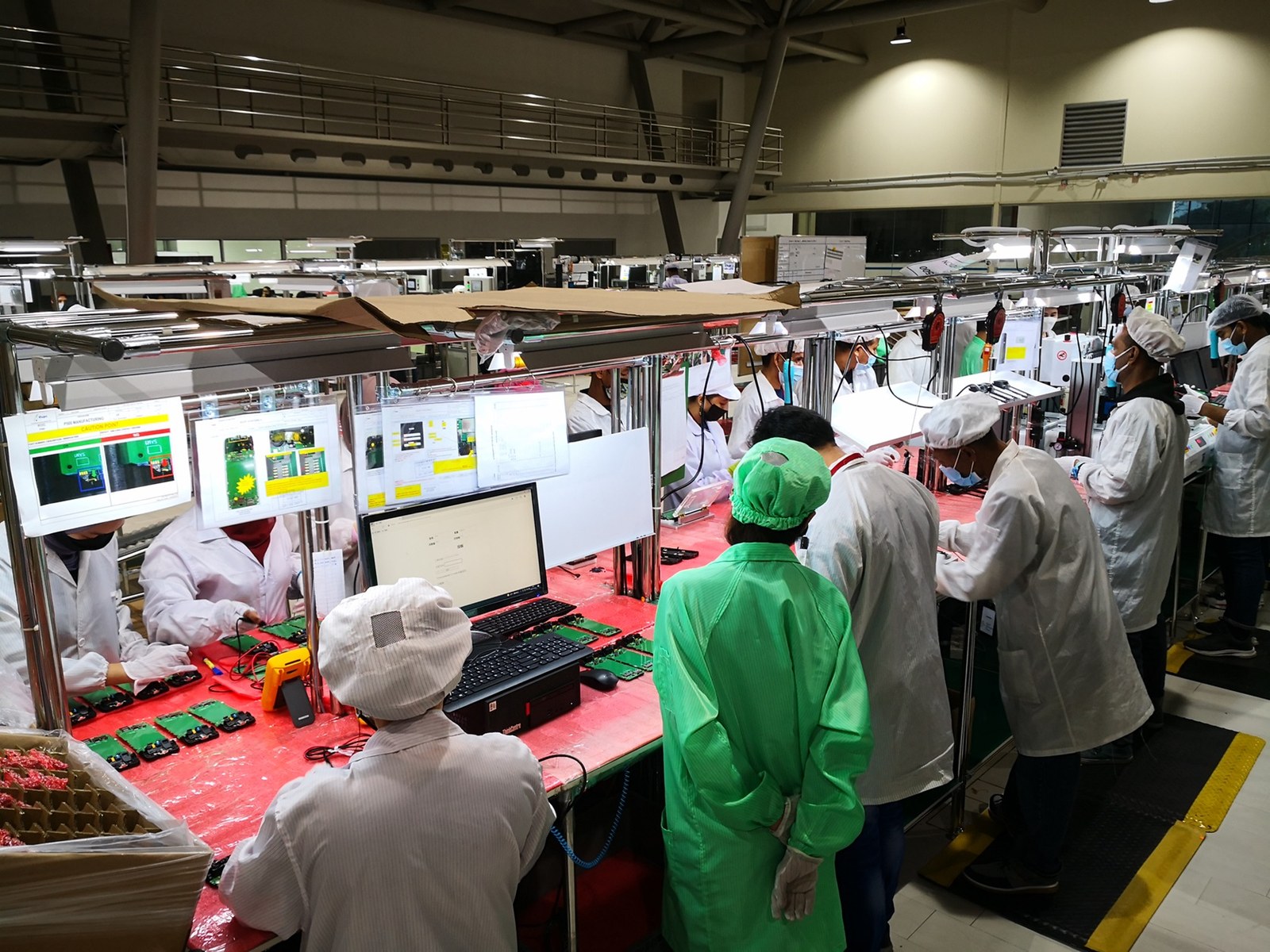
Pakistan’s phone manufacturers have told two federal ministries that imports of used, fully built smartphones have multiplied in four months while local assembly has contracted, putting an industry that employs more than 40,000 people directly and indirectly under pressure. The Pakistan Mobile Phone Manufacturers Association (PMPMA) has raised its concerns with the Ministry of Industries and Production and the Federal Board of Revenue (FBR), The Express Tribune reported on 24 November: used-smartphone imports rose from 1,434 units in July to 98,383 in October 2026.
Local smartphone assembly moved the other way over the same period, falling from 906,711 units in July to 752,870 in October, a drop of about 17 per cent, the paper reported. The association said nearly all smartphone manufacturers had reported layoffs and the retrenchment of skilled workers to reduce costs.
Two ministries, one letter from the manufacturers
Industry sources cited in the same report put two mechanisms behind the surge. The first is a narrowing tariff difference between completely built-up (CBU) smartphones and completely knocked-down (CKD) kits, which it said has fallen to around 11 per cent on a $100 phone and 14 per cent on a $200 phone. The second, according to industry sources cited in the same report, is a downward revision in FBR valuations issued in January 2026, which made it much cheaper to import used smartphones at under-invoiced values and cost the national exchequer.
The association also raised the problem it calls reverse cascading, which it says has made it impossible for assemblers to localise chargers, batteries, cables and motherboard assembly. A charger imported as part of a CKD kit attracts no duty, but the cumulative duty on importing the raw material and subcomponents that go into it is close to 20 per cent, the association said. It has repeatedly asked the government to remove that discrepancy so that logistic and financial costs fall and exports become viable.
The unit counts show the scale of the import shift. Total CBU smartphone imports rose from 18,431 units worth $17.8 million in July to 150,133 units worth $71.7 million in October, the report said, and the association argued that CBU imports have taken 41.8 per cent of the smartphone market by value.
What October’s trade data actually shows
The national accounts are less dramatic than the unit counts, and the two sets of numbers describe different things. The Pakistan Bureau of Statistics’ advance release on external trade statistics for October 2026, published on 20 November, records mobile phone imports of Rs50,222 million in October, provisional, against Rs39,725 million in September, final, and Rs40,702 million in October 2025 — a rise of 26.42 per cent month on month and 23.39 per cent year on year, as set out in the bureau’s release statement.
Over the four months from July, the same line is thinner than the year before: Rs166,205 million against Rs182,117 million, a fall of 8.74 per cent. Profit by Pakistan Today reported the same official figures in dollars, a 7.20 per cent fall to $598.147 million for July-October against $644.574 million a year earlier, with October at $181.006 million after $143.046 million in September and $144.563 million a year earlier.
That combination is the story in a single line: the import bill for phones fell over four months and then jumped by more than a quarter in October. The association’s own figures suggest why the unit count moved faster than the value — in October it counted 98,383 used smartphones imported against 150,133 CBU smartphones imported in all — and it attributes the surge in used units to FBR valuations that make those handsets cheap to bring in at under-invoiced values.
The production figures run on a different basis again and should not be set against the import series as if they matched. On the wider handset series, Profit reported that domestic manufacturers assembled 23.03 million phones between January and October 2026, nearly six times the 3.85 million units imported commercially over the same period, with 2.95 million handsets assembled in October against roughly one million imported. About 9.62 million of the assembled handsets were smartphones and roughly 13 million were 2G devices. VGO TEL overtook Infinix to become the largest local assembler, producing 3.50 million units in ten months against Infinix’s 2.27 million, reversing the 2025 order in which Infinix led with 3.65 million.
The April picture, which KhabarWire reported from Pakistan Telecommunication Authority data — 2.79 million phones assembled in March 2026, up 20 per cent on the year, with 86 per cent of demand met locally — described a sector still expanding. The association’s monthly smartphone figures now describe the part of that sector that is contracting.
The expired policy the industry is waiting on
The duties that shape the decision sit in a policy vacuum. A Ministry of Commerce brief reported by Profit in September said regulatory duty on smartphones priced above $500 had been cut by 20 per cent to Rs17,600 per unit from Rs22,000 for FY2026-27, with additional customs duty reduced from 6 per cent to 4 per cent across the listed smartphone and cellular-phone categories under the National Tariff Policy 2025-30. Regulatory duty on completely knocked-down or semi-knocked-down kits fell to 4 per cent from 5 per cent.
The same brief said the Mobile Device Manufacturing Policy 2020-25 had expired and a new policy had yet to receive federal government approval, while incentives under the expired policy remain protected under the Fifth Schedule of the Customs Act, 1969. It also recorded that Pakistan’s smartphone and cellular-phone imports had risen to $1.888 billion in FY2025-26 from $1.497 billion a year earlier, with CBU smartphone imports more than doubling to $357.7 million.
The government has been active elsewhere in industrial localisation. The Auto Policy 2026-31, now with a money bill before Parliament, sets binding domestic-value-addition minimums and export targets for vehicles, and the Ministry of Industries and Production is headed by Adviser to the Prime Minister Haroon Akhtar Khan, who has been directing that ministry towards a 30 per cent electric-vehicle share by 2030. A mobile device policy with comparable enforcement is the instrument the association’s complaints point at.
Industry sources cited in the Tribune report offered India as the benchmark, saying its handset industry had gone from near-zero exports in 2020 to almost $30 billion in FY2025-26 through production-linked incentives and local value addition.
What is still unresolved
Three things are open. The ministries have not published a response to the association, and the letter itself has not been released, so the unit-level figures behind the complaint remain the association’s own. The FBR’s revised valuations are not the subject of any published review. And a replacement mobile device policy has been pending approval since the previous one lapsed, which leaves the association asking for a change to duties that were cut only three months ago.
One further caveat belongs with the data. The statistics bureau labels its October figures provisional, and the association’s production counts and the bureau’s handset counts are not the same measure, so a monthly fall in one series and a ten-month rise in the other are not necessarily in conflict. What can be said without qualification is that the value of phone imports into Pakistan fell by 7.2 per cent over four months to October, rose by more than a quarter in October alone, and that the manufacturers’ association says the fastest-growing part of that import growth is used handsets arriving ready to use.