Reporting snapshot · 12 November 2026 (Asia/Karachi). The approval was reported late on 11 November, and the policy text has still not been published, so the localisation minimums, penalties and export splits below come from reporting on the draft and from the adviser's public statements. The money bill has not been tabled, and the clearance is on The Express Tribune's account of its own reporting rather than an IMF statement.
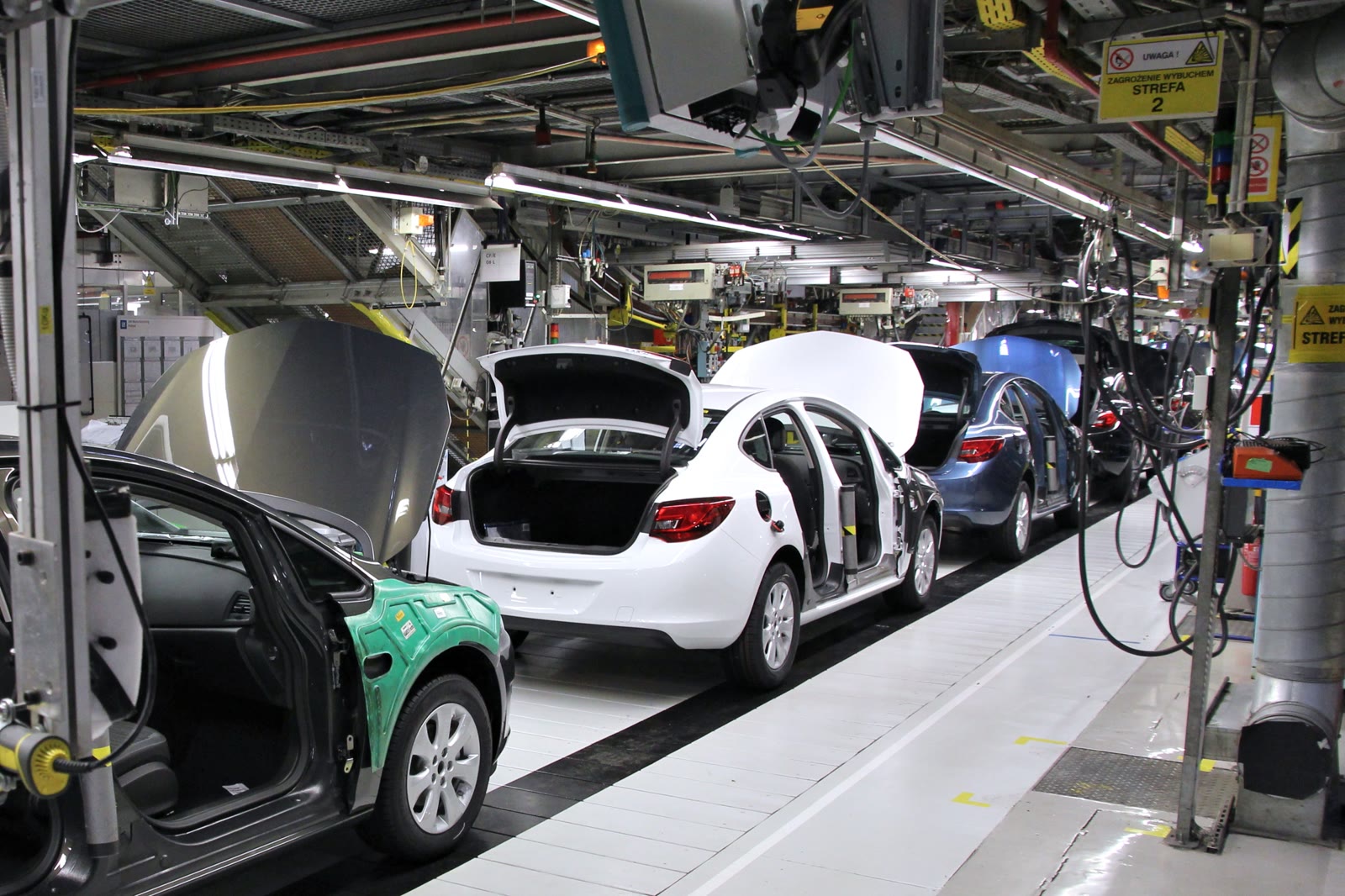
Prime Minister Shehbaz Sharif has approved the Autos and Auto Parts Manufacturing Policy 2026-31 after the International Monetary Fund raised no objection to the draft, and the government will take it to Parliament as a money bill, described in The Express Tribune as a mini-budget, once the federal cabinet has signed off. The Express Tribune reported that the policy draft was shared with the IMF, which raised no objection to it, and that the money bill follows cabinet approval.
That is the third step in five days, and each one has moved the policy closer to binding. The government announced the framework at a joint press conference in Islamabad on 7 November, reported by Geo News, with Information Minister Attaullah Tarar and Adviser to the Prime Minister on Industries and Production Haroon Akhtar Khan presenting it and the prime minister’s focus on bringing down the price of vehicles below 1,300cc. Radio Pakistan recorded that the policy rests on six pillars — low-cost vehicles, boosting exports, promoting electric vehicles, export localisation, vehicle safety and transparency — and that import duties had been cut to lower manufacturing costs. On Saturday, the prime minister approved the final draft and sent it to the cabinet, Profit reported. KhabarWire covered the announcement and its tariff and tax package on 8 November, and the Auto Policy 2026-31 hub collects the policy’s steps in order.
What is new in the reporting that followed is not the policy’s direction but its enforceability. The Express Tribune sets out the specific schedules and penalties that the announcement did not carry, and The News International, reporting the adviser’s remarks on the same day, independently confirms the export split, the localisation penalty and the condition attached to imported battery electric vehicles.
What assemblers must now localise
The Express Tribune sets out a policy that moves localisation from aspiration to a floor with arithmetic behind it. Existing original equipment manufacturers must hold the domestic value addition they already achieve for each model, and raise it by two percentage points a year on the previous year’s base, an eight per cent cumulative increase across the policy period. By 2030-31, the minimums are 40 per cent for internal combustion engine cars and SUVs, 45 per cent for light commercial vehicles, 80 per cent for tractors and 90 per cent for motorcycles and rickshaws. New energy vehicles carry their own, progressively higher schedule, reaching 25 per cent for cars and SUVs and 30 per cent for motorcycles and rickshaws by 2030-31.
The penalty for missing a target is an additional three percentage points of customs duty on the manufacturer’s relevant non-localised completely knocked-down imports in the following financial year, a measure both The Express Tribune and The News International describe.
Exports, and what missing the target costs
The policy period carries a cumulative export target of about $6.01 billion for 2026-31, and The News International reports the adviser’s split of it: $3.29 billion, or 55 per cent, from parts makers, and $2.72 billion, or 45 per cent, from vehicle manufacturers. Eligible exporters receive support equal to five per cent of net free-on-board export value under the Drawback of Local Taxes and Levies scheme, with an additional ten per cent on qualifying incremental exports.
Here the obligations are sharper than the incentives. The Express Tribune reports that manufacturers face penalties of one to three per cent of annual factory-gate sales for non-compliance, that two consecutive failing years can lead to cancellation of the manufacturing certificate except in cases of force majeure, and that OEMs must win export business through the global supply chains of their international principals. The adviser separately put idle plant capacity across the industry at 41 to 80 per cent and said the policy would encourage contract manufacturing to use it.
The condition on imported electric vehicles
The headline import concession is narrow and time-limited. A five per cent customs duty applies to imported battery electric vehicles priced up to $15,000 for the first two years, and only to companies that establish local assembly or manufacturing and start commercial production of the imported model by 30 September 2028. Importers must lodge a surety bond and an irrevocable bank guarantee covering the customs-duty differential, which is encashed if production does not begin on schedule. The Express Tribune adds that OEMs which do not sign agreements with the Engineering Development Board covering localisation, exports and other performance obligations lose concessionary tariffs on imported parts.
The government has put a $17.7 billion foreign exchange saving over the policy period against importing equivalent vehicles in completely built-up condition, and expects wider electric vehicle adoption to avoid imports of about 1.823 million tonnes of oil. At the COP31 summit in Antalya on 11 November, the prime minister said the government was aiming for 30 per cent of new vehicles to be electric by 2030 under the newly launched policy, and that more than one in ten motorcycles sold in Pakistan this year were electric. Radio Pakistan carried the remarks.
Where the parts industry says it cuts the wrong way
The industry that is supposed to supply those exports has publicly rejected the policy. The Express Tribune reported that Aamir Allawala, a former president of the Pakistan Association of Automotive Parts and Accessories Manufacturers, warns the import-centric design puts nearly 1,200 engineering and component enterprises at risk, threatens 300,000 direct jobs and another 1.5 million associated with the industry, and could reverse localisation already achieved at 50 to 65 per cent on several locally assembled models. He notes that only around 0.1 per cent of the population buys cars annually, so a five to seven per cent price reduction reaches a small group, and that component makers had not endorsed a final version substantially different from proposals discussed with the ministry up to June 2026. PAAPAM chairman Abdul Rehman Aizaz said cutting completely built-up vehicle duty to 15 per cent by 2031 would undercut the domestic value chain, against roughly 120 per cent in India, 80 per cent in Thailand and 52 per cent in Indonesia, and raised concerns over the concessions for new energy vehicles, describing a proposed 15 per cent localisation target over five years as an invitation for manufacturing and employment to move abroad.
The distributional objection is also the argument running through the policy’s critics in the business press. The Friday Times argues that incentives for private electric cars favour buyers who can already afford one, and that electric buses and mass transit would serve more people, while a second commentary warns that the transition could swap imported petrol for imported batteries, motors and electronics unless Pakistan builds exportable industry rather than assembly.
What happens in Parliament next
The sequence from here is procedural and visible. The money bill goes to cabinet first, then to Parliament, where the localisation schedules, the export targets and the penalty regime become law rather than policy intent. Adviser to the Prime Minister Haroon Akhtar Khan has set out the ambition in terms of moving Pakistan beyond vehicle assembly into engineering and global supply chains, arguing that a component made in Pakistan should reach a vehicle built in Shanghai, Tokyo, Munich or Detroit. The Ministry of Industries and Production has recorded that position.
Two things are worth watching. The policy envisages periodic monitoring and a mid-term review in 2028, with corrective interventions if the targets are missed, which is where the parts industry’s warnings and the government’s own arithmetic meet. And the text itself is still not public: the ministry’s policy register lists the New Energy Vehicles Policy 2025-30 alongside the Auto Industry Development and Export Policy 2021-26, and the 2026-31 policy has not been posted there. Until it is, every figure above rests on the reporting of the draft rather than on a published document.
KhabarWire has covered the 7 November announcement and its tariff and tax package, the 20 October draft approval and the 30 per cent electric vehicle target.