Reporting snapshot · 15 October 2026 (Asia/Karachi). This account draws on The Express Tribune's 15 October news story from its Islamabad bureau and on Profit by Pakistan Today's 15 October monitoring report from the Pakistan-China Business Forum (PCBF) event. Both outlets carried the same MoU details and the same adviser attribution on the same day; the underlying announcement is the PCBF event itself. The MoU is described by both outlets as a "proposed" joint venture; no manufacturing site, investment value, employment figure or production timeline is published.
What was signed in Islamabad
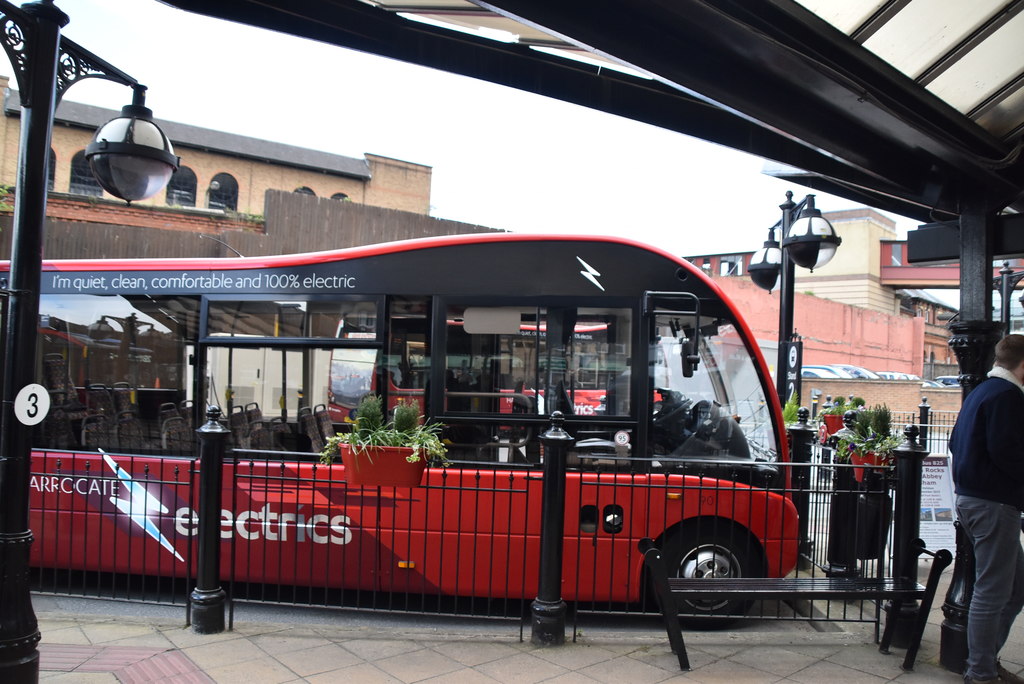
Pakistan’s GUGO Motors and China’s Shengtang Group signed a memorandum of understanding (MoU) on 15 October in Islamabad to establish a proposed joint venture to build electric buses in Pakistan, according to The Express Tribune. Profit by Pakistan Today’s parallel monitoring report carried the same headline agreement and added the parties’ framing of the deal as a “Made in Pakistan” manufacturing platform with export-oriented production in view.
The ceremony was organised by the Pakistan-China Business Forum (PCBF) at an event marking the 77th anniversary of the founding of the People’s Republic of China, both outlets reported. Adviser to the Prime Minister on Industries and Production Haroon Akhtar Khan attended as chief guest, per the Tribune and per Profit. Chinese Ambassador to Pakistan Jiang Zaidong also attended, according to Profit.
Both outlets described the agreement as a proposed joint venture rather than a signed contract, and neither outlet reported an investment figure, a manufacturing location, a production volume, an employment number or a plant commissioning date.
The 14-member Chinese delegation
The signing took place during an 11-day visit by a 14-member Chinese business delegation led by Wei Linzhuo, President of the PCBF Beijing Office, Profit by Pakistan Today reported. The delegation’s mission covered Islamabad, Lahore and Karachi, and its areas of interest listed by Profit include:
- electric vehicles;
- lithium-ion batteries;
- charging infrastructure;
- manufacturing;
- tourism;
- trade centres and China Pavilions;
- electrical appliances;
- building materials;
- mineral equipment;
- and pharmaceuticals.
Profit said further business meetings were scheduled for the delegation’s visit to advance other partnerships and investment projects. About 150 dignitaries attended the ceremony, per The Express Tribune.
How the adviser framed the deal
In his remarks, Adviser Haroon Akhtar Khan said the next phase of Pakistan-China economic cooperation should focus on industrial investment, technology transfer, local manufacturing and export growth, Profit reported. The adviser said the government was committed to facilitating Chinese investors and to converting investment interest into “commercially viable projects”, per Profit.
The Tribune’s account added that the adviser highlighted “opportunities in electric mobility”, and that cooperation with Chinese companies could help Pakistan develop local supply chains, expand its automotive manufacturing base and create employment. The adviser also emphasised the importance of investment in Special Economic Zones, applicable incentives, “predictable policies” and “streamlined regulations” to attract long-term investment, per Profit.
The Ministry of Industries and Production said it would coordinate the partnership across “relevant ministries, institutions and the Chinese Embassy”, according to Profit.
How the MoU fits the wider EV push
The signing comes two days after Adviser Haroon Akhtar Khan told a visiting European Union delegation in Islamabad that Pakistan had set a target of lifting electric vehicles to 30 per cent of new sales by 2030 and directed the Engineering Development Board to explore EU cooperation on skills training, as KhabarWire reported on 14 October. The 14 October EU-skills story focused on the policy target and the EU delegation; the 15 October MoU adds a concrete bilateral manufacturing counterparty, naming GUGO Motors and Shengtang Group and a 14-member Chinese business delegation covering multiple sectors.
The MoU is a distinct event from the Punjab provincial government’s plan for 1,500 electric buses across 91 tehsils reported in September; none of those provincial programmes name GUGO Motors or Shengtang Group as a counterparty, and the 15 October signing is the first KhabarWire has covered in which named Pakistani and Chinese firms have publicly agreed an MoU specifically for an electric-bus joint venture.
It is also distinct from PVARA’s parallel engagement in Bangkok with the World Bank Group on tokenised bonds and AI supervision, covered by KhabarWire earlier today. Both involve Pakistan’s federal government and an external counterparty in mid-October, but the actors, the instrument and the sectors are different.
What remains uncertain
Four things are not on the public record.
First, the size and structure of the joint venture. Both outlets describe the agreement as a “proposed” joint venture; no investment value, equity split, governance arrangement or registered entity is published.
Second, the manufacturing footprint. Neither outlet reported a plant location, production volume, annual capacity, employment number or start date. The Tribune’s framing — “develop local manufacturing capabilities” and “explore production of export-ready vehicles under the Made in Pakistan banner” — is forward-looking language rather than a confirmed schedule.
Third, the technology transfer arrangement. Profit describes the partnership as aimed at “technology transfer” and “local manufacturing capabilities”, but neither outlet reports which components will be sourced locally, what the technology-transfer mechanism is or what intellectual-property arrangements apply.
Fourth, the federal government’s role. The Ministry of Industries and Production has committed to coordinate with “relevant ministries, institutions and the Chinese Embassy”, per Profit, but no financial commitment, subsidy, tax concession or regulatory change tied to the joint venture is announced. The 30 per cent EV target announced on 14 October is a national policy ambition; how many of the buses that GUGO Motors and Shengtang Group would build, if any, would count toward provincial programmes such as Punjab’s 1,500-bus plan is not addressed in either outlet’s coverage.
Sources & reporting notes
This is a synthesis of published material, not eyewitness reporting. Sources were reviewed on 15 October 2026 (Asia/Karachi). The Express Tribune and Profit by Pakistan Today ran the same MoU announcement on the same day; the Tribune's lead was the Islamabad signing and the adviser's remarks, while Profit's monitoring report added the delegation's composition, the sector list and the ministry's coordination language.
- The Express Tribune — Electric bus JV signed with Chinese group15 October 2026 · Primary Pakistani English-daily story from the Islamabad bureau on the MoU between GUGO Motors and Shengtang Group, the adviser's framing of the deal and the 150-person ceremony at the 77th PRC-founding anniversary event.
- Profit by Pakistan Today — Pakistani, Chinese firms sign agreement to set up electric bus manufacturing joint venture15 October 2026 · Independent Pakistani business outlet's monitoring report on the MoU, adding the 14-member Chinese business delegation led by Wei Linzhuo, the 11-day mission covering Islamabad, Lahore and Karachi, the sector list and the Ministry of Industries and Production's coordination commitment.
- KhabarWire — Pakistan sets 30 percent electric-vehicle target for 2030, seeks EU training help14 October 2026 · Internal archive of Adviser Haroon Akhtar Khan's 13 October meeting with a visiting EU delegation in Islamabad on the 30 per cent EV target and the EDB skills mandate, used here as the policy framework that the 15 October MoU sits alongside.
- KhabarWire — Punjab plans 1,500 electric buses for 91 tehsils10 September 2026 · Internal archive of the Punjab provincial government's electric-bus programme referenced here as the largest existing Pakistani electric-bus programme; whether GUGO–Shengtang output feeds into that programme is not addressed in the 15 October coverage.
- KhabarWire — PVARA's Bilal bin Saqib takes Pakistan's digital-finance push to the World Bank in Bangkok15 October 2026 · Internal archive of the parallel Pakistan multilateral engagement in Bangkok, used to flag the distinct sector and counterparty of the GUGO–Shengtang MoU.
Sourcing note. The Express Tribune and Profit by Pakistan Today both reported the same MoU announcement on the same day from the same PCBF event; the Tribune carried the adviser's framing and the attendance figure first, while Profit's monitoring report added the delegation leadership, the sector list and the ministry's coordination commitment. Neither outlet published an investment value, a plant location, a production timeline or a binding structure; both outlets used "proposed" and "MoU" as the operative terms. The English-daily landscape: Dawn and Geo News did not publish their own 15 October dispatch from the PCBF event before this article closed for review.