The predawn raid in Caracas
In the early morning hours of Saturday, 3 January 2026, the United States military carried out an unprecedented direct intervention in Venezuela, launching coordinated strikes on the capital city of Caracas and capturing incumbent President Nicolás Maduro and his wife, First Lady Cilia Flores. The operation, codenamed Operation Absolute Resolve by the Pentagon, commenced at approximately 2:00 a.m. local time when explosions reverberated across northern Venezuela, targeting air defense batteries, radar installations, communication nodes, and military hangars around Fort Tiuna and Generalissimo Francisco de Miranda Air Base.
According to operational accounts reported by Reuters, the mission combined months of intelligence gathered with the assistance of an agency asset inside the Venezuelan apparatus and tactical rehearsal against replica compounds. While precision air assets and Marine Corps attack helicopters suppressed perimeter defenses and disrupted the city’s power grid, an elite assault force led by the U.S. Army’s Delta Force touched down directly at Maduro’s fortified residential compound at Fort Tiuna. The extraction team secured Maduro and Flores within ninety minutes of landing and extracted them via rotorcraft to offshore naval assets.
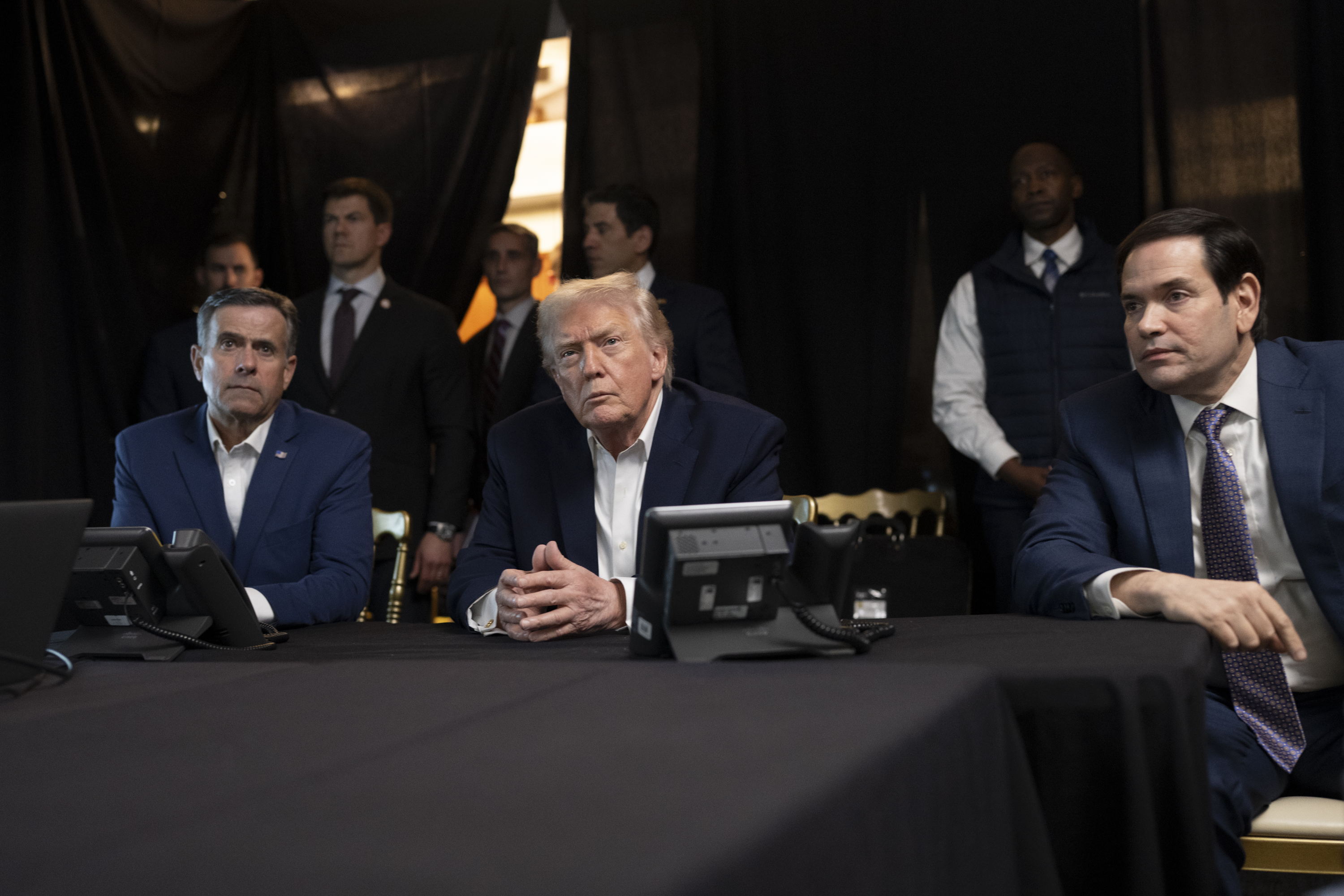
Shortly before dawn, President Donald Trump announced via social media and official White House channels that Maduro was in U.S. military custody aboard the amphibious assault ship USS Iwo Jima in international waters. Later on Saturday afternoon, an official transport aircraft carrying the captured leader touched down at Stewart Air National Guard Base in upstate New York, before Maduro was moved by helicopter and armored convoy into federal detention in Manhattan, as reported in live coverage by the Associated Press.
The federal indictment in New York
The immediate legal framework invoked by Washington to justify the apprehension is a criminal prosecution pending in the U.S. District Court for the Southern District of New York. In public statements on 3 January, U.S. Attorney General Pam Bondi announced that Maduro and several senior associates face federal charges including narcoterrorism conspiracy, cocaine importation conspiracy, and possession of machine guns and destructive devices in furtherance of drug trafficking crimes.
The court docket on CourtListener reflects the longstanding federal case against the leadership of what U.S. prosecutors have termed the “Cartel of the Suns”—an alleged network of high-ranking Venezuelan military officers and political officials accused of colluding with armed groups to move tons of cocaine toward North American markets. While initial federal indictments were unsealed in March 2020, prosecutors confirmed that unsealed superseding filings formally name both Maduro and Flores as defendants subject to immediate arraignment.
The administration has maintained that the operation was an execution of federal arrest warrants rather than a declaration of war. Speaking on Sunday, Secretary of State Marco Rubio told BBC News that the United States does not view itself as being at war with Venezuela or its armed forces, framing the raid as a law enforcement action against an indicted transnational criminal enterprise. Maduro and Flores are scheduled to make their initial appearance before a federal magistrate judge in lower Manhattan on Monday, 5 January, where defense counsel is expected to enter pleas of not guilty and challenge the jurisdictional legality of the capture.
Succession and crisis in Miraflores
In Caracas, the removal of the head of state triggered immediate political instability and conflicting claims of authority. Within hours of the strikes, Vice President Delcy Rodríguez delivered an urgent audio broadcast over state television, demanding proof that Maduro and Flores remained alive and condemning the U.S. mission as an illegal imperialist kidnapping that violated basic norms of sovereignty.
Defense Minister Vladimir Padrino López appeared in uniform alongside high-ranking officers of the Bolivarian National Armed Forces (FANB) to declare a nationwide state of emergency. Padrino López asserted that the armed forces remained loyal to the constitutional order, while acknowledging severe losses during the initial assault. Casualty estimates released during the weekend showed sharp discrepancies: Venezuelan military officials acknowledged that more than twenty domestic soldiers had been killed defending the installations, while the Cuban Ministry of the Revolutionary Armed Forces confirmed on 4 January that 32 Cuban military and security personnel assigned to presidential protective details in Caracas lost their lives during the assault.
Despite initial calls for resistance, public streets in Caracas remained subdued over the weekend, with heavy military patrols guarding government ministries and state oil company headquarters. U.S. officials claimed that contact had been established with elements of the Venezuelan regime to ensure continuity of essential services, but whether Rodríguez or the military high command exercises consolidated control over the country remains untested.
Diplomatic shockwaves and international law
The dramatic capture has ignited intense international debate over sovereignty, the limits of extraterritorial force, and the United Nations Charter. The operation marks the first direct U.S. military abduction of a foreign head of state since Operation Just Cause in Panama in December 1989, when American troops captured General Manuel Noriega to face drug charges in Miami.
Regional and global reactions divided swiftly:
- Governments in Cuba, Nicaragua, Colombia, Mexico, Brazil, Russia, and China issued sharp statements condemning the U.S. strikes as an egregious breach of international law and Article 2 of the UN Charter, which prohibits the threat or use of force against the territorial integrity or political independence of any state.
- Several regional leaders called for an emergency meeting of the United Nations Security Council and the Organization of American States to address the unilateral action.
- By contrast, Venezuelan diaspora communities in Miami, Madrid, and Bogotá held public demonstrations celebrating Maduro’s removal, while domestic opposition factions called for an orderly constitutional transition to restore democratic institutions.
- In Washington, Congressional leaders expressed mixed reactions. While prominent administration allies praised the precision and boldness of the military raid, several lawmakers across both parties questioned whether conducting combat operations on foreign soil without prior congressional authorization violated the War Powers Resolution of 1973.
The legal questions surrounding the arrest are likely to dominate the courtroom proceedings in New York. Under established U.S. legal precedent—most notably the 1992 Supreme Court ruling in United States v. Alvarez-Machain—federal courts have generally held that the forcible abduction of a foreign national from their home country does not necessarily deprive a court of jurisdiction to try them. However, defense attorneys are expected to argue that Maduro, as a recognized head of state, enjoyed customary immunity under international law, and that the scale of military destruction distinguishes this case from prior overseas arrests.
What remains uncertain
As of 4 January 2026, the situation remains highly volatile across multiple dimensions:
- Governance in Caracas: While Delcy Rodríguez and the military high command claim interim authority, the chain of command between civilian ministries, military garrisons, and intelligence directorates remains precarious.
- Casualties and Infrastructure: Independent verification of casualties among civilians and base personnel has not been completed. Early reports confirmed damage to ports, airport radar, and research facilities in La Guaira and Miranda state.
- Oil and Economic Impact: Venezuela holds the world’s largest proven crude reserves. While President Trump publicly suggested that revenue from Venezuelan petroleum could be redirected toward transition costs and American interests, global energy markets and international buyers are awaiting clarity on sanctions, export operations, and physical facility security.
- Legal Precedents: The pending arraignment in Manhattan will test how federal courts navigate head-of-state immunity challenges, executive power under Article II of the U.S. Constitution, and the evidentiary requirements of the unsealed narcoterrorism indictment.
What is established is historic in magnitude: after twelve years in power, Nicolás Maduro was removed from Caracas in a matter of hours by American special forces, opening an unpredictable new chapter for Venezuela and inter-American relations.