Reporting snapshot · 9 October 2026 (Asia/Karachi). The Norwegian Nobel Committee announced the 2026 Peace Prize in Oslo on Friday 9 October. The announcement was followed within hours by new US sanctions on the International Criminal Court. This is a synthesis of reporting by the Nobel Committee, UN News and Reuters, not eyewitness reporting; the Gaza findings described below are the conclusions of a UN inquiry, not a binding court ruling.
What happened
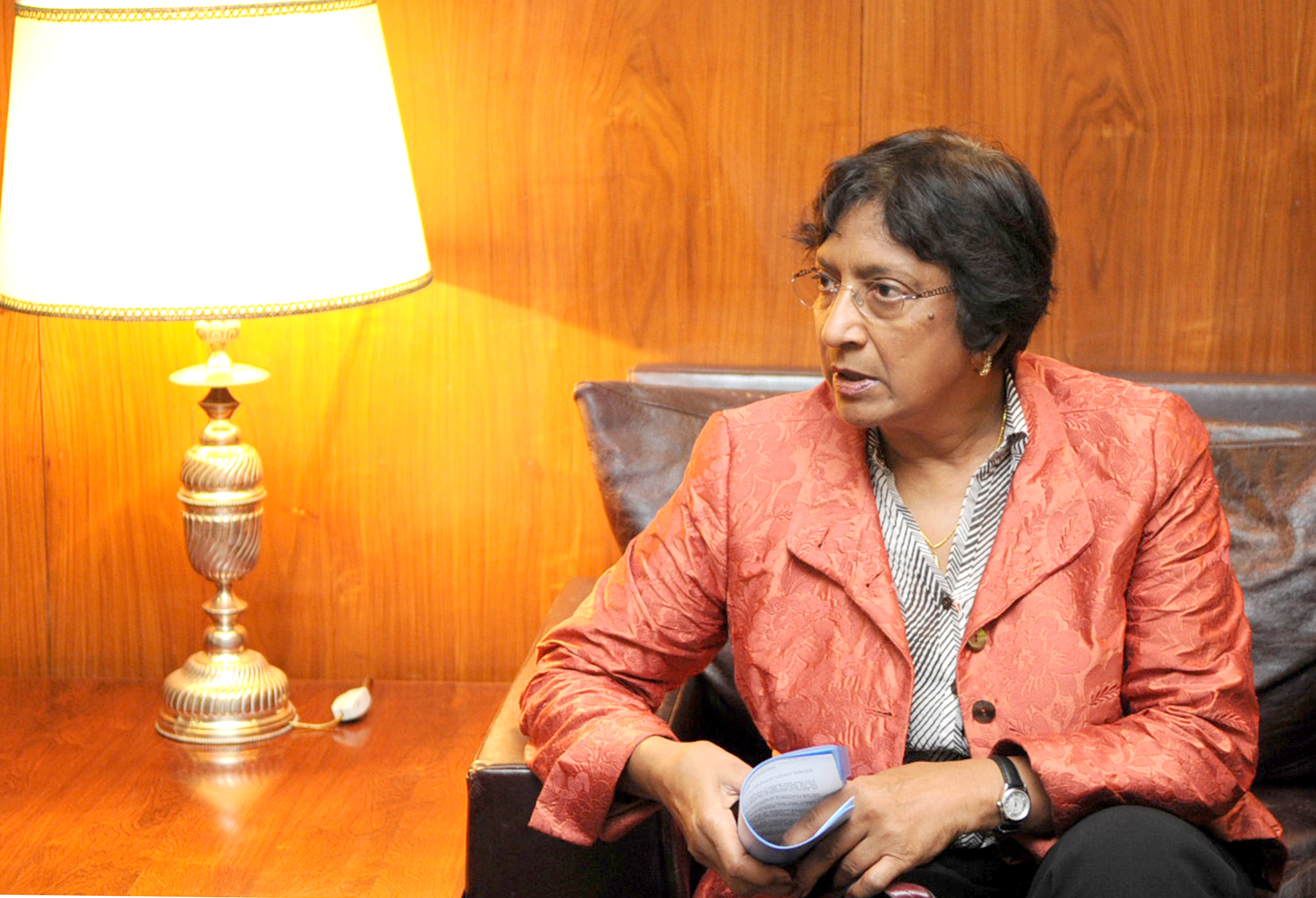
The Norwegian Nobel Committee awarded the 2026 Nobel Peace Prize to Navanethem “Navi” Pillay, a South African jurist and former United Nations High Commissioner for Human Rights, “for her efforts to promote peace and international law,” the committee said in its announcement. The prize is the fifth of this year’s six Nobel awards, worth 12 million Swedish kronor, or about US$1.2 million, and is due to be presented in Oslo on 10 December.
Announcing the decision, the committee’s chair, Jørgen Watne Frydnes, said the award went to “a person who with exceptional courage and integrity has led the way towards a more comprehensive global legal order,” and that Pillay had been “instrumental in ensuring that war crimes, crimes against humanity and genocide are prosecuted.”
Pillay, 85, responded with a pointed joke about US President Donald Trump, who has repeatedly said he deserved the prize. Speaking in Nuremberg, where she was attending an event, she said: “If you clap a little bit more I may share this prize with Trump,” according to a Reuters account carried by Geo News.
Within hours of the announcement, the Trump administration imposed sanctions on the International Criminal Court, the tribunal in The Hague where Pillay served as a judge before her UN posting. Reuters reported that the US Treasury announced the measures with a six-month initial grace period and some carve-outs for telecoms, software and pensions. Secretary of State Marco Rubio called the court “rogue” and said Washington would “ban transactions” and cut off its resources, as reported by The News International.
Who is Navi Pillay
Pillay was born on 23 September 1941 in Durban, South Africa, into a family of Indian Tamil origin, according to her Nobel biography. Under apartheid she trained as a lawyer and built a practice defending activists, including Nelson Mandela; UN News records her as the first non-white woman to establish a legal practice in South Africa. She founded her own law firm in 1967 and later earned a doctorate in law from Harvard University in 1988.
Her judicial career moved from the bench in South Africa — she was appointed to the High Court in 1995 — to the international courts that became the centre of the committee’s citation. As a judge and then president of the International Criminal Tribunal for Rwanda, she helped establish that rape and sexual violence, and the spread of propaganda, could support charges of crimes against humanity and genocide. She went on to serve as a judge at the International Criminal Court and, from 2008 to 2014, as UN High Commissioner for Human Rights.
More recently she chaired the UN Independent International Commission of Inquiry on the Occupied Palestinian Territory from 2021 to 2025. That commission’s 2025 report concluded that Israel’s actions in Gaza amounted to genocide, a finding Israel rejected as “scandalous.” Pillay is currently a judge at the International Court of Justice, the UN’s highest court, in a case in which Myanmar stands accused of genocide.
UN Secretary-General António Guterres congratulated Pillay, saying she had shown “that the force of law must prevail over the law of force.” The current UN human rights chief, Volker Türk, called the award “particularly poignant” at a time when, he said, human rights are “under attack on so many fronts,” UN News reported.
Why the committee chose her now
The committee framed the award less as a lifetime-achievement tribute than as a defence of a system it says is under strain. It noted that the rules-based international order “has never been perfect” and that the greatest powers have often evaded responsibility, but argued that more conflicts are now addressed through diplomacy, treaties and legal mechanisms rather than force.
“At a time of existential challenges — including more wars and conflicts than the world has seen in a long time — international law is no longer just a supplement to peace and security. It is an absolute necessity,” the committee wrote. It added that the system “is under tremendous pressure, and its institutions are under attack,” describing judges as guarding “the thin red line between order and chaos.”
That argument collided with events on the same day. The ICC denounced the US sanctions as an “assault on the rule of law and on the very foundations of the international legal order,” according to The News International, and called on its 125 member states to defend it. The court has previously faced US sanctions against individual prosecutors and judges; the new measures could reach companies that provide services to the court itself. Washington has cited ICC arrest warrants for Israeli officials, including Prime Minister Benjamin Netanyahu, and an earlier investigation into US conduct in Afghanistan.
The Pakistan angle
The award landed in a week in which Pakistan had publicly lobbied for a different outcome. Before the announcement, Prime Minister Shehbaz Sharif had said he hoped Trump would receive the prize, citing the US president’s role in the ceasefire that ended the May 2025 Pakistan–India conflict, and said Islamabad had nominated him. “We sincerely hope President [Trump’s] efforts to promote peace and prevent conflict in our region receive due recognition this time,” Shehbaz wrote, according to Geo News.
The prize instead went to a jurist whose commission concluded that genocide occurred in Gaza — a finding that has shaped Pakistan’s own position at the United Nations on the occupied Palestinian territory, where it has joined Security Council members in denouncing Israeli settlement activity. Pakistan’s diplomacy on Gaza has also run through the US-led “Board of Peace” process, which Shehbaz briefly travelled to Washington to join.
What is still uncertain
Several questions remain open. The US sanctions carry a six-month grace period, and Rubio said the measures would be adjusted if US concerns were addressed, so their practical effect on the ICC’s work is not yet clear. How the court’s member states — including all European Union and NATO countries apart from the United States and Turkey — respond will shape whether the measures hold.
The status of the Gaza finding should also be kept in context. It is the conclusion of a UN Human Rights Council-appointed commission of inquiry; it is not a ruling by the International Court of Justice or the ICC, and Israel disputes it. Pillay’s role at the ICJ in the separate Myanmar case is ongoing. The 2026 Nobel season closes on Monday with the economics prize.
This article will be updated if the ICC sanctions are revised or if member states announce a coordinated response.
Sources & reporting notes
This is a synthesis of published material, not eyewitness reporting. Sources were reviewed on 9 October 2026.
- Norwegian Nobel Committee — "Nobel Peace Prize for 2026"9 October 2026 · Primary announcement: the citation, the committee's reasoning on international law, and the framing of the award.
- NobelPrize.org — "Navanethem Pillay – Facts"9 October 2026 · Biographical record: birth date and place, legal career, ICTR and ICC roles, UN High Commissioner tenure and the ICJ Myanmar case.
- UN News — "Former UN human rights chief Navi Pillay awarded Nobel Peace Prize"9 October 2026 · Reactions from Secretary-General António Guterres and Volker Türk; Pillay's career and the 2025 Gaza commission report.
- Reuters via Geo News — "South Africa's Navanethem 'Navi' Pillay wins 2026 Nobel Peace Prize"9 October 2026 · Announcement details, prize sum and date, the Gaza finding and Israel's rejection, and Shehbaz Sharif's remarks on nominating Trump.
- The News International — "US imposes sanctions on ICC after former judge wins Nobel Peace Prize"9 October 2026 · US sanctions on the ICC, the Treasury's grace period and exemptions, Rubio's statement and the court's response.