Reporting snapshot · 20 September 2026. Ukraine launched what Russian officials called the largest drone attack of the war on Moscow overnight into Sunday, the final day of Russia's parliamentary elections. At least two people were killed in the Moscow region and about 20 injured, and a facility at the Moscow Oil Refinery was damaged. Russian interceptor and casualty figures could not be independently verified and changed through the day. This is a dated snapshot, not a live tracker.
What happened
Ukraine fired what Moscow’s mayor called the largest drone barrage of the war at the Russian capital overnight from Saturday into Sunday, as Russians voted on the third and final day of a parliamentary election that President Vladimir Putin has framed as a test of support for the war in Ukraine. Moscow’s mayor, Sergei Sobyanin, said on Sunday that Russian air defences had intercepted more than 1,600 drones since Saturday, 450 of them heading for the capital, and described the assault as the biggest on Moscow in the conflict. Reuters reported the attack.
Moscow region Governor Andrey Vorobyov said a 44-year-old woman was killed in Sofyino when a drone hit a three-storey residential building, and an elderly man died after a private house was struck in the Orekhovo-Zuyevo district. About 20 people were injured, including children. A fire triggered by a drone crashing into a 21-storey building forced the evacuation of about 400 people, including dozens of children, from an apartment block in the Ramenskoye district. Al Jazeera later reported the regional death toll had risen to at least three. BBC News and Al Jazeera carried the accounts.
The oil refinery was a primary target
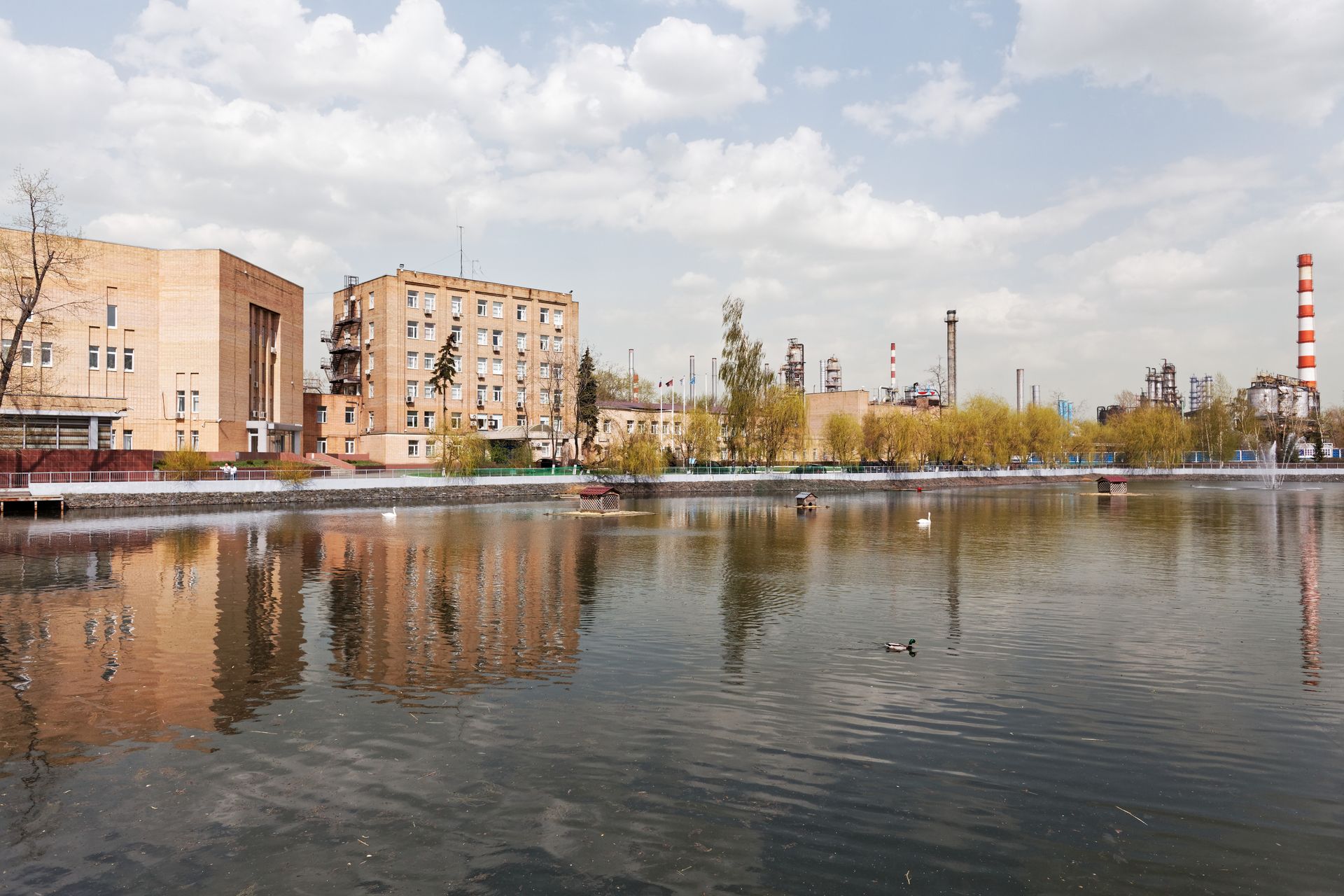
A facility at the Moscow Oil Refinery in the capital’s southeastern Kapotnya district was damaged in the attack. The plant, operated by state-controlled Gazpromneft, refines about 11 million tonnes of crude a year and, according to Ukrainian and Russian reporting, supplies around 40 per cent of Moscow’s fuel market and up to 70 per cent of the region’s demand for petrol and aviation fuel. Ukrainian military officials said three key units at the site had been damaged, and Ukraine’s defence minister said striking such facilities “directly undermines the enemy’s ability to continue its war of aggression”. The refinery had already been hit twice in June, when two strikes were reported to have knocked out its main distillation units; Reuters reported in late June that repairs would take at least six months.
Ukraine’s President Volodymyr Zelenskyy confirmed the strikes, saying Kyiv had hit “one of Russia’s key oil industry facilities and the aggressor’s logistics facility” in the Moscow region — “billions of dollars that sustain the war machine”. He said the attack used domestically produced Flamingo cruise missiles and a weapon initially reported as a new ballistic missile, the Pelican, which several military sources later described as a long-range winged drone. The identification of the munitions could not be independently verified, and social-media claims of missile debris in the Moscow region were unconfirmed.
Strikes on both sides of the border
The assault came amid an escalation of long-range attacks by both sides. Ukraine’s air force said Russia launched 138 drones across Ukraine overnight, of which 101 were intercepted or suppressed. A woman and her two three-year-old children were killed when a Russian drone hit their home in the Kyiv region, and Kyiv region governor Tymur Tkachenko said a girl later died in hospital after a separate strike, bringing the region’s overnight toll to four, including three children. Four people were killed when a Russian drone hit the car they were travelling in in the Sumy region, and a drone strike on a monastery in the Kherson region killed one clergyman.
In the Russian-occupied part of the Kherson region, the head of Russia’s Central Election Commission said a drone attack on a civilian bus killed three people, including an election official. Russia’s defence ministry said it had shot down 1,110 Ukrainian drones across the country overnight, the largest single-night figure it has published, but the Guardian cautioned that Moscow’s interception counts are “often exaggerated” and that Ukraine’s daily drone rate is estimated in the low hundreds.
An attack timed to the election
Sobyanin accused Ukraine of attempting to disrupt the vote. “The unprecedented attack was clearly planned with the aim of disrupting the elections. The enemy did not succeed,” he said on Telegram. The election is Russia’s first parliamentary vote since the full-scale invasion of Ukraine began in February 2022, and it has been dismissed by Kyiv and Western critics as a “pseudo-election” that excludes most anti-war candidates. Only parties that support Putin and the Kremlin’s military campaign were registered to run, and Moscow also organised voting in Ukrainian territory it occupies.
The timing fits a pattern of escalation. Kyiv has stepped up long-range drone strikes against Russian energy infrastructure in recent months to cut off a source of revenue Moscow uses to fund the war, now in its fifth year. Ukrainian strikes have already knocked out a significant part of Russia’s oil-refining capacity, triggering fuel shortages, price increases and long queues at filling stations in many regions, according to the Guardian. The attack also follows US President Donald Trump’s claim on Monday that the two sides had agreed not to target each other’s energy facilities — a pledge that Sunday’s strikes appeared to contradict.
What it means for Pakistan
For KhabarWire’s readers the significance is indirect but real. The war in Ukraine, now in its fifth year, remains a structural driver of global energy and food prices, and Pakistan is a fuel-importing country that has felt those pressures directly: the government this month reintroduced fuel-conservation measures and widened a fuel-relief scheme as petrol and diesel prices rose with world oil markets. Sunday’s attack underscores that neither of the world’s two largest conflicts — the Russia-Ukraine war and the escalating Middle East confrontation — is easing, keeping pressure on oil prices and on Pakistan’s import bill.
The Kremlin, for its part, is likely to present the vote and the attack as proof of national unity behind its soldiers. Putin’s United Russia party is expected to retain its dominance, with initial results beginning to emerge on Sunday evening.
What is still uncertain
Several facts remain contested or unresolved. Russian figures for drones intercepted, casualties and damage could not be independently verified, and the reported death toll in the Moscow region rose during the day from two to at least three. The exact condition of the Moscow Oil Refinery — whether the damaged units can be repaired quickly or will take months — is unknown, as is whether the attack will materially affect Russian fuel supply. The identification of the new Pelican weapon, initially described as a ballistic missile and later as a drone, remains unconfirmed. Whether the strike changes either side’s calculus in the war, and whether Washington’s sanctions and tariff moves against buyers of Russian energy — signed by Trump on Friday — reshape global energy trade, are open questions.
Sources & reporting notes
This is a synthesis of published reporting from 20 September 2026; it is not eyewitness reporting. Russian military claims about interception numbers and casualties are attributed to the officials who made them and could not be independently verified. Sources were reviewed on 20 September 2026.
- Reuters — Two dead in Moscow region, drones hit oil refinery in Russian capital20 September 2026 · Wire report of the attack, Sobyanin's interception figure of more than 1,600 drones, the refinery hit, the two deaths and 400 evacuated in the Ramenskoye district.
- BBC News — Largest attack on Moscow sees Ukraine fire hundreds of drones20 September 2026 · Vorobyov's casualty account, the refinery details and three damaged units, the airport restrictions at Sheremetyevo and Vnukovo, the bus attack in occupied Kherson, and the Fastiv deaths.
- Al Jazeera English — At least three killed in Ukrainian drone attack on Moscow, says Russia20 September 2026 · Updated death toll of at least three, the 400-person evacuation, Kyiv region casualties including three children, the refinery damage, and Zelenskyy's statement.
- The Guardian — Ukraine targets Moscow with hundreds of drones on final day of Russian election20 September 2026 · Skepticism about Russian interception figures, the Pelican and Flamingo weapons, the war's broader impact on Russian refining capacity, and the election context.