Reporting snapshot · 2 September 2026. Political statements and museum discussions regarding potential collection loans remain subject to ongoing diplomatic dialogue between London and Athens. No formal loan agreement has been ratified by the British Museum Trustees.
What happened
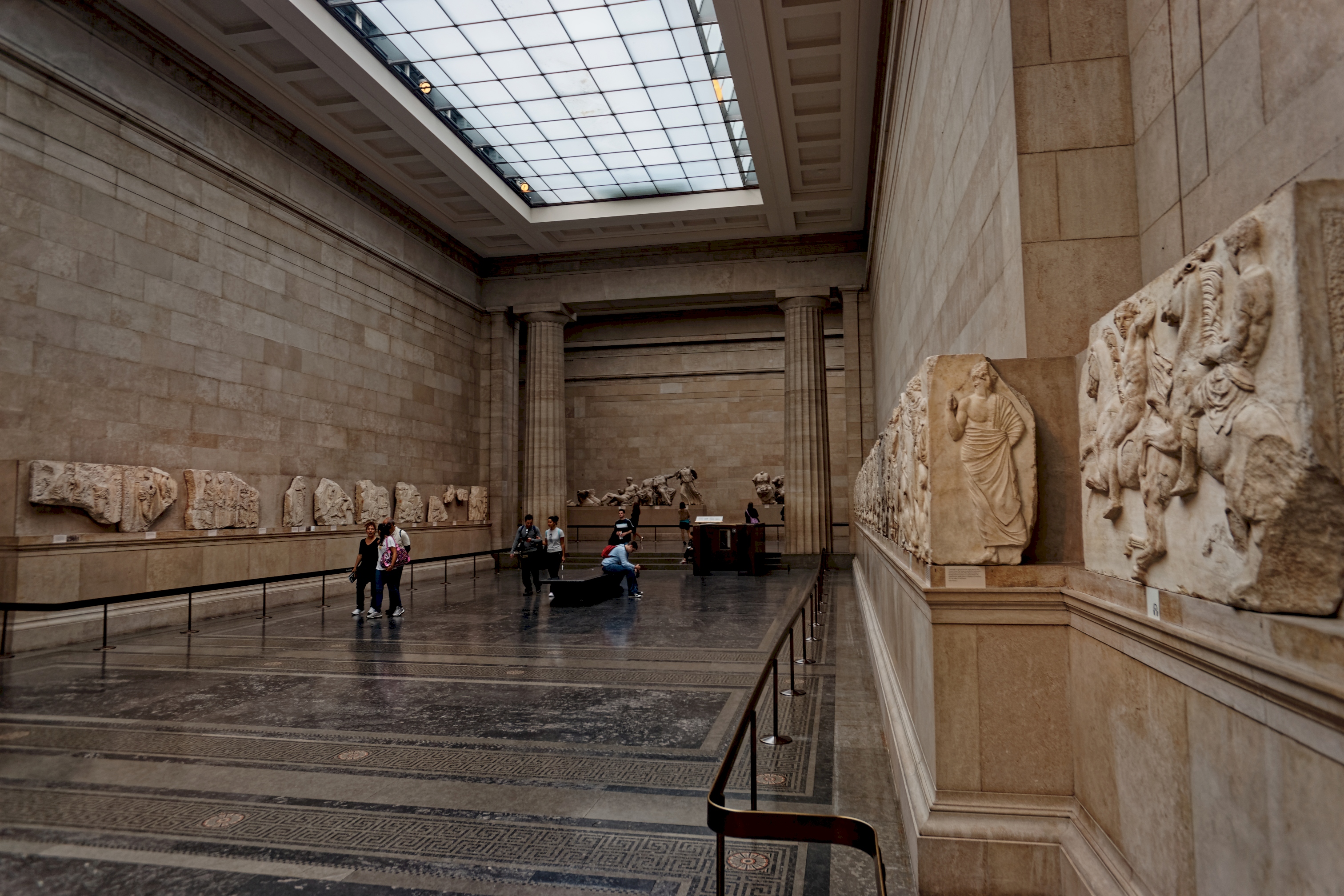
British Prime Minister Andy Burnham has shifted his public position on the Parthenon Sculptures, distancing his administration from earlier pledges to facilitate their permanent return to Greece. In an interview published by the Financial Times in late August, Burnham remarked that resolving the decades-long dispute is ultimately a matter for the British Museum Trustees rather than central government, noting that legal responsibility resides with the institution under existing statute.
The comments represent a marked change in tone from Burnham’s past statements. While serving as Mayor of Greater Manchester in 2023, Burnham argued publicly that the British Museum should return the sculptures to Athens “no strings attached.” His involvement with the issue extends back more than two decades: in 2002, as a backbench Member of Parliament, he co-sponsored a Private Member’s Bill intended to amend the British Museum Act 1963 to allow the restitution of the artefacts.
Despite backing away from government-led legislative changes, Burnham insisted that his administration remains committed to “British cultural diplomacy” as an instrument of foreign policy. The shift has attracted scrutiny from heritage advocates, legal scholars, and Greek cultural officials who had anticipated that a Burnham-led government might take a more interventionist approach to cultural restitution.
Specialist outlets including The Art Newspaper reported that the Prime Minister’s remarks align government policy more closely with the pragmatic partnership strategy pursued by British Museum Director Nicholas Cullinan and the museum’s Board of Trustees.
The statutory barrier of the British Museum Act
At the heart of the dispute lies the British Museum Act 1963, an Act of Parliament that sharply curtails the power of the museum’s trustees to dispose of objects in the permanent collection. Under Section 3 and Section 5 of the Act, trustees are legally barred from deaccessioning items unless they are duplicate copies, unfit to be retained, or completely destroyed.
Because the Parthenon Sculptures do not meet any of these statutory exemptions, any permanent transfer of ownership would require the UK Parliament to amend or repeal the 1963 Act. By stating that the issue rests with the British Museum, Burnham effectively signaled that the government will not introduce primary legislation to alter the museum’s statutory powers.
This distinction between government legislation and museum governance is central to British cultural administration. While national museums receive public funding through the Department for Culture, Media and Sport, they operate as arm’s-length bodies governed by independent boards of trustees. Governments routinely cite this institutional independence to avoid intervening in collection management decisions.
For restitution campaigners, however, deferring to the trustees creates an administrative circle: the trustees cannot permanently return the sculptures without legislative reform, and ministers refuse to enact legislative reform by pointing to the trustees’ autonomy.
Loans, exchanges, and the limits of cultural diplomacy
With permanent transfer off the legislative agenda, attention has shifted toward institutional loan agreements and reciprocal cultural exchanges. The British Museum has increasingly promoted collaborative partnerships with international institutions, pointing to agreements such as the scheduled loan of the Bayeux Tapestry from France as evidence that complex cross-border loans are achievable without surrendering title.
According to reporting by the Museums Association, British Museum leadership has explored terms for a multi-year partnership with the Acropolis Museum in Athens. Under such an arrangement, portions of the 2,500-year-old marble friezes could travel to Greece on rotating loan in exchange for ancient Greek masterpieces never before seen in the United Kingdom.
Yet loan agreements face fundamental political and philosophical hurdles:
- The ownership precondition: The Greek government and the Acropolis Museum maintain that the sculptures were illegally acquired by Thomas Bruce, 7th Earl of Elgin, between 1801 and 1812. Accepting a conventional loan from the British Museum would imply recognition of British ownership, which Greek officials have repeatedly rejected.
- Precedent and collection integrity: Proponents of the British Museum’s position argue that unilateral restitution would establish a precedent threatening universal museums that hold encyclopedic international collections.
- Public sentiment: Recent UK polling indicates growing public openness toward resolving the dispute, but political sensitivity remains high across Westminster.
The concept of “cultural diplomacy” promoted by Burnham reflects an attempt to navigate between these entrenched positions. By encouraging loans and cooperative research without altering the legal status of the national collection, the government seeks to foster warmer bilateral ties with European partners while avoiding contentious domestic debates over national heritage laws.
What is still uncertain
Substantial questions remain unresolved regarding how far institutional diplomacy can proceed within existing legal constraints.
First, it remains unclear whether British and Greek negotiators can draft a bilateral agreement whose wording satisfies both legal jurisdictions. Creating a legal mechanism—such as a joint cultural partnership or rolling long-term deposit—that avoids explicit concessions on formal ownership requires delicate diplomatic drafting.
Second, the British Museum Trustees have not published formal terms or timetables for any proposed exchange. Any arrangement approved by the trustees would likely be challenged by domestic groups advocating strict retention of national heritage, as well as by legal specialists examining whether long-term indefinite loans circumvent the spirit of the 1963 Act.
Finally, Burnham’s repositioning highlights the divide between opposition rhetoric and the realities of government. While local leaders and backbenchers can advocate for unconditional restitution, national governments must balance diplomatic relations, legislative timetables, and statutory precedents. Whether a middle path of reciprocal loans can resolve a dispute that has lasted more than two centuries remains to be seen.