Reporting snapshot · 18 September 2026. The Cabinet Division notification and the prime minister's approval were issued on 17 September. Provincial governments had not yet decided whether to adopt the same measures when this article was published, and enforcement details and the first compliance report are not yet public.
What changed on 17 September
Pakistan’s federal government has revived the nationwide austerity and fuel-conservation drive it first imposed in March and wound down in June, issuing a Cabinet Division notification dated 17 September 2026 with immediate effect as renewed Middle East hostilities push international oil prices higher.
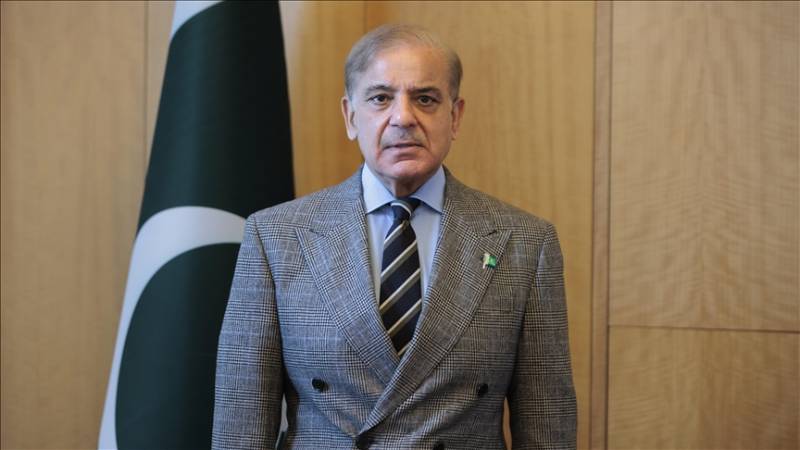
The notification orders a 50 per cent reduction in fuel provision for official vehicles for three months, a 5 per cent cut in non-employee-related expenditure (non-ERE) for the current fiscal year, a three-month ban on official foreign travel, and bans on government purchases of vehicles and durable goods. Prime Minister Shehbaz Sharif separately approved the “nationwide austerity and energy conservation campaign” at a high-level meeting in Islamabad on 17 September, according to a statement from his office. “Sacrifices should first be made by the government and the elite,” he said.
This is the second time this year the government has resorted to emergency fuel-conservation measures. The first package was announced on 9 March 2026 after the outbreak of the US–Iran war sent crude sharply higher; most of those measures were withdrawn on 20 June after a ceasefire, with only the market closing times retained. The new drive extends the conservation push from government fleets into foreign travel, procurement, official events and private wedding expenditure.
The fuel and travel measures
The centrepiece is a 50 per cent cut in fuel allocations for official vehicles for three months. Operational vehicles of the armed forces, civil armed forces, law enforcement agencies, essential services and the Federal Board of Revenue are exempt, but administrative and non-operational vehicles within those organisations remain subject to the cut. Development projects are excluded from the measure, according to the notification as reported by state media.
Official foreign visits and travel are banned for three months, including obligatory visits. Exceptions are limited to scholarships offered by international development partners and training or courses arranged through the Economic Affairs Division or under institutional agreements. Where travel is unavoidable, ministers, advisers, special assistants and government officials must fly economy class, and ambassadors or high commissioners will represent Pakistan at obligatory events in place of delegations from Islamabad.
The government also approved a 5 per cent reduction in the non-ERE budget for FY2026-27, with deductions made monthly. The cut applies to foreign missions and to officials posted abroad, although obligations covering rents, educational fees and medical care are spared. Development projects are again exempt.
Spending, procurement and official events
A complete ban has been imposed on the purchase of vehicles of all types and on the procurement of durable goods, with the sole exception of information-technology equipment. Development projects are excluded from both bans.
The notification also tightens official conduct: meetings should preferably be held by teleconference rather than in person, official dinners are barred except those hosted for visiting foreign delegations, and government-funded seminars, training programmes and conferences are prohibited unless held at government venues such as auditoriums and committee rooms.
Separately, the government decided to continue the single-dish rule at all marriage-related functions and events — a restriction aimed at curbing consumption at large family gatherings that has no direct cost to the public purse.
A committee for monitoring and implementing fuel-conservation and additional austerity measures will collect compliance reports from ministries, divisions, departments, public-sector entities and provincial governments, identify non-compliance, and submit a weekly progress report to the prime minister. The notification also allows exemption requests to be considered case by case by the committee before approval by the prime minister.
Business hours and exemptions
The notification retains the market closing times first introduced during the earlier drive. Shops, markets, shopping malls, bazaars and departmental, grocery, general and kiryana stores must close by 9pm; marriage halls, marquees and other venues hosting festive events by 10pm; and restaurants, cafés, eateries, food outlets and standalone fruit-and-vegetable shops by 11pm. Takeaway and home-delivery services are exempt from the restaurant limit.
A long list of establishments sits entirely outside the closing-time restrictions: pharmacies, medical and medical-supply stores, laboratories, clinics and hospitals; standalone bakeries, tandoors and milk and dairy shops; fuel and CNG stations and electric-vehicle charging points; gyms, sports facilities and padel courts; and IT companies and call centres.
The measures apply to all federal government establishments, including attached departments, state-owned enterprises, statutory bodies and regulatory authorities. Geo News reported that the new business timings are initially limited to Islamabad, with the federal government encouraging provincial and regional governments to adopt similar rules. Dawn reported that Punjab and Sindh were set to decide on 18 September and that Khyber Pakhtunkhwa’s cabinet was to review the steps.
Why this matters
Pakistan is a net energy importer with limited foreign-exchange reserves, and the notification lands as crude has traded above $100 a barrel after Houthi attacks on Saudi civilian and economic infrastructure and threats to the Strait of Hormuz and Bab al-Mandab shipping lanes disrupted oil and gas imports. The government has already launched a Rs100-a-litre fuel-relief scheme for motorcycles, rickshaws and cars up to 800cc, but it has refused to cut taxes on petrol and diesel, leaving pump prices among the highest in South Asia, The Express Tribune reported.
The package is intended to reduce government fuel consumption and non-salary spending at a time when every barrel of imported crude and every shipment through disrupted routes adds to the import bill. For ordinary consumers, the most immediate effects are the business-hour restrictions and the single-dish rule at weddings; the deeper effect will depend on whether provincial governments adopt the measures and on how the monitoring committee’s weekly reports reveal compliance.
What is still uncertain
Several questions remain open. The government has not published a public estimate of savings from the March drive, and it has not said what it expects the September package to save. Whether all four provinces and the regional administrations will adopt the measures is undecided. The Express Tribune reported that the notification keeps a “backdoor” to relax any of the measures: exemptions can be granted case by case by the monitoring committee with the prime minister’s approval. How rigorously the fuel cut and travel ban are enforced will only become clear once the committee submits its first weekly report.
Sources & reporting notes
This is a synthesis of published material, not eyewitness reporting. Sources were reviewed on 18 September 2026.
- Radio Pakistan — Cabinet Division notification of 17 September 202617 September 2026 · Primary record of the notification's measures, exemptions and business-hour schedule.
- Radio Pakistan — PM approves nationwide austerity campaign17 September 2026 · Primary record of the Prime Minister's Office statement, the single-dish decision and the monitoring committee.
- Dawn — Markets to close at 9pm as govt reintroduces austerity measures17 September 2026 · Independent confirmation of the business-hour schedule and exemptions.
- The Express Tribune — PM unveils austerity measures as Gulf conflict spirals18 September 2026 · Independent detail on the 11 measures, the development-project exemptions and the case-by-case exemption provision.
- Geo News — Govt orders shops and malls to close by 9pm under austerity drive17 September 2026 · Independent confirmation of the fuel cut, travel ban and the Islamabad scope of business timings.
- Pakistan Today — PM approves austerity drive as global oil prices surge18 September 2026 · Independent account of the prime minister's meeting and the fuel-subsidy context.
- Reuters — Pakistan announces austerity measures to conserve fuel as Gulf conflict spirals17 September 2026 · International wire confirmation that this is the second austerity drive this year.
_of_Dargai_Malakand_KPK_Pakistan.jpg)