Reporting snapshot · 9 November 2026. WAPDA says the main tunnel and powerhouse were not damaged and that no one was hurt, but the cause of the failure and the cost and schedule impact are still under investigation. The restart date is not known.
What happened
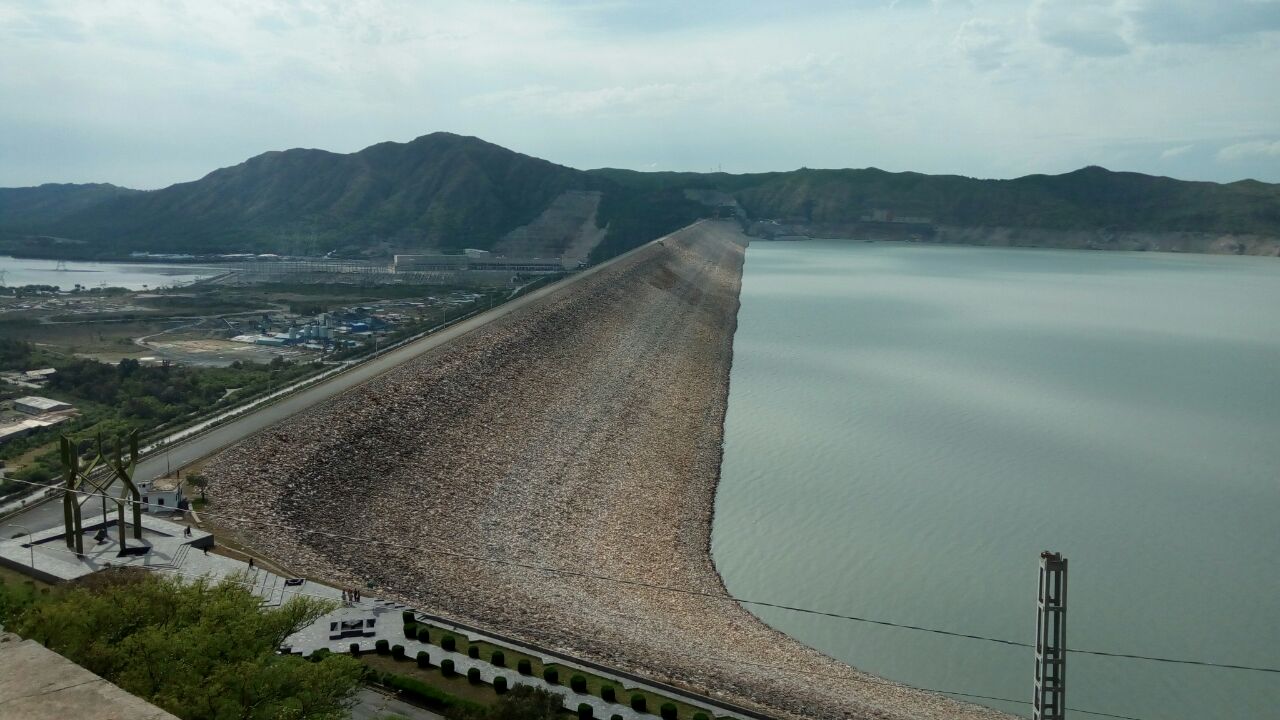
A protective bund at the under-construction T-5 hydropower project at Tarbela Dam breached on Monday, 9 November, sending a large volume of water into Tunnel Five and forcing the Water and Power Development Authority to suspend construction indefinitely.
WAPDA said the inflow began during excavation of the second bench connecting tunnel, when a weak rock mass collapsed and water from the intake pit entered the tunnel and the powerhouse area. The authority said the intake pit had been drained and dewatering of the under-construction powerhouse had begun. It rejected reports that the main T-5 tunnel had collapsed, saying there was no damage to the main tunnel, the under-construction powerhouse, the tailrace culvert or the switchyard, according to a WAPDA statement carried by Radio Pakistan.
Haripur Deputy Commissioner Waseem Ahmed, who visited the site, said all Pakistani and foreign workers had been evacuated. One Pakistani worker was swept into the water but was rescued by emergency teams, and no casualties were reported, the Express Tribune reported. Ahmed said construction had been suspended indefinitely and that a high-level inquiry would examine whether a structural weakness or technical fault caused the protective bund to fail. The next course of action would be decided after the inquiry report, he said.
Dawn reported from Swabi that the collapse of the protective bund triggered a surge of water from the reservoir into downstream work areas. The two accounts describe the same failure from different vantage points: WAPDA focuses on the rock collapse during excavation, while the district administration describes the breach of the protective embankment that was meant to keep water out of the tunnel.
What the T-5 project was meant to add
T-5 is the Tarbela 5th Extension Hydropower Project, built at Tunnel No 5 of Tarbela Dam. It is designed to add 1,530 megawatts through three units of 510 megawatts each, raising Tarbela’s installed capacity from 4,888MW to 6,418MW and adding an average of 1.347 billion units of electricity a year, according to The News International.
The financing is international and large. WAPDA awarded the civil works contract to China’s Power Construction Corporation in May 2021 at $354.6 million. The project’s approved cost is $807 million, with the World Bank providing $390 million and the Asian Infrastructure Investment Bank contributing $300 million, the Express Tribune reported.
The scheme is one of the largest hydropower projects under construction in Pakistan and is part of a long effort to add cheaper, cleaner generation to a grid that has relied heavily on imported fuel. Its output would be especially valuable in summer, when river flows rise and demand for cooling peaks. Tarbela is also central to the country’s water system: in July, authorities opened the dam’s spillways as monsoon flows rose, a reminder that the reservoir serves irrigation and flood management as well as power generation. KhabarWire reported on that spillway release.
The project has nevertheless faced repeated delays. Its completion deadline has slipped from the original five-year schedule to September 2027. In August 2025, work was temporarily suspended after rising reservoir levels sent water into the construction site, the Express Tribune reported. The latest incident is the second time in about 15 months that water has interrupted work at T-5.
Why an indefinite stoppage matters
The immediate damage may be limited. WAPDA’s statement says the main tunnel, the under-construction powerhouse, the tailrace culvert and the switchyard were not damaged, and that water from the intake pit had been drained. That is a materially different picture from a collapse of the main tunnel, the claim WAPDA sought to knock down.
But the authority has not published an independent assessment of the tunnel lining, the intake pit, the powerhouse or the equipment inside it. Dewatering an underground powerhouse is a delicate operation: water, silt and debris can damage seals, electrical systems and recently poured concrete even when the structure itself remains sound. Until engineers inspect those areas, WAPDA’s assurance that the key structures are intact should be read as the authority’s own assessment rather than a completed engineering finding.
The project’s financing adds to the stakes. The World Bank and the Asian Infrastructure Investment Bank are lending against a timetable that has already been revised once. A long stoppage could affect loan disbursements, contractor costs and the expected date for the first unit to come online, although WAPDA has not quantified any of those effects. The project is meant to reduce reliance on costlier generation, so a delay has fiscal as well as engineering consequences.
There is also a safety dimension. The incident happened during construction, not while the plant was operating, and all workers were evacuated. One worker was swept into the water and rescued. The inquiry will need to establish whether the protective bund was adequate for the ground conditions at the tunnel portal and whether warnings or remedial work could have prevented the breach.
What is still uncertain
The exact sequence remains contested in emphasis. WAPDA says a weak rock mass collapsed during excavation and allowed water from the intake pit to enter the tunnel and powerhouse area. District officials describe a protective bund breach that let water into Tunnel Five. Those accounts can be reconciled, but the inquiry has not yet established what failed first, whether the bund was correctly designed for the conditions, or who was responsible for monitoring it.
The extent of the damage is also unclear. WAPDA says the main structures were not damaged, but it has not released photographs, inspection reports or a detailed list of affected equipment. The cost of dewatering and repairs, the time needed to restart excavation, and the effect on the September 2027 completion target are all unknown.
WAPDA has not said whether the incident affected the dam’s existing generating units; its statement addressed the under-construction works. Nor has it set a date for the inquiry report or said whether the contractor, Power Construction Corporation of China, will bear any of the repair costs.
What happens next
The immediate tasks are dewatering the powerhouse, securing the tunnel and assessing the condition of the affected works. WAPDA said senior officers, the project engineer and the contractor were assessing the situation. The Haripur district administration has launched a high-level inquiry, and the next course of action will be decided after its report.
For Pakistan’s power sector, the key questions are how long T-5 remains offline and whether the latest setback pushes back a project that was already behind schedule. The answer will shape not only the dam’s generating capacity but also the credibility of the financing and construction timetable attached to one of the country’s most important hydropower schemes.